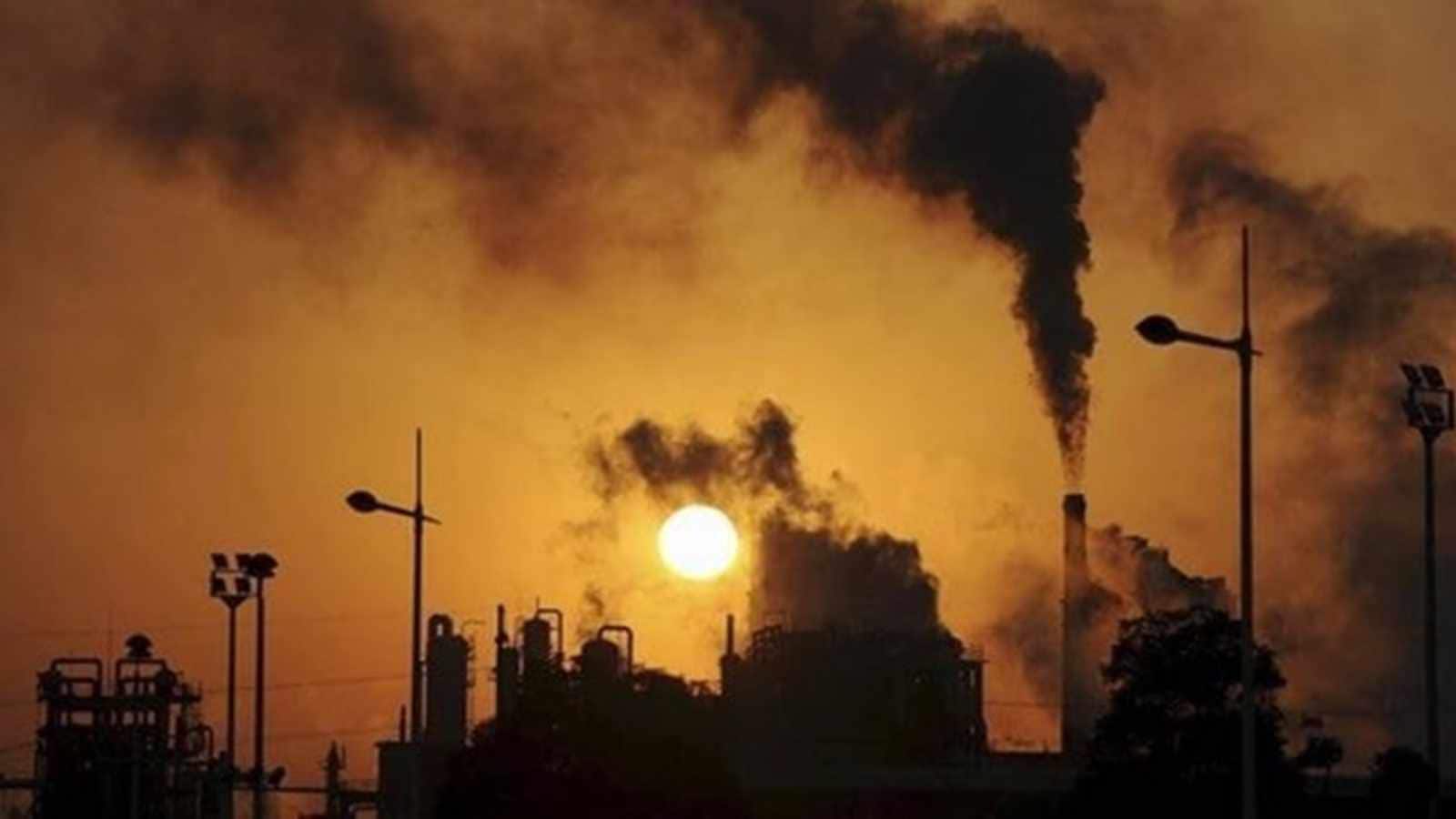
Global mean surface temperature (GMST) is no longer tracking along a linear projection. The latest UN synthesis reports indicate that the rate of warming has increased from an average of $0.18^\circ\text{C}$ per decade between 1970 and 2010 to a projected trajectory that could exceed $0.3^\circ\text{C}$ per decade in the current window. This shift represents a fundamental change in the Earth’s energy imbalance (EEI), where the planet traps more energy than it radiates back into space. Understanding this acceleration requires moving beyond alarmist headlines and into the specific mechanics of feedback loops, aerosol masking, and the specific heat capacity of the deep ocean.
The Triple Drivers of Thermal Acceleration
The current spike in global temperatures is not a singular event but the intersection of three distinct physical phenomena. To analyze why current warming exceeds prior models, one must decouple these drivers:
- The Aerosol Termination Shock: Historically, industrial activity produced both greenhouse gases (GHGs) and sulfate aerosols. While GHGs trap heat, aerosols reflect sunlight, effectively masking a portion of the warming. Recent global maritime regulations—specifically IMO 2020 which slashed sulfur content in shipping fuels—have cleaned the air but inadvertently removed this "cooling shield." This has resulted in a localized but significant increase in solar radiation absorption over the Atlantic and Pacific trade routes.
- The Albedo Feedback Decay: As Arctic sea ice and high-latitude snow cover diminish, the Earth’s reflectivity (albedo) drops. The replacement of white, reflective surfaces with dark, heat-absorbent ocean water creates a self-reinforcing loop. The North Pole is currently warming nearly four times faster than the global average, a process known as Arctic Amplification.
- The El Niño-Southern Oscillation (ENSO) Phase Shift: On a shorter cyclical scale, the transition from a prolonged La Niña (which buries heat in the deep ocean) to a strong El Niño (which releases that heat into the atmosphere) has acted as a thermal "step function," pushing atmospheric temperatures to record highs.
Quantifying the Equilibrium Climate Sensitivity
A critical bottleneck in climate strategy is the uncertainty surrounding Equilibrium Climate Sensitivity (ECS)—defined as the long-term warming resulting from a doubling of atmospheric $CO_2$. For decades, the consensus range sat between $1.5^\circ\text{C}$ and $4.5^\circ\text{C}$. However, new high-resolution models suggest the "fat tail" of the distribution is heavier than previously thought, with some data points indicating an ECS as high as $5.0^\circ\text{C}$.
The gap between "expected" and "observed" warming often stems from the lag in ocean thermal inertia. The world's oceans absorb over 90% of the excess heat trapped by GHGs. We are currently witnessing the saturation of the upper mixed layer of the ocean. Once this layer reaches a specific thermal threshold, it can no longer buffer atmospheric increases as efficiently, leading to the rapid surface spikes observed in 2023 and 2024.
The Carbon Budget and Structural Overshoot
The mathematical reality of a $1.5^\circ\text{C}$ limit is increasingly divorced from industrial output. To maintain a 50% chance of staying below this threshold, the remaining carbon budget is approximately 250 gigatonnes of $CO_2$. At current emission levels of roughly 40 gigatonnes per year, this budget expires in less than seven years.
This creates a scenario of "Structural Overshoot." Strategy can no longer be based solely on mitigation; it must account for the infrastructure requirements of large-scale carbon removal and solar radiation management (SRM) research. The logic of the energy transition is hindered by the following variables:
- Energy Density Parity: The transition from fossil fuels to renewables is not a 1:1 replacement in terms of EROI (Energy Return on Investment). Decarbonizing heavy industries like cement and steel requires high-enthalpy heat that current battery technology cannot provide.
- Mineral Constraints: The scaling of lithium, copper, and neodymium required for a total transition exceeds current global mining capacity by orders of magnitude.
- Political Inertia: The mismatch between the decadal scale of climate feedback and the quarterly or four-year scale of political and financial incentives.
Decoupling Economic Growth from Carbon Intensity
The primary metric for success in the next decade is the "Carbon Intensity of GDP." While some developed nations have achieved relative decoupling (GDP grows while emissions fall), absolute decoupling on a global scale remains elusive. The shift from a carbon-based economy to a mineral-based economy introduces new geopolitical risks.
The bottleneck is no longer the price of solar or wind power—which has plummeted—but the "Intermittency Tax." This refers to the massive capital expenditure required for long-duration energy storage (LDES) and grid hardening to handle the variable nature of renewable inputs. Without a breakthrough in either modular nuclear fission or grid-scale chemical storage, the reliance on gas-peaker plants will remain a structural necessity, floor-loading the global emission rate.
The Tipping Point Calculus
Analysis of the UN report suggests we are approaching "non-linear" shifts. Unlike linear warming, where $X$ amount of carbon leads to $Y$ amount of heat, non-linear shifts occur when a system crosses a threshold and moves into a new state independently of further human input.
Permafrost Carbon Release
The Siberian and North American permafrost contains roughly 1,400 billion tons of carbon—double what is currently in the atmosphere. As these soils thaw, microbial action releases methane ($CH_4$), which has a Global Warming Potential (GWP) 80 times higher than $CO_2$ over a 20-year period. This creates a "Natural Emission Source" that humans cannot easily turn off.
AMOC Destabilization
The Atlantic Meridional Overturning Circulation (AMOC) acts as a global conveyor belt for heat. Increased freshwater runoff from the Greenland ice sheet reduces the salinity and density of North Atlantic water, slowing the pump. A collapse or significant slowing of the AMOC would paradoxically lead to cooling in parts of Europe while accelerating tropical warming and shifting global monsoon patterns, devastating global agriculture.
Strategic Response to Thermal Acceleration
The standard "corporate sustainability" model is insufficient for the magnitude of the observed thermal acceleration. Organizations and governments must pivot from speculative carbon offsets to "Hard Asset Adaptation."
- Infrastructure Hardening: Redesigning supply chains to bypass regions with high "Wet Bulb Temperature" risks, where human labor becomes physically impossible without active cooling.
- Redundant Agricultural Systems: Investing in indoor, climate-controlled farming and drought-resistant genomic crops to counteract the increasing volatility of the hydrological cycle.
- Direct Air Capture (DAC) Scaling: Acknowledging that because we have likely exceeded the carbon budget for $1.5^\circ\text{C}$, the only path to stabilization is the industrial-scale removal of legacy $CO_2$ from the atmosphere. This requires a new sector of the economy as large as the current oil and gas industry.
The data indicates that the "Earth System" is responding more sensitively to forcing than the median models of the 2010s predicted. This necessitates a shift in risk management: stop planning for the "most likely" scenario and start building for the "worst-case" thermal bound. The most significant risk is not just the heat itself, but the speed at which it is arriving, which outpaces the generational turnover of infrastructure and policy.
Immediate capital allocation must prioritize the electrification of everything and the simultaneous fortification of the energy grid. Failure to address the "Aerosol Termination Shock" and the "ECS Gap" today ensures a reactive, rather than proactive, global response as the $1.5^\circ\text{C}$ threshold is crossed within the next five years.