Kharg Island is a scrubby, T-shaped rock in the northern Persian Gulf that should, by all rights, be a historical footnote. Instead, it is the jugular vein of the Iranian state. This 20-square-kilometer limestone outcrop handles over 90% of Iran’s crude oil exports, serving as the primary collection point for the country’s massive inland fields. If the global economy has a single point of failure in the brewing conflict between Washington and Tehran, this is it.
President Donald Trump’s recent signals that the U.S. could seize or blockade the island represent a departure from traditional "maximum pressure" diplomacy. It is a shift toward direct physical control of sovereign energy assets. By neutralizing the military installations on Kharg while deliberately sparing the loading jetties and tank farms, the administration is attempting to perform a delicate surgery: cutting off the Revolutionary Guard’s "financial oxygen" without detonating a $150-per-barrel oil shock that would wreck the global recovery.
The Deep Water Advantage
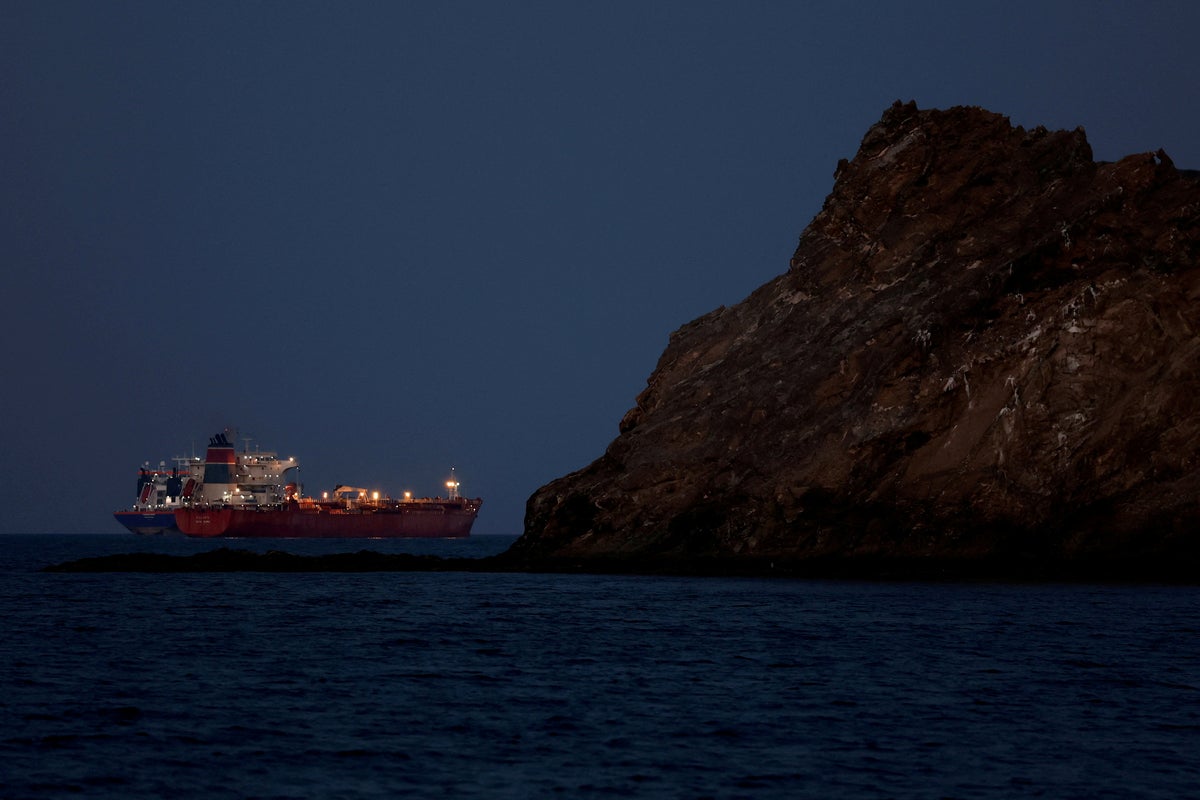
Most of Iran’s 1,500-mile coastline is frustratingly shallow, making it useless for the world’s largest ships. Kharg is the exception. Surrounded by naturally deep waters, it allows Very Large Crude Carriers (VLCCs)—vessels the size of aircraft carriers—to dock directly at its "T-jetty" on the east and "Sea Island" on the west.
Without Kharg, Iran’s oil industry effectively reverts to the 19th century. While Tehran has scrambled to open the Jask terminal outside the Strait of Hormuz, that facility remains a secondary backup with a fraction of Kharg’s capacity. Currently, Kharg maintains a storage buffer of roughly 30 million barrels. Even as U.S. strikes dismantled the island’s air defenses and missile bunkers in mid-March 2026, tanker tracking data shows that nearly 1.4 million barrels per day continue to flow, mostly toward China. This persistence isn't a sign of U.S. weakness, but of a calculated tactical pause.
Leveraged Seizure vs. Strategic Destruction
The "veteran" logic in Washington has shifted. During the Tanker War of the 1980s, the goal was to protect shipping. Today, the goal is to own the leverage. If the U.S. military occupies the island, it doesn't just stop Iran from selling oil; it gains a "physical switch" over the regime’s survival.
History provides the blueprint. In 1979, it wasn't just street protests that toppled the Shah; it was a nationwide oil strike that paralyzed the state’s ability to pay its enforcers. By threatening to take Kharg, the Trump administration is betting that the Islamic Revolutionary Guard Corps (IRGC) cannot sustain a war—or internal order—if their primary revenue source is held in a physical escrow by American Marines.
However, this gamble ignores the "fungibility trap." Oil is a global commodity. If 1.5 million barrels of Iranian crude vanish overnight, China—the primary buyer—will be forced to bid against Europe and the U.S. for barrels from Saudi Arabia and West Africa. We have already seen Brent crude spike to $119 per barrel on the mere rumor of a blockade. A full seizure would likely push prices into the $150 range, a level that historically triggers global recessions.
The China Factor and the Shadow Fleet
We cannot discuss Kharg without discussing Beijing. For years, Iran has relied on a "shadow fleet" of aging tankers using "ghost" transponders to bypass sanctions. Much of this cat-and-mouse game starts at the Kharg Island loading docks.
China has transformed itself into an "electrostate," aggressively moving toward EVs and renewables to insulate itself from Middle Eastern volatility. Yet, they still rely on the Persian Gulf for a massive chunk of their crude. A U.S. occupation of Kharg Island would be viewed by Beijing not just as a move against Tehran, but as a direct threat to Chinese energy security.
The U.S. Treasury’s recent hint that it might "unfreeze" sanctioned Iranian oil already at sea—essentially using Tehran’s own diverted crude to flooded the market and lower prices—shows how complex this economic warfare has become. It is no longer just about bombs; it is about managing the global supply-demand curve while holding a knife to the enemy's throat.
The Risks of a "Forbidden Island"
Occupation is a messy business. Kharg is not just a port; it is a fortress. Known to the IRGC as the "Forbidden Island," it is honeycombed with underground facilities and defended by coastal defense cruise missiles. Any "boots on the ground" operation would expose U.S. forces to a relentless barrage of drone and rocket fire from the Iranian mainland, just 15 miles away.
Furthermore, the environmental risk is catastrophic. A single stray shell hitting a fully loaded storage tank or a VLCC at the jetty could create an oil spill that would eclipse the Exxon Valdez, potentially shutting down desalination plants across the Gulf and turning a local war into a regional humanitarian crisis.
The administration believes it can control the escalation. They see Kharg as a bargaining chip in a grander "Art of the Deal" style negotiation to force Iran back to the table and reopen the Strait of Hormuz. But in the Persian Gulf, leverage has a habit of exploding. If the goal is to bankrupt the regime without bankrupting the American commuter, the margin for error is non-existent.
The coming weeks will determine if Kharg Island remains an "Orphan Pearl" or becomes the spark for the first truly global energy war of the late 2020s.
Would you like me to analyze the specific technical capabilities of the IRGC’s coastal defense systems currently stationed near Kharg?