Nineteen is supposed to be messy. It is the age of burnt toast at two in the morning, of crumpled lecture notes left on sticky library tables, of changing your major three times before the first snow. Nineteen belongs to the self. It is a selfish, necessary season designed for figuring out whether you prefer coffee black or sweet, and whether you have the courage to tell your parents you want to study art instead of accounting.
Baylee Laine missed that season entirely.
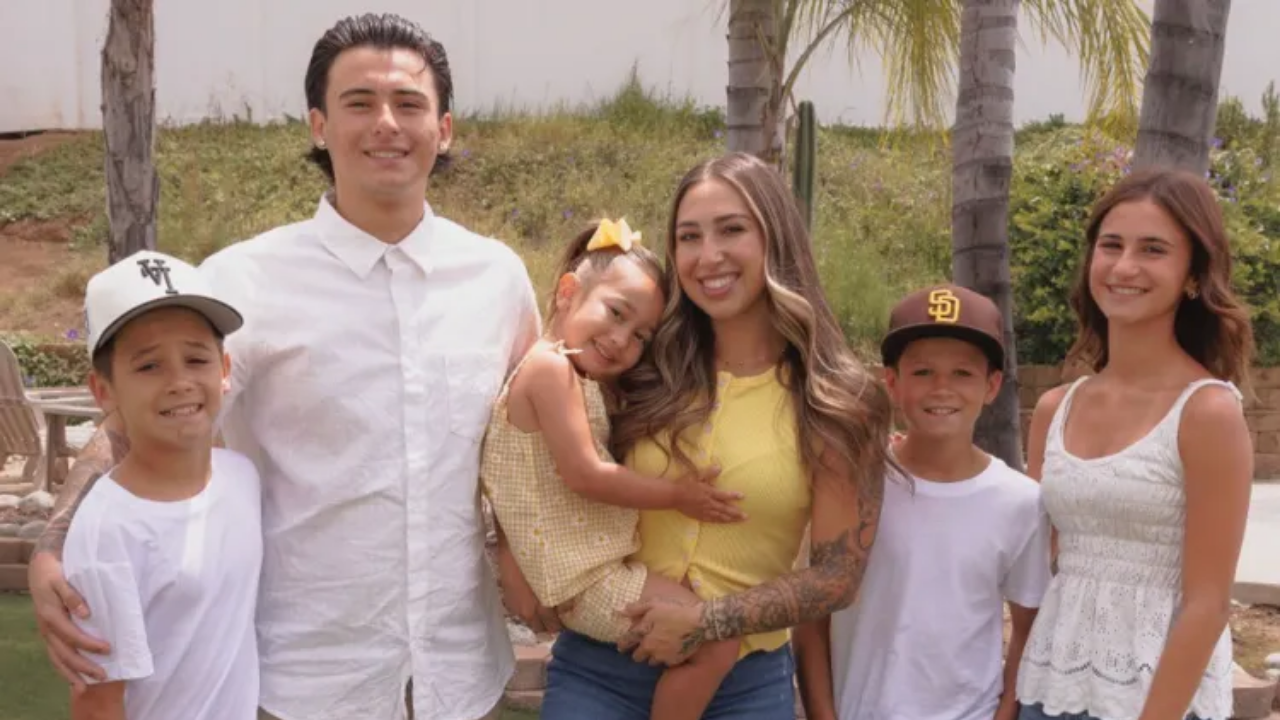
One afternoon, the horizon of her life tilted. While other sophomores worried about midterms and dorm laundry, Baylee looked at four younger siblings—ranging from grade school to early teens—and realized the adults were gone. Not temporarily. Permanently. The safety net didn't just fray; it vanished.
Let me be clear about what happens next in a scenario like this, because television loves to sanitize it. Television gives you a swelling string section and a montage of a teenager pasting motivational sticky notes to a bathroom mirror. Reality is much heavier. Reality smells like bleach, cheap instant noodles, and damp winter coats crammed into a hallway that is entirely too small. Reality is the specific, crushing math of dividing a single paycheck among five hungry mouths, four growing bodies, and one landlord who does not care about your age or your grief.
Baylee had a choice. It wasn't a noble choice wrapped in ribbons. It was a binary trap. She could hand her brothers and sisters over to a state system that is chronically overburdened, chronically underfunded, and fundamentally built to scatter siblings across different zip codes like leaves in a gale. Or she could surrender her own future.
She walked away from the scholarship. She walked away from the lecture halls, the campus green, and the quiet library carrels where she used to trace the outlines of her ambitions.
Instead, she learned the language of shift work.
Two jobs. Say those words out loud and let the friction of them sit on your tongue. Two jobs means waking up before the sun has even decided to clear the horizon, sliding into slip-resistant shoes, and standing on hard tile for eight hours pouring coffee or ringing up groceries while your mind is three miles away, wondering if the youngest made it home from school and locked the deadbolt. It means coming home just as the house is settling down, grading your own exhaustion, and sitting at a wobbly kitchen table to help with fractions you haven't thought about in years.
We talk about resilience in this culture as if it were a shiny medal you pin to someone's chest. We love the narrative of the plucky young hero who overcomes the odds with a smile. But true resilience is jagged. It leaves scars that never quite sit flat under the skin. It is waking up with panic in your throat before your feet even touch the floor. It is the cold, silent terror of looking at a utility bill and realizing the numbers simply do not add up, no matter how many times you subtract the groceries.
Consider the invisible stakes of what Baylee did. When a nineteen-year-old takes on the role of mother, she isn't just sacrificing her education. She is sacrificing her youth, yes, but she is also rewriting the genetic code of her family's trajectory. If those kids had been separated, the trauma would have compounded. Statistics tell us that siblings separated in the foster care system face staggering hurdles regarding high school graduation, stable employment, and mental health. Baylee looked at those statistics without knowing the data points, sensing only the visceral truth. She knew that keeping them under one roof, under one chaotic, exhausted, loving roof, was the only firewall between her siblings and the dark.
I think about the quiet moments. The ones no one writes articles about.
It is midnight. The house is finally quiet, save for the refrigerator humming its rhythmic, low-frequency tune. Baylee is sitting on the edge of a secondhand couch, staring at a stack of unpaid notices. Her hands are chapped from commercial dish soap. Her muscles ache with the dull, persistent throb of someone who has been on her feet for fourteen hours across two separate shifts. On the coffee table sits a stray colored pencil and a half-eaten crust of toast.
At that exact second, she could quit. She could scream at the ceiling. She could let the overwhelming weight of the world pull her under.
She doesn't.
She reaches out, picks up the colored pencil, and rolls it between her fingers. Then she stands up, walks down the creaking hallway, and checks to make sure her youngest sister has her blanket pulled up to her chin.
That is not inspiration porn. That is raw, unadulterated grit.
We live in a society obsessed with overnight success stories, with founders ringing bells on stock exchange floors and influencers monetizing their morning routines. We celebrate the grand leaps. We rarely pause to honor the slow, agonizing crawl of someone who simply refuses to let go of the people who share her blood.
Baylee Laine didn't get a graduation ceremony at nineteen. She got aching arches, double shifts, and the terrifying responsibility of shaping four human souls when she was barely past being one herself. But she also got something else. She got a dining room table crowded with five plates. She got the sound of laughter echoing down a hallway that could have been empty. She got the fierce, unbreakable certainty that love is not a feeling you stumble into, but a choice you grind out, day after brutal day, until the sun finally comes up again.