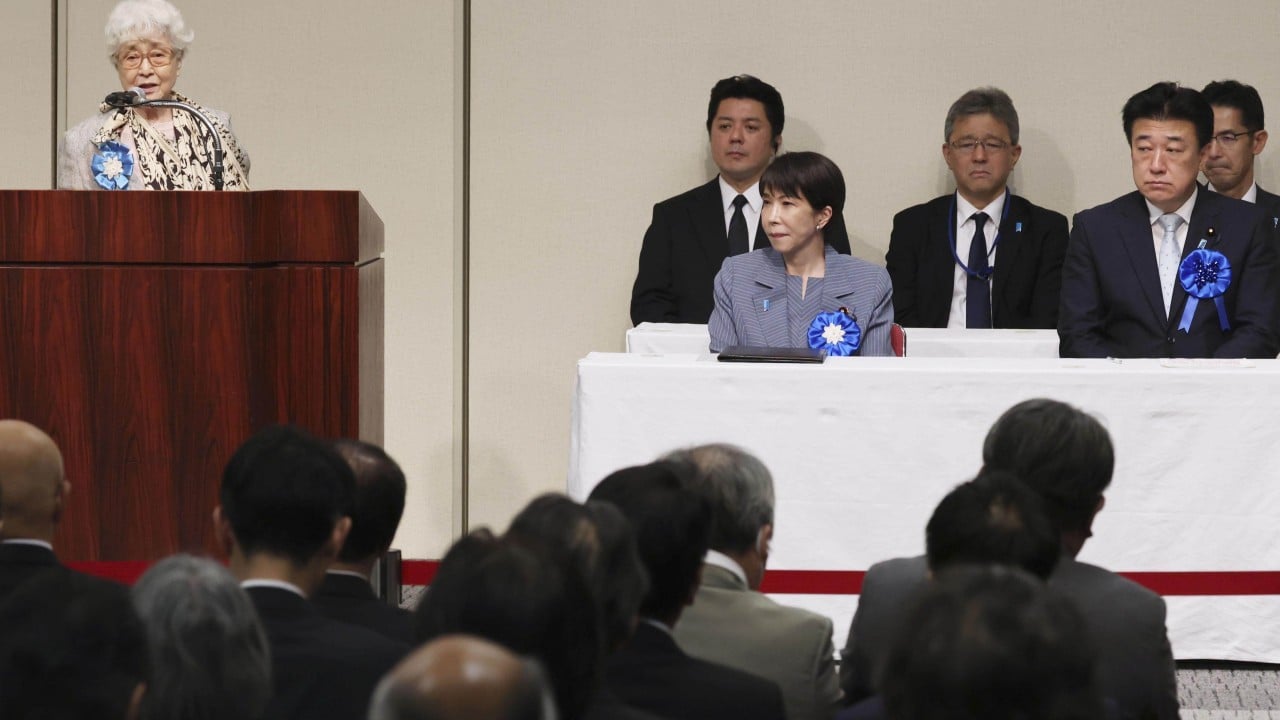
Japanese Prime Minister Sanae Takaichi is playing an ancient, exhausted melody. At a national rally in Tokyo, she stood before the aging families of Japanese citizens stolen by North Korean operatives decades ago and promised a "breakthrough." She urged Kim Jong Un to take a "courageous step." She claimed she would weigh all options, including a direct summit, to finally resolve the abduction issue.
It is the standard rhetorical theater expected of every Japanese leader since Junichiro Koizumi’s historic visits to Pyongyang in 2002 and 2004. But let’s drop the polite diplomatic fiction.
There will be no breakthrough. There is no opening. The promise of a dramatic, top-level diplomatic resolution to the abductions is a structural impossibility under current geopolitical conditions. By continuing to frame the North Korea problem through the singular lens of the 17 officially recognized abductees, Tokyo is trapped in a loop of domestic political performance that actively paralyses its broader regional strategy.
I have watched successive administrations burn immense political capital pretending that a mixture of economic carrots and moral outrage will make Pyongyang change its mind. It will not. The fundamental mechanics of the Kim regime, coupled with shifting tectonic plates in global security, mean that Japan’s traditional playbook is obsolete.
The Mathematical Impossibility of North Korea's Reversal
To understand why Takaichi’s rhetoric is fundamentally flawed, you must understand how North Korea calculates state survival.
When Koizumi traveled to Pyongyang in 2002, Kim Jong Il did something unprecedented: he admitted that North Korean agents had systematically snatched Japanese nationals from coastal towns in the 1970s and 1980s to train spies in Japanese language and culture. He apologized. He returned five living survivors.
Pyongyang expected that this admission would lead to the normalization of ties and billions of dollars in economic aid, mimicking the 1965 normalization pact between Japan and South Korea. Instead, it triggered a massive, permanent wave of public fury inside Japan.
Pyongyang learned a stark lesson: admitting guilt to an international democracy does not yield economic windfalls; it locks in permanent enmity.
Look at the raw data North Korea works with today:
- The Deadlock: North Korea claims the issue is settled because the remaining abductees are either dead or never entered the country.
- The Forgery Trap: In 2004, North Korea returned cremated remains it claimed belonged to Megumi Yokota, who was kidnapped at age 13. Japanese DNA testing proved the remains belonged to someone else.
- The Internal Logic: For Kim Jong Un to backtrack now, admit the 2004 remains were a fraudulent cover-up, and produce living abductees would be a catastrophic admission of state deception.
In a totalitarian system built on the myth of absolute regime infallibility, Kim cannot hand over a hidden group of elderly Japanese citizens without exposing the internal security apparatus to profound systemic risk. The "courageous step" Takaichi asks for is a direct threat to Kim's internal authority.
The Trump-Beijing Mirror Game
The current administration believes a narrow diplomatic window exists because Donald Trump has expressed generic support for resolving the issue. Takaichi even dissolved the House of Representatives previously to secure a mandate for direct engagement with Kim.
This ignores how the regional security landscape has transformed. North Korea no longer needs Japan’s money.
During the early 2000s, Pyongyang was economically isolated, reeling from famines, and desperate for capital. Today, the Kim regime has a fully operational, miniaturized nuclear arsenal and intercontinental ballistic missiles. More importantly, the deepening fracture between Washington and Beijing has turned North Korea into an indispensable buffer state for China and a crucial military partner for Russia.
Imagine a scenario where Japan offers billions in infrastructure development in exchange for the remaining abductees. Why would Kim take it? Acceptance invites intrusive Japanese oversight, violates the regime's paranoid isolationism, and offers nothing that clandestine trade networks and sanctions evasion aren't already providing.
When Kim Yo Jong issued a calculated statement hinting at a summit while demanding Japan drop its "unilateral" obsession with the abductions, it wasn't an invitation to negotiate. It was a classic wedge tactic designed to see if Tokyo would break ranks with Washington's hardline containment policy. Takaichi cannot drop the issue without committing domestic political suicide, and Kim cannot engage if the issue is raised. It is a perfect, permanent stalemate.
The Cost of Emotional Foreign Policy
The tragedy of the abductions has warped Japanese foreign policy into something deeply emotional rather than ruthlessly pragmatic. Because the public is deeply invested in the fate of the victims, the Ministry of Foreign Affairs is forced to treat a historical, humanitarian grievance as a top-tier national security priority.
This has a massive downside: it prevents Japan from playing a fluid diplomatic game in East Asia.
While South Korea fluctuates between engagement and deterrence, and Washington balances strategic patience with military positioning, Japan remains frozen. Every single interaction Tokyo has with the international community regarding North Korea requires a mandatory recitation of the abduction grievance. It is a line item in every UN resolution, every G7 communique, and every bilateral summit.
By tying normalization and economic cooperation exclusively to the return of people North Korea insists do not exist, Japan has effectively removed itself as a meaningful actor in denuclearization talks. It has zero leverage. It has sanctioned North Korea to the maximum limit, meaning it has no more economic punishments left to threaten.
The Brutal Reality of the Clock
The most painful truth that no politician in Tokyo will voice is that time has already won.
Megumi Yokota was taken in 1977. The five abductees who returned in 2002 have been back for over two decades. The parents of the missing are either in their late 80s and 90s or have passed away without answers. The surviving abductees, if alive, are now elderly individuals who have spent half a century inside the most closed society on earth.
The policy of demanding the immediate, total return of all abductees based on lists compiled decades ago is a strategy designed for a political reality that expired twenty years ago.
Takaichi's assertion that she will achieve a breakthrough "during her time in office" is not an actionable diplomatic strategy. It is an insurance policy. It signals to the conservative base that her heart is in the right place, shielding her from criticism when the status quo inevitably remains unchanged.
Japan needs a massive pivot. It must decouple its broader defense doctrine—including the acquisition of counterstrike capabilities and missile defense integration—from the false hope of a diplomatic grand bargain over the abductions. Tokyo must treat North Korea exclusively as a hostile nuclear state to be contained, rather than a misbehaving neighbor that can be reasoned with through sentimental appeals.
Sticking to the old script doesn't honor the victims; it simply ensures that Japan remains strategically paralyzed by the very regime that stole them.