Cold rain on a Tuesday morning smells like iron and crushed pine needles. If you kneel in the wet leaf litter of a Delaware state park, the soil is darker than you expect—rich, heavy, and full of small pale roots that have barely learned the shape of the earth around them.
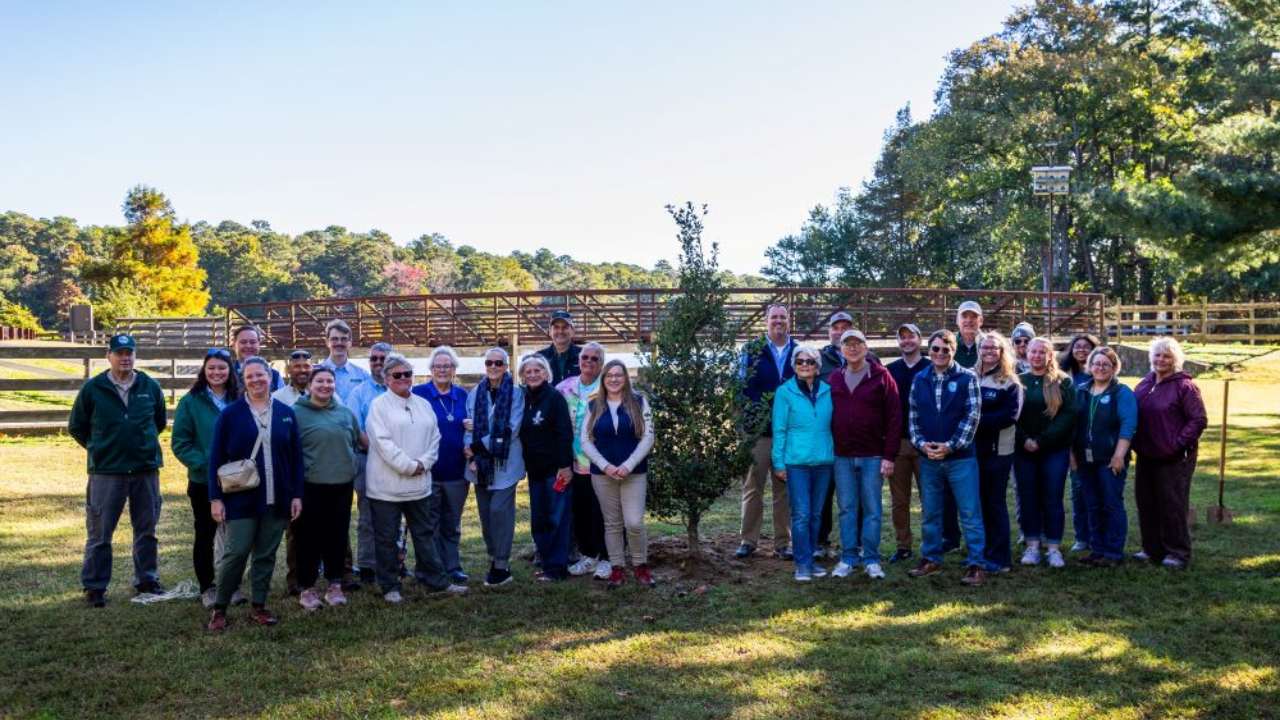
Seventy-five thousand times over five years, across seventeen parks, someone knelt in dirt like this.
Press releases turn that effort into neat arithmetic. Seventy-five years for the state park system. Seventy-five thousand trees in the ground. Five years of planning, volunteers, grants, shovels, and trucks rolling down two-lane roads before sunrise. Numbers are tidy. They sit on a page without asking anything of you.
Dirt does not care about neat arithmetic. Dirt cares about wind coming off the bay, salt spray stinging young bark, deer browsing tender shoots in January, and summer heat baking clay until it cracks like old pottery.
I have stood beside young plantings in coastal mid-Atlantic parks where half the seedlings looked like dry sticks stuck into mud, and I have felt that familiar knot in the stomach—the doubt that comes when you spend a Saturday sweating over a hole in the ground for a tree whose shade you will barely see in your prime. Planting a tree is an act of stubbornness. You put a living thing in the soil and walk away trusting time, weather, and strangers to keep it alive.
To see why seventy-five thousand trees across seventeen parks matters beyond a milestone press release, step into a hypothetical walk through a coastal park on a windy autumn afternoon. This scene is a composite illustration built from real coastal park conditions rather than a single documented moment.
Picture Hannah, a fictional park volunteer in her forties who works accounting during the week and brings work gloves to the woods on weekends. Around her, a strip of loblolly pines and red maples borders a salt marsh and a gravel trail. Two years ago, those trees were knee-high whips wrapped in plastic or wire guards. Now, a few reach her shoulder. A kingfisher rattles past the marsh edge. Salt wind hums through the needles—a dry, rushing sound like distant traffic.
Hannah looks at a sapling leaning slightly toward the open water. She knows the questions people ask when they hear about big reforestation numbers. Do all seventy-five thousand survive? Why plant in state parks when housing developments and highways keep eating up open land elsewhere? How long does it take before a young grove actually cools a trail, filters runoff, or shelters warblers instead of just looking like a nursery row?
None of those questions have quick, comforting answers, and pretending otherwise would insult anyone who has ever watched a drought scorch a yard. Tree survival depends on species selection, soil drainage, protection from wildlife, and the luck of the first two or three summers. Some seedlings fail. Others get chewed back and resprout crooked and tough. That uncertainty is part of the bargain.
Why Seventeen Parks Hold Different Weather
Delaware is small—easy to cross in a couple of hours if traffic cooperates—yet walking from a northern creek valley to a southern barrier beach feels like crossing different climates. A tree that thrives in damp Piedmont soil near Brandywine Creek can sulk or die in sandy, wind-scoured ground near the Atlantic coast.
Spreading seventy-five thousand trees across seventeen parks means matching species to microclimates rather than dropping one monoculture everywhere. Think of a choir where every singer has a different range. If everyone sings the same high note, the song thins out and strains; when altos, basses, and tenors carry different parts, the sound holds together when the room gets loud.
Forests work the same way. Mix oaks, pines, gums, maples, and native understory shrubs, and a single pest, drought, or nor'easter cannot wipe out the whole stand at once. Along a coastal edge, salt-tolerant trees take the brunt of storm gusts and buffer the inland woods behind them. Further inland, deeper shade and thicker leaf litter hold moisture after heavy rain so streams run clearer instead of turning into muddy ditches.
Consider what happens next: a storm hits at high tide.
Water pushes inland across low ground. Bare turf and compacted earth shed rain fast, sending sheets of water rushing toward roads and ditches. A band of established trees and roots acts like a sponge and a brake combined. Leaves catch part of the downpour; roots loosen hard soil so water sinks in; fallen branches and duff slow the runoff. A single young sapling cannot stop a flood. Seventy-five thousand trees woven across seventeen parks over five years start building a living lattice that works quietly year after year.
The Quiet Math of Seventy-Five Years
Seventy-five years is roughly one human lifetime.
When Delaware's state parks began seventy-five years ago, the people drawing boundaries and opening gates were thinking about public space for families who needed somewhere green to breathe. Back then, a park visitor might have been a child riding in the back seat of a car with vinyl upholstery that burned bare legs in July. That child could be a grandparent today, walking the same trail with stiff knees and a camera.
I still remember the smell of hot asphalt and pine sap on a humid July afternoon when I was nine—stepping out of a station wagon onto gravel that popped under my sneakers, hearing cicadas buzz so loud it felt like the air itself was vibrating. Places like that stay stitched into memory long after exact dates blur. Parks do not just hold trees. They hold milestones: first camping trips, awkward teenage hikes, quiet mornings after hard news, dog walks at dusk.
Marking a seventy-fifth anniversary by finishing a five-year push to hit seventy-five thousand trees connects past and future in a way a ribbon-cutting never could. A monument stays the same size forever. A tree changes every spring.
And yet, there is a tension here we should look straight in the eye. Planting seventy-five thousand trees is an achievement, not a finish line. A sapling in the ground is a promise, not yet a canopy. It takes years—often decades—for young trees to grow wide crowns, drop thick layers of leaves, and build the deep root networks that anchor soil against erosion. People who care about wild spaces sometimes feel torn between celebrating milestones and worrying about how slow nature's clock runs compared with the speed of land change.
Both feelings can be true at once. You can cheer every shovel that went into the dirt over five years and still know that the hardest work—watering through dry spells, keeping invasive vines from smothering young crowns, protecting buffers around sensitive habitats—happens long after the count reaches seventy-five thousand.
What Happens When Nobody Is Watching
Let's use a simple metaphor to picture what a new planting does over time: imagine a savings account opened with small, steady deposits rather than one lump sum.
In year one, the balance looks modest. A passerby might barely notice the difference between a field of saplings and tall grass. By year five, the deposits are compounding—roots spreading deeper, branches knitting together, birds finding cover that wasn't there before. Twenty or thirty years down the road, hikers walk beneath real shade, listening to wind move through upper leaves while ferns and woodland wildflowers settle into the cool air below.
Here is another hypothetical character to ground that time span: picture Mateo, a fictional park ranger or land steward walking a trail ten years after planting day. Mateo is not giving a speech or posing for a photo. He is checking bark for borers, pulling a tangle of porcelainberry or bittersweet off a young oak before it chokes the crown, and noticing where deer paths are wearing down a slope.
Mateo's job is unglamorous. Most visitors never see him. Yet his quiet attention is the bridge between "planted" and "established." Without follow-through, even well-chosen trees struggle against aggressive weeds, compacted trails, or extreme weather. With steady care across seventeen parks, those seventy-five thousand trees become part of the everyday architecture of the state.
Why This Matters Even If You Never Hold a Shovel
You do not have to be an arborist, a conservationist, or a weekend volunteer to feel the difference a healthy park system makes.
Step off a hot pavement onto a shaded woodland path in late August and the temperature drop hits your skin within ten paces. Noise from nearby roads softens. Your breathing slows without you planning it. Even if you only visit a state park twice a year for a picnic or a walk along the water, those places shape how a region feels and how resilient its land remains when weather turns rough.
Seventy-five years of state parks in Delaware built a public commons. Five years of planting seventy-five thousand trees across seventeen parks renewed that commons for people who haven't been born yet.
Rain keeps falling on the mid-Atlantic coast, cold and steady against dark bark and wet leaves. Somewhere in the dark soil of seventeen parks, tiny white root tips are pushing outward an inch at a time, feeling for water, holding on through the wind, waiting for another spring.