Silence.
That is the first thing you notice when you walk through a scorched eucalypt forest after a bushfire has chewed its way through the canopy. No kookaburras laughing from the upper branches. No rustle of a glider slipping between trunks at dusk. Just charred bark smelling faintly of wet ash and an eerie, heavy quiet that presses against your eardrums.
I have stood in that silence. Years ago, walking along a ridge in eastern Australia months after flames swept through, I felt a strange kind of grief that surprised me. I had expected sadness over the fallen timber, yet what unsettled me most was the emptiness of the air. A forest can sprout green shoots from its roots within weeks, yet the real homes—the deep, insulated hollows carved over a century or more by termites, fungi, and wind—are gone in a single afternoon.
If I am honest with you, when I first heard about Australian designers shaping hempcrete into shelters for threatened wildlife, I was skeptical. Hempcrete? A bio-composite made from the woody inner core of industrial hemp stalks—called hurd—mixed with a lime binder and water? It sounded like a trendy human housing material being forced into a job it was never meant to do. Can a wall material meant for eco-homes really stand in for a living, breathing tree hollow? Or is it just another well-meaning experiment that sounds poetic on paper and falls short in the bush?
Let’s trace the real problem before we judge the answer.
Why Tree Hollows Take a Lifetime and Vanish in Minutes
Across Australia, more than three hundred native vertebrate species rely on tree hollows for shelter, nesting, or raising young. Sugar gliders, feathertail gliders, brush-tailed phascogales, owls, cockatoos, pardalotes, microbats—the list reads like a roll call of the bush’s most delicate night shifts.
Here is the catch that rarely makes headlines. Young trees do not have hollows. A eucalypt generally needs to be well over a century old—sometimes two hundred years or more—before decay and insect activity sculpt cavities deep enough and wide enough for these animals to survive extremes of heat, cold, and predators.
Now think about what happens when megafires sweep through, or when land clearing and logging strip out old-growth stands. You cannot plant a hundred-year-old hollow. Even if you plant ten thousand seedlings tomorrow, the animals living today need somewhere to sleep tonight.
A forest can regrow leaves in a single spring, yet a hollow takes a lifetime of quiet decay to carve.
Consider what happens next: well-intentioned conservationists often put up standard timber nest boxes. Timber boxes help, and many volunteers spend weekends building and mounting them. Still, ordinary thin wood has glaring flaws in harsh Australian climates. When summer temperatures spike past forty degrees Celsius, a thin wooden box sitting in direct sun can turn into an oven. When winter frosts bite hard or bushfires roar past, thin timber offers little thermal buffer and minimal fire resistance.
To make this concrete, let us use a hypothetical scenario. Picture a mother sugar glider named Pip—not a real tracked animal, just a stand-in for thousands of tiny marsupials trying to raise joeys in a fragmented patch of bushland. Her birth tree went up in smoke two summers ago. She finds a cheap timber box nailed to a surviving trunk. On a sweltering January afternoon, the heat inside climbs dangerously high; on a freezing night in July, the cold seeps straight through the planks. Worse yet, larger aggressive birds or invasive species sometimes widen or monopolize standard boxes. Pip is surviving on borrowed margin.
Inside the Workshop Where Hemp Meets the Bush
That gap—between urgent need and fragile alternatives—is where designers in Australia began looking at hempcrete with fresh eyes.
Instead of treating hempcrete purely as a block or cast wall for human dwellings, designers started asking how its physical properties might solve the exact weaknesses of conventional artificial shelters. Let us look closely at what hempcrete actually is, without dressing it up in buzzwords.
Hemp hurd is porous. When bound with lime and allowed to cure, the resulting material traps countless tiny pockets of air. Those air pockets act as natural thermal insulation, slowing down heat transfer in both directions. Think of it like a thick, breathable wool sweater compared to a thin windbreaker: it moderates temperature swings rather than letting scorching days or freezing nights ambush whatever is inside.
Hempcrete also regulates moisture well compared to sealed plastic or non-breathable coatings, and because lime is alkaline and mineral-based, cured hempcrete does not burn easily the way dry timber does. It can char or resist direct ignition far better than thin untreated wood, giving shelters a fighting chance when ember attacks roll through a valley.
Let’s introduce another character—again, a hypothetical composite based on real sustainable builders and wildlife advocates—whom we will call Hannah, an industrial designer working out of a dusty regional studio.
Hannah knows the smell of lime dust and crushed plant stalks. Her hands stay rough from mixing batches, testing densities, and sanding curved interiors so tiny claws have grip without splinters. When she first shaped a test shelter, she worried about weight. A solid block of hempcrete is heavier than a flimsy pine box, and heavy things are harder to hoist safely into branches without damaging living trees.
So she experimented. Hollowing out cores. Varying wall thickness. Designing modular shapes and breathable entryways sized to keep out larger bullies while welcoming small gliders or birds.
A Metaphor for What We Actually Build
Pause for a second and notice what is happening here. This is a metaphor for how we relate to the wild world as a whole.
For generations, human architecture has been about drawing a hard line: humans in here, nature out there. Concrete slabs, steel frames, cleared paddocks, fenced reserves. We built fortress walls to keep the wild away, and then wondered why the wild became fragile.
Hempcrete flips that posture. It starts with a crop grown in soil, harvested from plants, bound with mineral earth, shaped to mimic a natural cavity—not to replace a living forest forever, but to bridge a painful gap while young trees grow tall.
But the real problem lies elsewhere if we stop at romance.
Designing a clever shelter in a studio is one thing. Knowing whether threatened wildlife will actually use it—and whether it holds up through torrential rain, fungal growth, insect boring, and seasonal shifts—is another matter entirely. Animals do not read design blogs. A glider or a small parrot decides in seconds whether a space feels safe, dry, quiet, and free of strange chemical odors.
Some lime mixes cure slowly or can feel chalky if not properly formulated. Heavy shelters require thoughtful mounting systems so they do not rip bark or fall during gale-force storms. And hemp farming itself in Australia still scales unevenly across regions, meaning supply chains and transport distances matter if the goal is genuine sustainability rather than shipping materials halfway across a continent.
Being honest about those uncertainties matters. Conservation is messy. Anyone who promises a silver bullet for habitat loss is selling a fairy tale. Hempcrete shelters are a bridge, not a cure-all. If we clear old-growth forests unchecked, no amount of clever bio-masonry will rebuild a complex woodland ecosystem.
How Design Turns Empathy Into Survival
Still, watch what happens when empathy guides engineering.
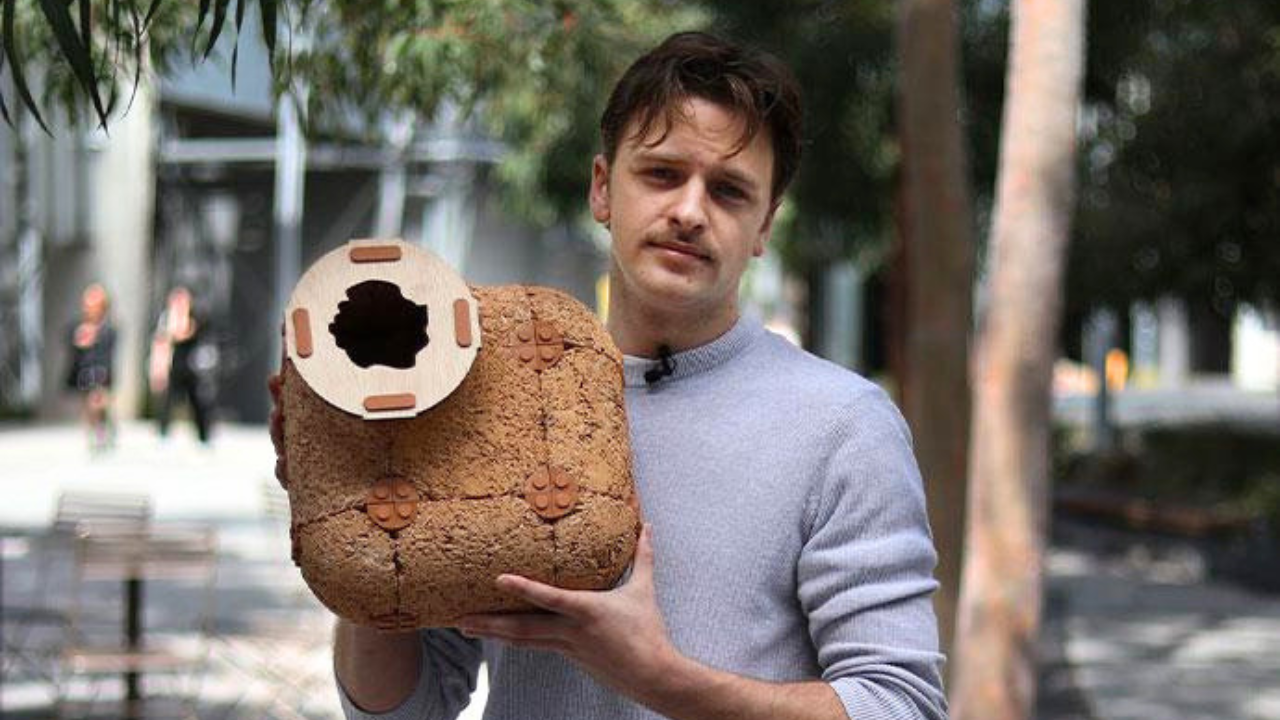
Imagine Hannah walking out into a regenerating woodland at dawn, carrying a curved, earthy shelter that looks almost like a piece of petrified driftwood or a sculpted stone nest. She is not trying to outsmart nature; she is trying to imitate its patience—offering a cooler sanctuary during heatwaves, a steadier temperature during cold snaps, and a sturdier shell against the elements while saplings reach toward the sun.
In a country where bushfires, droughts, and habitat fragmentation have pushed dozens of species onto precarious ledges, small interventions add up when they respect real biology. A sheltered microclimate can mean the difference between a joey surviving a brutal summer or failing to thrive. A fire-resistant exterior can mean a shelter still stands after a low-intensity ground fire passes through.
Even better, using an agricultural byproduct like hemp hurd connects rural farming with ecological restoration. Farmers grow a fast-maturing crop that locks carbon as it grows; designers turn the woody leftovers into durable, breathable habitats; threatened creatures get a fighting chance in places where old hollows vanished decades ago.
You do not need a degree in ecology or materials science to feel why that matters. Everyone knows what it feels like to lose your home—or to watch someone you care about scramble for safety when the roof comes down. Wildlife does not have insurance, savings, or real estate agents. When their trees fall, they have nowhere to go.
What Happens When We Stop Looking Away
Think back to that quiet scorched ridge I walked years ago.
For a long time, that memory felt like a closing door—proof of how fast ancient things can burn. Now, when I picture a hempcrete shelter tucked among recovering branches, I see something quieter and more stubborn. A handmade truce between human ingenuity and an ancient bush that refuses to give up.
Dawn breaks over the ridge.
Mist lifts off damp leaves, a tiny shape slips inside a cool, earthy hollow out of the coming sun, and the forest breathes again.