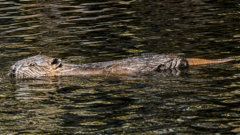
Everyone loves a good prodigal son story. The media spent the week weeping tears of joy over the headline that wild-born beavers have returned to a Scottish highland glen for the first time in four hundred years.
It makes for a great viral clip. A furry engineer chewing on a birch branch against a misty backdrop of ancient hills. The narrative writes itself: nature healing itself, humans stepping aside, ecological harmony restored after centuries of ruthless human error.
Except it is a lie. Not a deliberate fabrication, but a lazy, sentimental fairy tale peddled by people who watch nature documentaries instead of managing land.
I have spent twenty years advising rural landowners and regional planners across the UK and Europe on watershed management. I have watched multi-million-dollar river restoration projects get completely derailed because well-meaning urban activists wanted to recreate a Pleistocene theme park without reading the operational manual.
The return of Castor fiber to the Scottish highlands is not a triumph of rewilding. It is an unmitigated management headache that will flood high-value grazing land, choke upland tributaries, and destroy the fragile aquatic breeding habitats of native fish species that conservationists claim to care about.
Stop cheering for the beaver until you understand what happens when a rodent with architectural ambitions gets dropped into a twentieth-century agricultural landscape without predators.
The Lazy Consensus Of Rewilding Mythology
The core argument of the pro-beaver lobby relies on a seductive piece of historical revisionism. They tell you that beavers are a keystone species, that they are simply reclaiming what was stolen from them in the sixteenth century when pelts and castoreum were hunted out of existence.
This argument relies on a child-like view of history. Four hundred years ago, the Scottish highlands were not a pristine wilderness waiting for a furry savior. They were heavily deforested, grazed, and changing. More importantly, the human footprint was entirely different.
When people quote historical baseline ecology, they cherry-pick the parts that fit their aesthetic. They forget that the pre-industrial landscape had vast, unmanaged floodplains where a beaver dam could expand across square miles of wasteland without bothering a soul.
Today, those valleys are roads, bridges, arable farms, forestry plantations, and private estates. You cannot drop a hyper-efficient hydrological modifier into a heavily fragmented, highly engineered modern landscape and expect it to behave like a wild forest.
The lazy consensus assumes nature operates in a vacuum. It assumes that if you put a species back where it used to live, the surrounding ecosystem will magically step back four centuries to accommodate it.
That is not ecology. That is cosplay.
The Mechanical Reality Of Rodent Infrastructure
Let us look at the actual mechanics of what a beaver family does when it moves into a Scottish glen.
Beavers are not delicate artists. They are industrial bulldozers equipped with incisors. A single family can fell hundreds of mature trees a year, not just for food, but to engineer complex hydraulic systems. They build dams to raise water levels, creating deep pools to protect their lodges from predators and to float food supplies.
In a massive, untouched North American watershed, this creates dynamic wetlands. It traps sediment, filters pollutants, and creates complex habitats.
In a tight, low-gradient highland glen, it does something entirely different.
It turns productive valley floors into stagnant, waterlogged bogs. It raises the local water table to the point where ancient root systems of non-target trees drown and die. It burrows into riverbanks, destabilizing flood protection dikes and undermining rural infrastructure.
Imagine a scenario where a pair of beavers sets up camp fifty yards upstream from a nineteenth-century stone bridge or a low-lying rural access road. Within three seasons, their damming activity raises the upstream water level by four feet. The drainage culverts back up. The roadbed saturates. The tarmac cracks under the weight of utility vehicles.
Who pays for the fix? Not the London-based environmental NGO that campaigned for the release. The local council or the private landowner picks up a five-figure bill to clear the debris and armor the banks with riprap.
We are glorifying a rodent for doing what evolution programmed it to do, while passing the maintenance invoice to people who are just trying to grow oats or run sheep.
The Collateral Damage To Native Fisheries
The most glaring hypocrisy in the modern beaver narrative is the complete dismissal of its impact on native fish.
Conservationists love to talk about biodiversity as if every species goes up together in a rising tide of green harmony. It is a comforting illusion. In the real world, ecosystems are zero-sum games of brutal competition.
Atlantic salmon and sea trout are already in a precarious state across Scotland. Rising water temperatures, marine predation, and historical overfishing have pushed many river systems to the brink.
What happens when you introduce high-density beaver dams across prime salmon spawning rivers?
You build concrete-hard wooden walls that act as absolute migration barriers during low summer flows. Adult salmon cannot leap the dams to reach their historic gravel beds upstream. Even if they manage to clear them during a spate, the slow, silted, warm-water ponds behind the dams are death traps for juvenile salmonids that require cold, fast-flowing, oxygen-rich riffles to survive.
We are actively trading iconic, endangered migratory fish populations to subsidize a rodent that is currently thriving across most of continental Europe.
When local fishery boards point this out, they are dismissed as anti-nature curmudgeons. But they are the ones walking the banks in October, counting dead redds and measuring dropping water flows. They see the casualty counts while the rewilding PR machine focuses on the cute kits playing in the mud.
The Elephant In The Room: The Absence Of Apex Predators
There is a fundamental rule in wildlife management that every green campaigner conveniently forgets: cause and effect require a closed loop.
In historical ecosystems, beavers did not run rampant across every square foot of watershed. They were kept in check by a robust suite of apex predators, most notably the Eurasian wolf and the brown bear, alongside periodic disease and severe winter bottlenecks.
Those predators are not coming back to the Scottish highlands. There is no political appetite to turn the Cairngorms into a free-roaming wolf range, and rightly so given modern land use.
Without predators to dictate behavior, beavers do not just occupy a niche; they saturate it. They lose their wariness. They stop moving when resources deplete because they can simply engineer a larger dam to harvest more territory.
When you introduce a high-impact keystone species without its corresponding predators, you break the regulatory feedback loop. You get population explosions, hyper-territorial displacement, and rapid environmental degradation.
Managing un-predated wildlife populations always devolves into lethal control by humans. That is the dark irony of modern rewilding. You start with a romantic campaign to release a species, and within a decade, you are issuing government licenses to trap and shoot them because they are flooding a farmer's septic tank.
We saw this exact script play out in Knapdale. Millions spent, years of academic hand-wringing, followed by the inevitable reality of unlicensed culls and emergency relocations when the animals began chewing through prized commercial timber and undermining local railway lines.
History is not repeating itself; it is just becoming a farce.
What Real Watershed Management Looks Like
If we actually care about functional, resilient landscapes, we need to stop treating conservation like a moral purity test and start treating it as systems engineering.
That means abandoning the idea that putting a historical species back into a modern human-dominated landscape is an automatic net good. It requires asking harder, uncomfortable questions:
- Who absorbs the financial risk? If a reintroduced species causes economic damage to private land or public infrastructure, there must be an automatic, fully funded indemnification scheme backed by the advocates of the release. If you want beavers, you pay for the drainage tile they crush.
- Where are the hard ecological trade-offs acknowledged? Stop pretending that every intervention is a win for all wildlife. Be honest about which species lose when the water slows down and warms up.
- Where is the exit strategy? Every reintroduction project needs explicit population caps and pre-approved management triggers. If a population exceeds carrying capacity and begins destroying critical habitat or infrastructure, lethal removal or rapid relocation must be standard protocol, not a dirty secret whispered behind closed doors.
Nature does not care about your feelings, and it certainly does not care about your childhood memories of animated woodland creatures. It is a blind, relentless algorithm of energy and competition.
The return of the highland beaver is a flashy headline for people who do not have to live with the consequences of rising water tables and ruined infrastructure.
Let us check back in five years when the novelty has worn off, the local council is bankrupt from repairing washed-out roads, and the salmon are gone.
Then we can talk about who was really saving the glen.