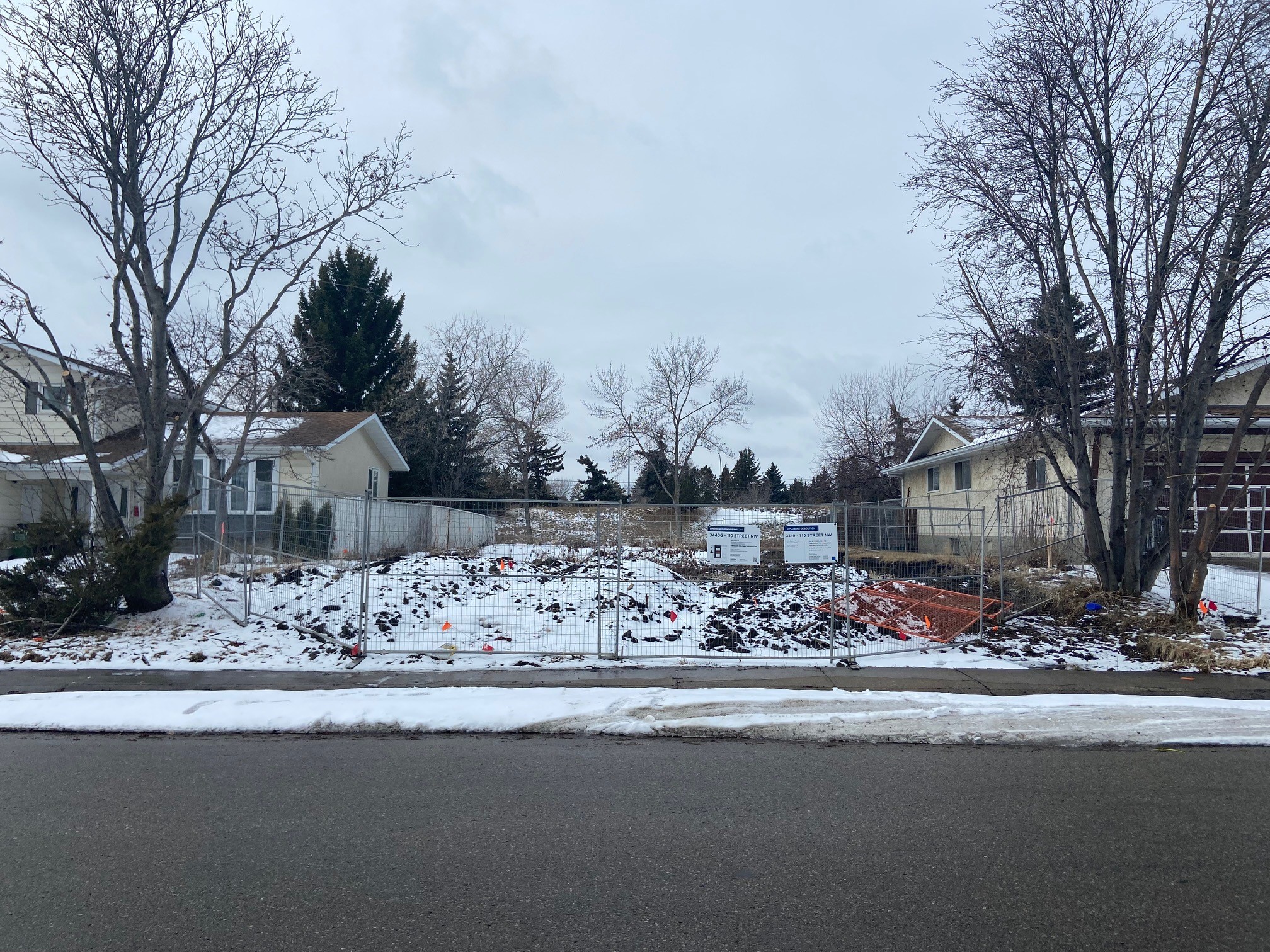
The homeowners of Duggan are currently patting themselves on the back for "protecting" their neighborhood. They are banding together to sign restrictive covenants—legal handcuffs designed to block skin-and-bones infill housing. They think they are preserving a way of life. They think they are protecting their property values.
They are doing the exact opposite.
By hard-coding 1970s urban planning into their land titles, these residents aren't saving their neighborhood; they are embalming it. They are creating a museum of mediocrity that the market will eventually price at zero. In their quest to keep out the "wrong" kind of density, they are ensuring that the only people who will ever want to buy their homes are other people who fear the future.
That is not a real estate strategy. It is a suicide pact.
The Myth of the "Character" Preservation
The core argument in the Duggan narrative—and dozens of similar neighborhoods across North America—is that infill destroys "character." Let's be honest about what "character" means in this context. It usually means a crumbling bungalow on a lot large enough to host a small music festival, surrounded by neighbors who haven't seen a baby stroller on their sidewalk since the Reagan administration.
When you use a restrictive covenant to prevent a lot from being split or a duplex from being built, you aren't preserving character. You are enforcing stagnation.
Real neighborhoods are living organisms. They breathe. They evolve. They densify as the city around them grows. When you stop that process, the neighborhood doesn't stay "charming." It gets old, it gets expensive to maintain, and it loses the very amenities—schools, local shops, transit—that made it desirable in the first place.
If a school in your neighborhood closes because there aren't enough children, your property value doesn't go up because you saved a "view." It goes down because you live in a demographic desert.
The Legal Illusion of Control
Restrictive covenants are being sold to these homeowners as a "silver bullet" against city zoning changes. Proponents claim that because these are private contracts between neighbors, the city can't touch them.
Technically, they are right—for now. But they are ignoring the massive legal and political shifts occurring globally. Courts and provincial governments are increasingly viewing these covenants as "contrary to public policy." In an era where housing affordability is the single most explosive political issue, do you really believe a judge will uphold a 50-year-old document that prevents three families from living where one currently resides?
Ask any seasoned real estate litigator about the "doctrine of changed circumstances." If the entire city around Duggan moves toward high-density transit-oriented development, a restrictive covenant that demands single-family detached homes becomes an absurdity. It becomes a cloud on the title that makes the property harder to sell, harder to finance, and harder to insure.
You aren't "taking back control." You are creating a legal mess that your heirs will have to pay thousands of dollars to litigate away in twenty years.
The Economic Reality of Scarcity vs. Utility
Let's look at the math. The "lazy consensus" says that more houses on a block lower the value of existing houses.
I have spent fifteen years analyzing land use patterns, and the data suggests the opposite. The value of a piece of land is tied to its "highest and best use."
If your land is zoned for a single-family home and you legally forbid it from being anything else, its value is capped by what one family can afford to pay for that specific house. However, if that same land can host a fourplex, its value is now tied to the potential rental income or resale value of four units.
By signing a restrictive covenant, you are effectively telling the market: "I want my land to be less useful."
Imagine a farmer signing a legal document saying his land can only ever grow wheat, even if the world starts paying ten times more for corn. That is what Duggan homeowners are doing. They are voluntarily devaluing their greatest asset to satisfy a temporary aesthetic preference.
The Gentrification Trap
The irony is that these residents claim they are fighting "developers." In reality, they are the developer's best friend.
When you restrict supply in a desirable area, you don't stop people from wanting to live there. You just ensure that only the ultra-wealthy can afford the few remaining houses. This accelerates gentrification. It turns your neighborhood into an enclave for the elite, which sounds great until you realize your local coffee shop closed because no one who works there can afford to live within a thirty-mile radius.
The Social Cost of Exclusionary Walls
We need to talk about the "People Also Ask" obsession with "neighborhood harmony." People ask: "How do we keep our community feel?"
The answer isn't a legal barrier. It’s people.
A neighborhood with infill has life. It has young families who can afford a $500,000 half-duplex but could never afford a $900,000 bungalow on a double lot. It has seniors who want to downsize into a modern garden suite on their own property rather than being shoved into a sterile "assisted living" facility across town.
By blocking infill, the Duggan group is effectively saying to their own children: "You aren't welcome here. Go find a house in a suburb two hours away."
I have seen this play out in Vancouver, in San Francisco, and in Toronto. The neighborhoods that "won" the fight against density are now hollowed out. They are beautiful, quiet, and completely dead. The "community feel" they fought for died the moment they prioritized the shape of their roofs over the diversity of their residents.
The "Privacy" Fallacy
"But what about my privacy? What about the shadows?"
This is the most common complaint in the anti-infill playbook. It is also the most selfish. Living in a city is a trade-off. You get the infrastructure, the hospitals, the jobs, and the culture. In exchange, you lose the right to pretend you live on a 40-acre ranch in the middle of nowhere.
Modern architectural design can solve for privacy. Clerestory windows, strategic landscaping, and smart orientation mean you can have density without staring into your neighbor’s kitchen. But the Duggan crowd doesn't want solutions; they want a time machine.
The Hidden Risk: Infrastructure Collapse
Single-family neighborhoods are a net drain on city coffers. The property taxes collected from a sprawling block of bungalows rarely cover the long-term maintenance of the pipes, roads, and electrical grids serving them.
When you block density, you are freezing the tax base while the cost of infrastructure continues to climb. Eventually, the city has two choices:
- Jack up your property taxes to unsustainable levels.
- Let your services rot.
The "peace and quiet" you bought with your restrictive covenant will feel very different when the potholes aren't being filled and the water mains are bursting every winter because the city can't afford to upgrade them for a stagnant population.
Stop Fighting the Wrong War
If you actually care about your neighborhood, stop trying to turn it into a gated community without the gates.
Instead of spending thousands on legal fees for restrictive covenants, homeowners should be demanding better infill. Fight for better materials. Fight for better landscaping requirements. Fight for architectural standards that don't look like "shoeboxes."
That is how you protect value. You lean into the change and guide it toward quality. You don't try to stop the tide with a piece of paper signed by twenty-five angry neighbors.
A Thought Experiment: The 2046 Appraisal
Imagine it is twenty years from today. You are trying to sell your home.
The buyer is a young professional couple. They want a smart home, high-speed fiber, and walkability to a nearby light rail station. They see your "Restrictive Covenant" attached to the title.
They don't see "protection." They see a massive liability. They see a home that they can't renovate effectively, a lot they can't utilize to its full potential, and a legal headache that involves thirty other neighbors who might sue them if they try to build a modern garage suite for their aging parents.
They walk away. They buy the modern infill three blocks over that has the flexibility to adapt to the 2040s.
Your "victory" in 2024 just cost you $300,000 in equity.
The Brutal Truth
The "Duggan approach" is a manifestation of fear, not a strategy for growth. It is the last gasp of a suburban model that is fiscally and socially bankrupt.
If you want to live in a place that never changes, move to a cemetery. If you want to live in a city, accept that your neighbors might live in a house that looks different than yours. Accept that density is the only way to keep your city affordable, your services functioning, and your property relevant.
Tear up the covenants. Open the gates. Let the neighborhood grow, or watch it wither while you're still living in it.
Your "restrictive" covenant is aptly named—it restricts your wealth, your community, and your future.
Stop being your own worst enemy.