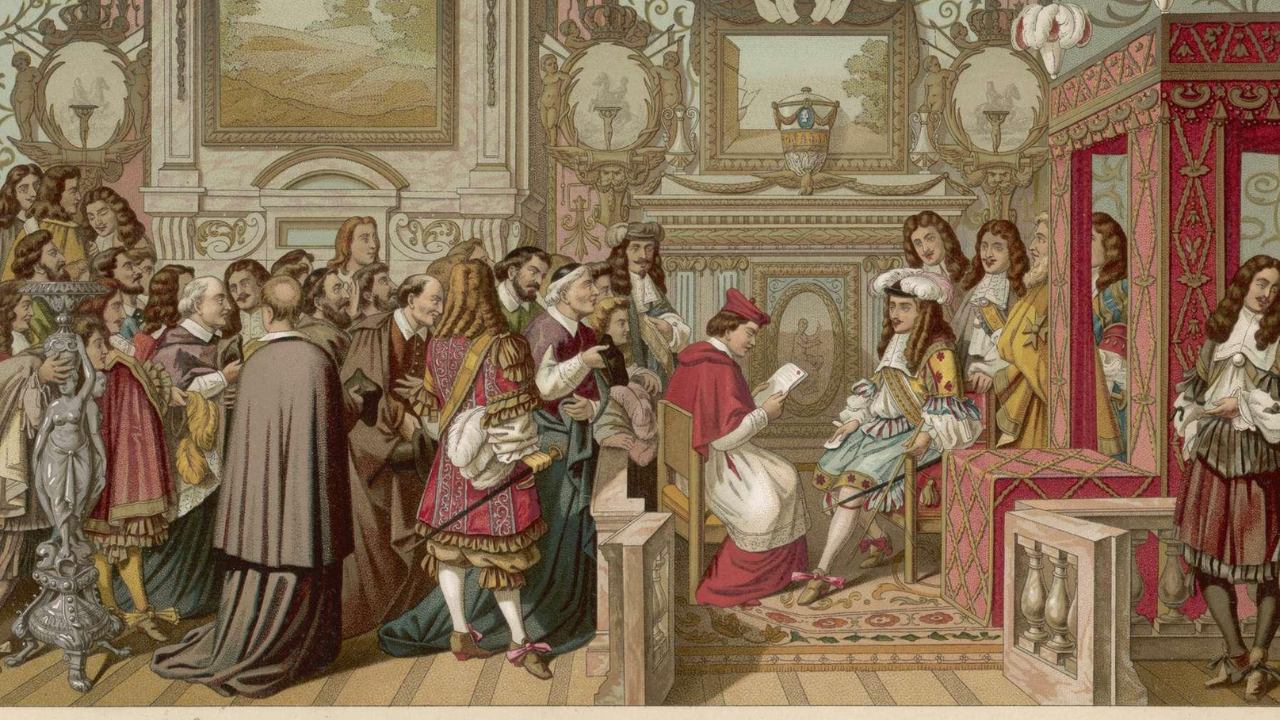
The Affair of the Poisons was not a mere string of murders but a systemic collapse of the French moral order. At its peak, the paranoia was so thick that Louis XIV, the most powerful man in Europe, feared his own mistress was slipping belladonna into his wine. This was an era where the boundary between chemistry and sorcery did not exist, and the quest for social mobility often ended in a vial of "inheritance powder."
The crisis began as a police investigation into a series of unexplained deaths among the Parisian elite and spiraled into a sprawling conspiracy involving black masses, child sacrifice, and a network of fortune-tellers who held the secrets of the court. It revealed a terrifying truth. Under the gold leaf of Versailles, the aristocracy was cannibalizing itself. Don't miss our recent post on this related article.
The Chemistry of Ambition
In the 1670s, Paris was the center of the world, but it was also a city of shadows. The nobility lived in a state of permanent, expensive competition. To lose favor with the King was social death; to run out of money was literal ruin. When traditional means of advancement failed, the desperate turned to the devineresses—midwives, fortune-tellers, and alchemists who operated in the slums of the Rue Saint-Denis.
These women sold more than just horoscopes. They sold "success" in liquid form. The most famous, Catherine Monvoisin, known as La Voisin, ran a lucrative business that catered to the highest levels of the French government. To read more about the background of this, The Washington Post provides an excellent breakdown.
The primary weapon of choice was arsenic. It was tasteless, odorless, and mimicked the symptoms of common ailments like cholera or gastric fever. In a world without forensics, a well-timed dose was indistinguishable from a stroke of bad luck. The "inheritance powder" became the unofficial tool of the younger sons and neglected wives of France.
The Execution that Ignited the Fire
The spark that blew the lid off this underground market was the trial of the Marquise de Brinvilliers. She was a beautiful, charismatic noblewoman who, with her lover, poisoned her father and two brothers to secure the family estate.
Her trial in 1676 was a sensation. It wasn't just the brutality of her crimes that shocked the public, but the casual nature of her methods. She had experimented on patients in hospitals to perfect her dosages. When she was finally beheaded and burned, the execution didn't bring closure. It brought panic. The public realized that if a Marquise could be a serial killer, anyone could be.
The King reacted by appointing Gabriel Nicolas de la Reynie, the first Lieutenant General of Police, to clean up the capital. La Reynie was a man of cold logic and tireless work ethic. He established the Chambre Ardente, or Burning Court, an extraordinary tribunal designed to bypass the standard legal delays and root out the "poisoners" by any means necessary.
The Web of La Voisin
La Reynie’s investigation soon moved from the back alleys to the drawing rooms. He arrested Marie Bosse, a fortune-teller who had bragged at a party about the number of "disposable" husbands she had helped eliminate. Her confession led directly to La Voisin.
La Voisin’s operation was a dark mirror of the Versailles court. She held court in her garden, where she received Duchesses and Princesses. She provided aphrodisiacs to win the King’s love and poisons to remove rivals. But as the interrogations grew more intense—often involving the "question," a polite term for state-sponsored torture—the names being screamed out became more dangerous.
The investigators found evidence of the Black Mass. These were perversions of religious rituals intended to grant the petitioner power over the King’s heart or the death of an enemy. It was alleged that infants were sacrificed to seal these pacts. While some of these claims likely grew out of the hysteria of the torture chamber, the sheer volume of testimony suggests a widespread occult subculture that the crown had completely failed to monitor.
The Mistress in the Crosshairs
The scandal reached its breaking point when La Voisin’s daughter implicated Françoise-Athénaïs de Rochechouart, Marquise de Montespan. Montespan was the King’s official mistress, the most influential woman in France, and the mother of several of his children.
The allegations were devastating. Witnesses claimed she had participated in rituals to maintain the King's affection as she aged and younger women began to catch his eye. The implication was clear. The King’s own bed was tainted.
Louis XIV was a man obsessed with his image as the "Sun King," the divinely ordained center of the universe. To acknowledge that his mistress was a regular client of a murderous witch would destroy the myth of his absolute control. He faced a choice between justice and the survival of the monarchy’s reputation.
He chose the monarchy.
The Great Cover Up
The King ordered the Chambre Ardente to stop taking testimony regarding Montespan. He seized the transcripts and suppressed the evidence. While La Voisin and dozens of others were burned at the stake, the high-ranking nobles often escaped with a quiet exile or a brief stay in a comfortable prison.
The records of the interrogations were eventually burned by the King himself in 1709, though La Reynie had kept secret notes that survived. This intervention created a lasting wound in the French legal system. It proved that in the eyes of the Sun King, there were two types of law: one for the people, and one for those close to the sun.
The Affair of the Poisons changed how France was governed. It led to the first strict regulations on the sale of toxic substances. Pharmacists were required to keep a "poison book" where buyers had to sign their names—a practice that remains a cornerstone of pharmaceutical law today.
The Legacy of the Glass Vial
We often look back at the 17th century as a time of rigid etiquette and flowing wigs, but the Affair of the Poisons reminds us it was an era of profound insecurity. The "darkness" the public believed in wasn't just a superstition; it was a rational response to a society where power was concentrated in the hands of a few and held by a thread.
The scandal ended not because the poisoners were gone, but because the King could no longer afford to look at what was in the cup. He realized that a nation believing its leaders are murderers is a nation that eventually stops believing in the Divine Right of Kings.
If you find yourself in the halls of Versailles today, the mirrors are bright and the gold is polished. But the history of the place is written in the "inheritance powder" that once sat in the pockets of the courtiers. The real poison wasn't the arsenic. It was the desperate, grinding need for status that made the arsenic necessary.
The shadow of the Chambre Ardente still looms over the history of French justice, a reminder that transparency is the only real antidote to a culture of fear. When the state begins to burn its records to protect its image, the rot has already reached the heart.
Check the labels on your medicine. The regulations that protect you from a stranger’s malice were born in the smoke of La Voisin’s pyre.