The radar screens in the command bunkers outside Moscow do not blink with panic. They pulse with a steady, metronomic rhythm that has become the terrible heartbeat of a continent.
It was a Sunday. Across the vast, flat expanse of the Russian Federation, families sat down to late-afternoon tea, the television murmuring softly in the background about the changing colors of the autumn foliage. Children chased each other through dacha gardens, their laughter carrying over the crisp air. Thousands of miles away, in workshops humming with fluorescent light and the smell of hot solder, programmers had just pressed enter.
Then came the numbers. Two hundred and forty-five.
That is how many Ukrainian drones the Russian Ministry of Defense claimed to have intercepted in a single day. Two hundred and forty-five mechanical birds of prey, carrying explosives, programmed to navigate terrain contours, slip past electronic jamming, and strike deep behind the front lines.
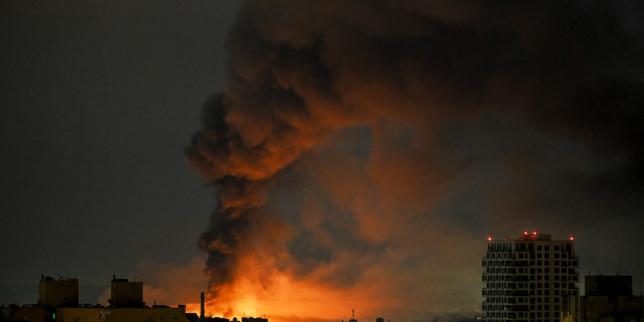
To read that figure in a morning briefing is to skim over an abstraction. It is a statistic that glides off the mind like rain on a windowpane. But behind that number is a sensory reality that defies simple accounting. Imagine standing in a quiet provincial field in the Voronezh region. The air is still. A faint smell of woodsmoke hangs in the distance. Suddenly, the sky tears open with a sound like ripping canvas, amplified a thousand times over. It is the high-pitched, angry buzz of a lawnmower engine from hell, descending at terminal velocity.
Seconds later, the concussive thump of an air defense missile meeting its target rattles the teeth in your skull. Glass shatters in a nearby kitchen. Car alarms begin to wail in unison across the neighborhood. A plume of black, greasy smoke blooms against the porcelain-blue sky, swallowing the clouds.
This is the geometry of modern attrition.
For months, the narrative of the war was dominated by mud, trenches, and artillery duels that ground ancient earth into powder. But the battlefield has mutated. It has grown wings. What we are witnessing is the democratization of long-range destruction, where a device assembled from commercially available drone parts and guided by satellite coordinates can cross international borders to deliver a message of kinetic retaliation.
Consider what happens next in the calculus of war.
Every time a swarm of this magnitude lifts off, an invisible chess match unfolds in the electromagnetic spectrum. Radar operators strain against the static. GPS spoofers broadcast false coordinates to trick incoming systems into tumbling harmlessly into forests or open fields. Air defense batteries expend million-dollar interceptor missiles on machines that cost a fraction of a luxury car to build.
This is the asymmetry that haunts military planners on both sides. You cannot win a war of economics when the defender must always spend more to destroy the attacker's weapon than the attacker spent to build it. Yet, you also cannot simply watch the sky fall.
In the towns dotting the Briansk and Kursk oblasts, the rhythm of daily life has been warped by the constant threat humming overhead. People check weather apps not to see if it will rain, but to gauge wind speeds—knowing that calmer winds make it easier for low-flying unmanned aircraft to maintain stability. Curtains are drawn earlier. Basements are cleared of old jars and winter coats to make room makeshift shelters. A strange, exhausted fatalism settles over the population. You cannot cower forever. Life demands to be lived, bread must be baked, and children must go to school, even when the ceiling of the world feels fragile enough to crack at any second.
The Russian military insists that the interception rate on this particular Sunday was absolute, that every single one of the 245 mechanical intruders was swatted from the air before it could kiss the earth in fire. Perhaps they were. In the fog of war, numbers are often the first casualty, weaponized to project invulnerability or to justify escalating demands for resources.
Yet, whether the debris fell harmlessly into empty fields or found its intended targets of asphalt, steel, and fuel depots, the psychological toll remains unchanged. The war is no longer a distant abstraction happening on a grainy map seen on a smartphone screen. It has migrated. It arrives unannounced through the chimney pots and over the treelines.
We have entered an era where distance no longer equals safety. The oceans of air that separate the capitals from the trenches have been bridged by silicon and lithium-ion batteries. Every Sunday can now bring a new storm, and every quiet afternoon can be shattered by the sudden, deafening realization that the war has found its way home.
A single shard of aluminum, stamped with a serial number in a language thousands of miles away, lies half-buried in the damp soil of a cabbage patch, catching the fading light of dusk.