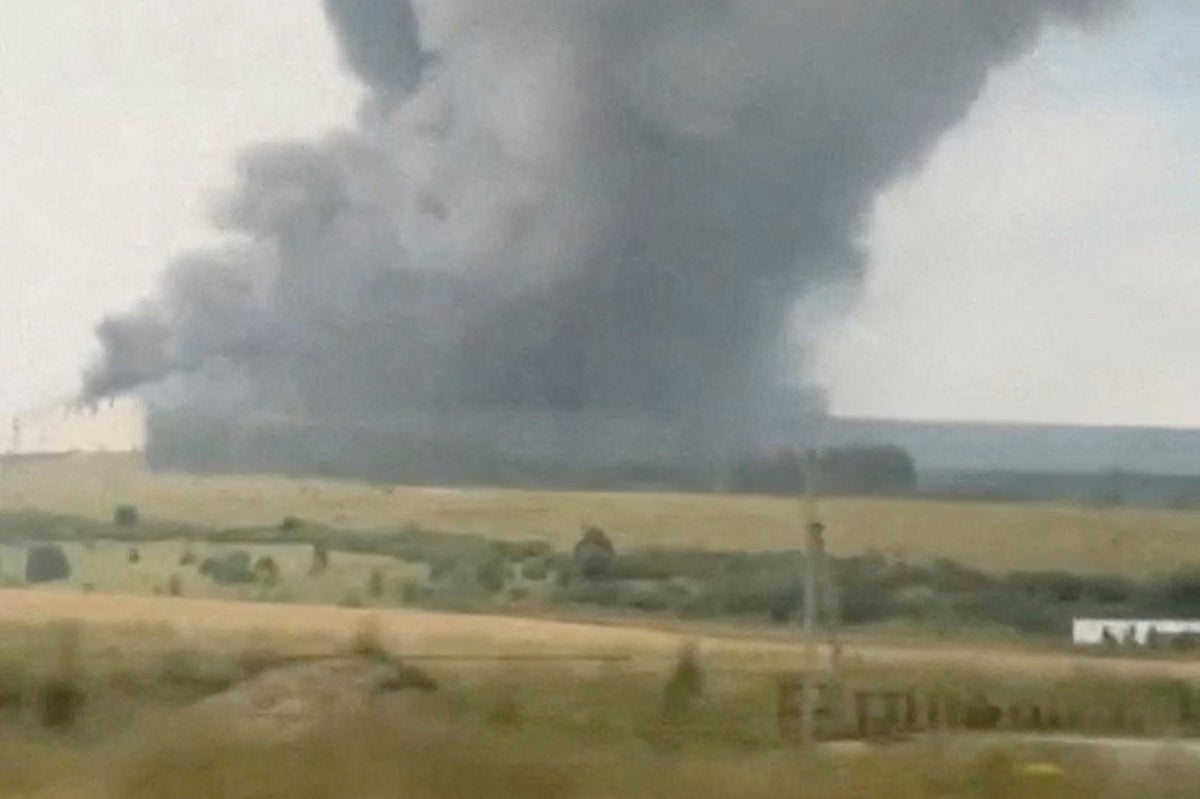
Modern military strategy frequently treats logistics and civilian retail economies as separate operational domains. This dichotomy fails when state-directed industrial output relies on commercial fulfillment networks to ingest, stage, and distribute dual-use hardware. Recent long-range aerial campaigns executed by Ukrainian forces against commercial distribution hubs inside the Russian Federation demonstrate a structural shift in targeting methodology. By systematically striking facilities belonging to the dominant domestic e-commerce enterprise, Wildberries, Kyiv has bypassed traditional military supply nodes to target the commercial backbone sustaining the adversary's aggregate mobilization capacity.
Evaluating this shift requires analyzing the mechanics of asymmetric economic disruption, the vulnerability profiles of decentralized warehousing networks, and the secondary feedback loops affecting financial institutions and consumer confidence. You might also find this similar coverage useful: Why Donald Trump Just Hit Pause on Iran While Monetizing His Feed.
The Structural Vulnerability of Commercial Fulfillment Networks
Mass-market online retail platforms operate on principles of high-velocity inventory turnover, spatial centralization, and minimal capital redundancy. Enterprises like Wildberries process a significant majority of consumer and light industrial orders in Russia, relying on sprawling peripheral distribution centers situated near major transport corridors. These facilities possess specific architectural vulnerabilities that differentiate them from hardened military depots:
- Footprint Density: Massive single-story structures spanning hundreds of thousands of square meters maximize storage efficiency but create catastrophic fire risks when structurally compromised by kinetic impacts.
- Just-In-Time Dependencies: Inventory management systems minimize local stockholding by maintaining continuous transit loops between regional hubs. Eliminating a primary fulfillment center severs the distribution pipeline for hundreds of smaller independent merchants.
- Dual-Use Integration: Open-market vendor verification protocols permit third-party merchants to list items ranging from consumer electronics to radio equipment, optics, and tactical garments. This integration creates an administrative blind spot where military procurement officers can acquire commercial-off-the-shelf components without triggering state defense contracting protocols.
When long-range unmanned aerial vehicles target these logistics nodes, the kinetic payload serves a dual purpose. Beyond destroying physical inventory, each strike introduces friction into the broader domestic supply chain, forcing operators to absorb escalating replacement costs, insurance premiums, and systemic delivery delays. As extensively documented in recent coverage by The Washington Post, the effects are worth noting.
The Cost Function of Asymmetric Aerial Interdiction
Traditional strategic bombing theory measures success by the permanent neutralization of heavy manufacturing plants. In a protracted war of attrition, however, disrupting the distribution layer yields a higher marginal return on investment than targeting heavy fabrication sites.
The economic equation governing these long-range drone strikes involves a stark asymmetry between the capital expenditure of the offensive platform and the asset value of the destroyed infrastructure. Low-cost autonomous airframes capable of traversing hundreds of kilometers force the defender to expend high-value interceptor missiles or absorb structural asset losses. When a fulfillment hub catches fire, the losses extend beyond the burned structure:
- Inventory Write-Offs: Stored goods owned by thousands of independent suppliers are incinerated, instantly destroying working capital for the small-business sector that forms the base of the domestic consumer economy.
- Re-routing Overhead: Remaining operational nodes must absorb displaced volume, creating localized processing bottlenecks, vehicle queueing delays, and increased fuel expenditures for last-mile delivery fleets.
- Capital Flight and Insurance Retraction: As logistics assets face systemic destruction, commercial underwriters either withdraw coverage or reprice risk, raising operational expenditure across the entire retail sector.
Major financial institutions exposed to the retail sector face compounding stress. When merchants default on working capital loans due to destroyed inventory, commercial lenders must elevate loan-loss provisions, transferring economic pressure from the consumer marketplace into the banking system.
Strategic Implications for Total Resource Mobilization
The integration of commercial retail infrastructure into active targeting taxonomies reflects the reality of modern total war. State defense ministries no longer rely exclusively on dedicated military-industrial complexes. Instead, they exploit commercial supply chains to procure microelectronics, power sources, navigation modules, and general logistics support.
By systematically dismantling roughly ten percent of primary storage capacity across multiple regional hubs over a compressed timeframe, the campaign alters consumer psychology. The conflict shifts from an abstract geopolitical event managed by specialized state agencies into a tangible domestic disruption affecting everyday acquisition of basic goods. Regional governors and corporate leadership are forced to request state-level financial stabilization packages and seek alternative cross-border logistics routes in neighboring states, revealing structural friction within the domestic economy that conventional economic sanctions alone failed to generate with equivalent velocity.
Ukrainian Drones Hit Russian Online Giant Retailer Wildberries
This video provides visual context on the scale of the drone strikes targeting major commercial logistics hubs inside Russia.