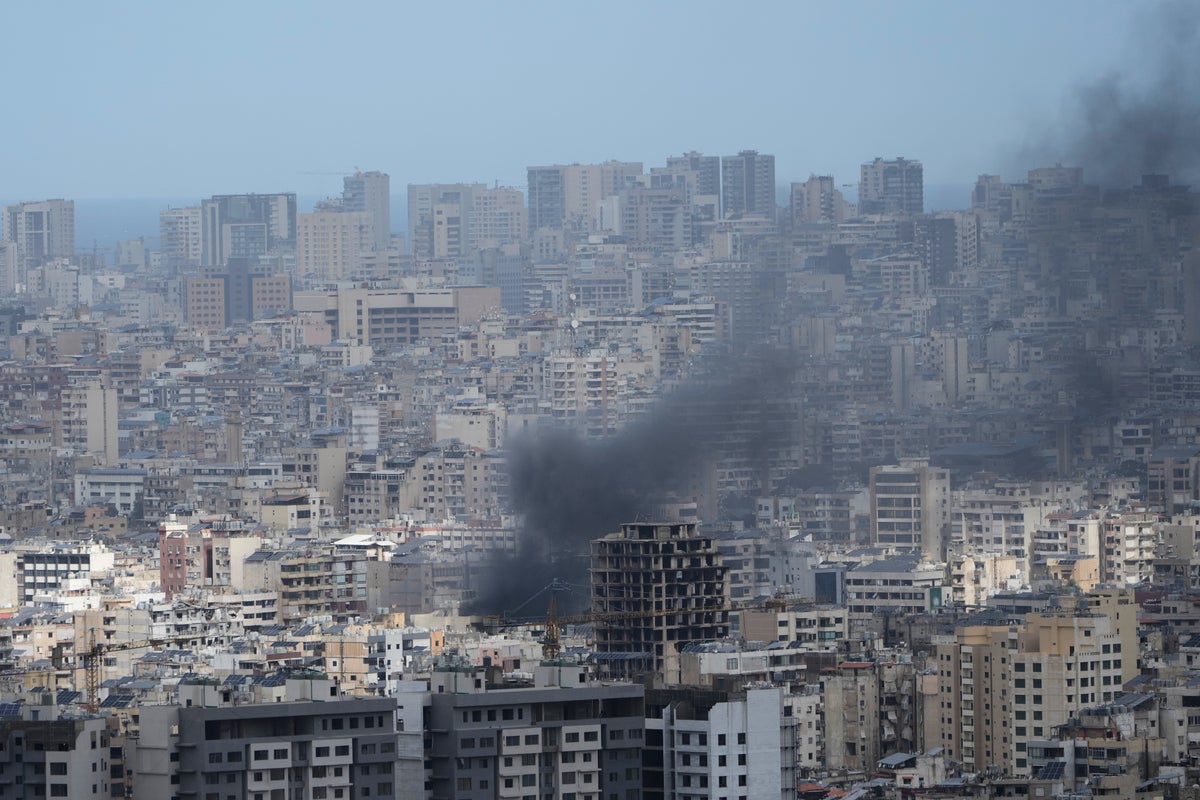
The proposal to seize or neutralize Iran’s Kharg Island oil terminal is no longer a fringe theory discussed in basement war rooms. It has moved into the center of a high-stakes geopolitical poker game where the stakes are the entire global energy supply. If the United States or its proxies move against this single point of failure in the Persian Gulf, they aren't just attacking an Iranian asset. They are pulling the pin on a grenade tucked inside the global economy.
Kharg Island handles roughly 90% of Iran’s crude exports. It is a literal rock in the sea, but it functions as the jugular vein of the Islamic Republic’s economy. The logic from the hawks is simple: cut the vein, and the regime bleeds out. However, the reality of global energy markets is far more interconnected and fragile than a simple military objective. A strike on Kharg doesn't happen in a vacuum. It triggers a cascade of insurance hikes, shipping reroutes, and retaliatory strikes that could see the price of a barrel of oil double overnight.
The Strategic Fragility of the Persian Gulf
To understand why Kharg Island is such a dangerous target, you have to look at the geography. It sits about 25 kilometers off the coast of Iran. It is a fortified industrial fortress, capable of loading massive tankers simultaneously. For decades, it has been the primary target of every Iranian adversary, yet it remains standing because its destruction implies a "point of no return" for the region.
When policy advisors suggest seizing or blockading this terminal, they often underestimate the Iranian "Theory of Victory." Tehran knows it cannot win a conventional naval war against a superpower. Instead, they have perfected the art of asymmetric escalation. If Iran cannot export its oil, the standing doctrine suggests that no one in the region will export theirs. This is not a hollow threat. Between the Strait of Hormuz and the Bab el-Mandeb, the world’s most vital energy transit points are within range of Iranian missiles, drones, and mines.
The Myth of Controlled Escalation
Proponents of a Kharg Island seizure argue that the move would force Iran into a weaker position during nuclear or regional stability negotiations. They see it as the ultimate "buy-low" opportunity for diplomatic leverage. This assumes the Iranian leadership responds rationally to economic strangulation. History suggests the opposite. When backed into a corner, the Revolutionary Guard tends to lash out to prove that the cost of containment is higher than the West is willing to pay.
A disruption at Kharg would immediately trigger the "War of the Tankers" 2.0. In the 1980s, this meant hundreds of merchant vessels were hit by mines and missiles. Today, with the advent of precision-guided loitering munitions, the damage would be surgical and devastating. Insurance markets would not wait for a full-scale war to react. The moment a move on Kharg is confirmed, Lloyd’s of London and other major insurers would declare the entire Persian Gulf a "no-go" zone for commercial shipping.
The Invisible Players in the Kharg Crisis
While the headlines focus on the friction between Washington and Tehran, the real players sitting in the shadows are the Asian refineries. China is the primary customer for Iranian "bonded" crude. Beijing has built an entire parallel financial system to facilitate these transactions, bypassing the SWIFT network and US dollar dominance.
If the US seizes Kharg or prevents exports, it is effectively declaring an economic blockade on Chinese energy interests. This transforms a regional Middle Eastern conflict into a direct confrontation between the world’s two largest economies. China will not sit idly by while its energy security is dictated by an American naval blockade in the Gulf. They have spent the last decade building strategic reserves and securing alternative pipelines through Central Asia, but a total loss of Iranian barrels would still create a massive deficit in their industrial sectors.
The Role of Shadow Fleets
We also have to account for the "Ghost Fleet"—the hundreds of aging tankers that operate without standard insurance or Western oversight. These ships are the ones currently docking at Kharg Island. They turn off their transponders, engage in ship-to-ship transfers in the middle of the ocean, and keep the Iranian economy on life support.
Seizing the terminal means physical occupation. It means putting boots on the ground or ships in the harbor to prevent these ghost tankers from docking. This isn't just a "sanction." It is an act of war. The legal hurdles alone are a nightmare for any administration. Under what international law does a nation seize a sovereign port during "peace" time? The answer is none. It would be a unilateral move that would alienate even the closest European allies, who are already weary of energy price volatility.
Market Realities vs Political Rhetoric
Wall Street often discounts political rhetoric until the first missile flies. But the bond markets and oil futures are starting to bake in a "conflict premium." If Kharg Island goes offline, we are looking at a loss of approximately 1.5 to 2 million barrels per day. On paper, OPEC+ has the spare capacity to fill that gap. Saudi Arabia and the UAE could, in theory, turn on the taps.
But will they?
The relationship between the Gulf monarchies and Washington has shifted. Riyadh is no longer interested in being the world’s "central bank of oil" just to bail out American foreign policy decisions. They have their own domestic diversification goals, known as Vision 2030, which require oil to stay at a certain price point. If they see the US taking reckless actions that put their own infrastructure—like the Abqaiq processing plant—at risk of Iranian retaliation, they might choose to stay neutral or even limit production to protect their assets.
The Logistics of Seizure
Let's look at the mechanics of "seizing" a terminal. It is not like taking a hill in a forest. Kharg is a complex industrial grid. You cannot simply pull a plug. It requires technical expertise to operate the pumping stations, the storage tanks, and the loading arms. If the Iranian staff sabotages the facility on their way out, the "prize" becomes a flaming environmental disaster that could take years to remediate.
The environmental impact of a major spill at Kharg would be catastrophic for the entire Gulf ecosystem. Desalination plants in Kuwait, Saudi Arabia, and the UAE—which provide the vast majority of the region's drinking water—would be forced to shut down. A military move on Kharg could inadvertently trigger a massive humanitarian water crisis across the Arabian Peninsula.
The Inflationary Feedback Loop
Central banks around the world are currently fighting a desperate battle against inflation. Energy is the primary driver of the cost of living. A spike in oil prices caused by a Kharg Island operation would act as a massive tax on the global consumer. It would negate any progress made on interest rate cuts and likely push the global economy into a synchronized recession.
For a US administration, the political cost is immediate. Gas prices at the pump are the most visible indicator of a President’s performance, regardless of whether they actually control them. Initiating a conflict that guarantees $6 or $7 per gallon gasoline is a form of political suicide that few in the West truly have the stomach for, despite the tough talk in campaign speeches.
The Counter-Argument for Kinetic Action
There is a school of thought that suggests the Iranian regime is currently at its weakest point in forty years. Internal dissent, an aging leadership, and a failing currency have created a "now or never" window for those who want to see a total collapse of the current system. They argue that the short-term economic pain of a Kharg Island shutdown is a price worth paying to remove a primary sponsor of regional instability.
This perspective relies on the "knock-out blow" fallacy. Military history is littered with examples of "surgical strikes" that turned into decadelong quagmires. Removing Iran's ability to sell oil doesn't necessarily remove the regime; it might actually unify a fractured population against an external "imperialist" aggressor. It also ignores the fact that Iran has been practicing "resistance economics" for decades. They are experts at surviving on the margins.
The Technological Shift
We are also entering an era where satellite surveillance and AI-driven maritime tracking make it impossible to hide the movement of oil. If the US wanted to stop Kharg exports without a single shot being fired, the path would be through the secondary insurance markets and the bunkering hubs in places like Singapore and Fujairah.
By targeting the entities that provide fuel, food, and water to the ghost fleet, the West could effectively "quarantine" Kharg Island without the need for a physical seizure. This is a "slow-motion" blockade. It lacks the cinematic flair of a naval boarding party, but it carries a much lower risk of starting World War III. However, this requires years of patient diplomacy and enforcement, something that modern political cycles are not known for.
The Nuclear Wild Card
A move on Kharg Island could also trigger the ultimate Iranian escalation. If the regime feels its existential survival is at stake, the "threshold" for a nuclear breakout becomes much thinner. Currently, Iran maintains a "hedge" position, but a total economic blockade through Kharg could be the final nudge needed for the Supreme Leader to authorize a weaponization program.
This is the ultimate lose-lose scenario for the international community. A kinetic strike on Kharg leads to a nuclear-armed Iran, which in turn leads to a nuclear arms race across the Middle East. The logic of "seizing" a terminal starts to look very small when compared to the threat of a nuclear-armed Tehran.
The Energy Transition Factor
We also have to acknowledge that the world is in the midst of a slow but certain energy transition. In twenty years, the strategic importance of Kharg Island might be half of what it is today. Is it worth risking a global depression and a regional war for a "waning" asset?
The hawks will say yes, because the threat is "now." The realists will say no, because the cost is "forever." The middle ground is where the true policy resides—a strategy of containment that uses Kharg Island as a "faucet" that the West can slowly turn down through sanctions and diplomacy, rather than a "pipe" that must be smashed with a hammer.
The True Cost of War in the Gulf
Let's not forget the human cost of a naval conflict around Kharg. It is a dense, high-traffic zone for civilians and commerce. A mistake, a misunderstood radar blip, or a rogue drone strike could see a repeat of the USS Vincennes tragedy or worse. The risk of unintended escalation is at its absolute peak in the narrow waters between Kharg and the Iranian coast.
Seizing Kharg Island isn't a policy; it's a gamble. It assumes that the world can absorb the shock, that Iran will fold under pressure, and that the "aftermath" can be managed. History, and the current state of global markets, says otherwise. This is a game where the house—in this case, the global consumer—always loses in the end.
The question isn't whether the US can seize Kharg Island. It’s whether the world can afford the consequences if they do.