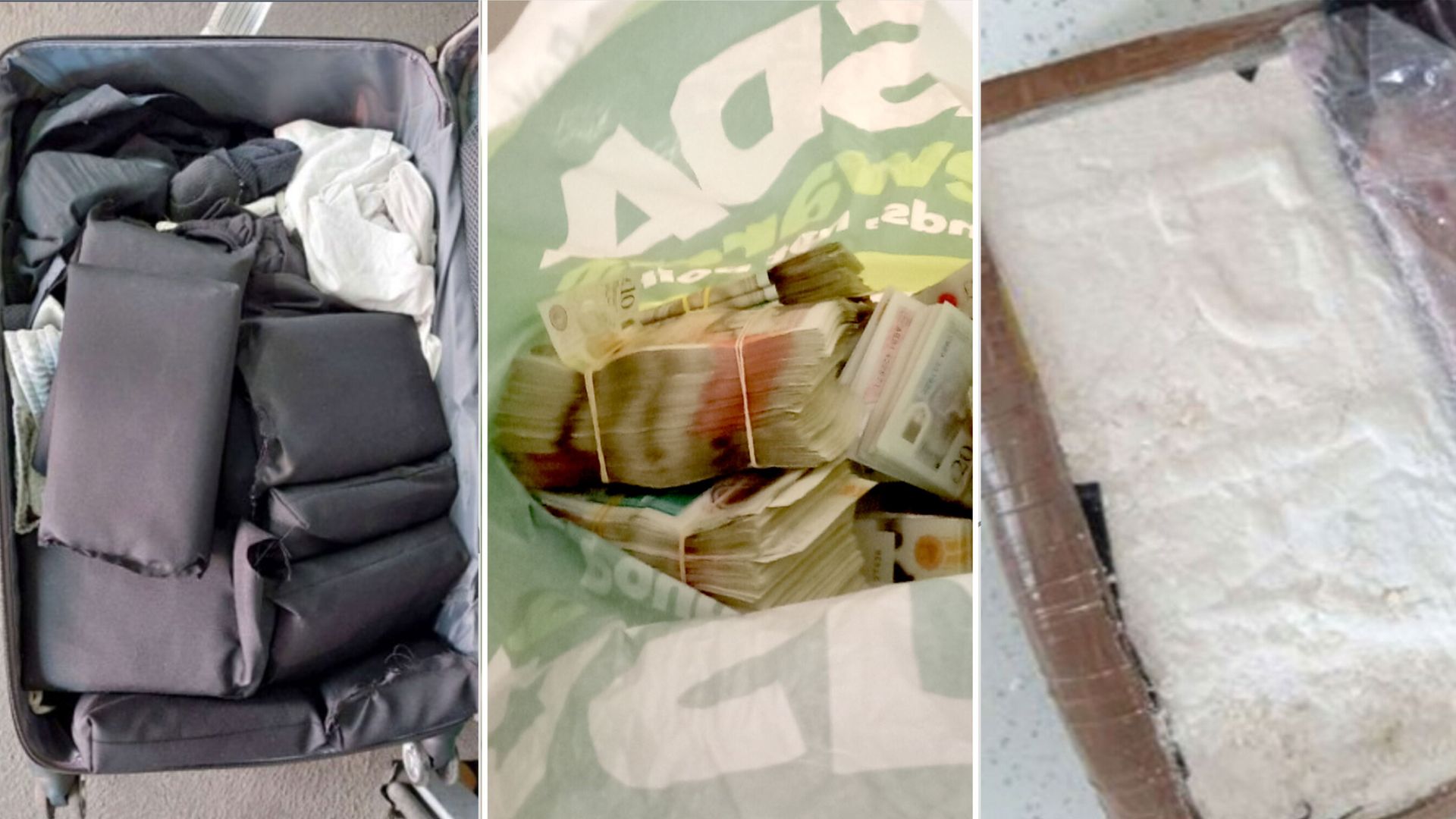
UK courts routinely hand down multi-year prison sentences to self-described holidaymakers caught smuggling cocaine disguised as coffee through major airports like Heathrow, Gatwick, and Manchester. While standard crime blotters treat these arrests as isolated tales of amateur greed, the operational reality tells a very different story. Transnational organized crime groups deliberately recruit ordinary travelers as disposable decoys, relying on outdated smuggling myths about coffee masking scents to move narcotics across borders at minimal financial risk to the cartel.
The mechanics of these busts follow a remarkably consistent pattern. Border Force officers intercept passengers arriving from high-risk transit hubs—often in South America, the Caribbean, or continental Europe—carrying commercially sealed bags of ground coffee or beans inside standard checked luggage. Behind the foil packaging and aromatic roast sits compressed blocks of high-purity cocaine. To the uninitiated courier, the disguise looks foolproof. To veteran customs investigators, it is an immediate red flag. If you found value in this post, you might want to check out: this related article.
The Persistence of the Coffee Myth
Smugglers have used coffee to mask contraband for decades, popularized by Hollywood films and urban legends suggesting that strong organic odors overwhelm canine detection units. The science behind canine olfaction disproves this entirely.
Dogs do not smell the way humans do. When a human walks into a kitchen, they smell a blended bowl of stew. When a trained detection dog sniffs a suitcase, it processes every individual volatile organic compound separately. A dog smells the roasted coffee beans, the plastic liner, the nylon luggage fabric, and the specific chemical signature of methyl benzoate—the volatile compound that gives illicit cocaine its distinct odor—all as distinct, unblended layers. For another perspective on this event, check out the latest update from Associated Press.
"Adding coffee to a package of cocaine does not hide the drugs from a detection dog; it simply gives the dog two things to smell instead of one."
Furthermore, modern airport security does not rely solely on canines. Checked baggage passes through multi-view X-ray scanners and computed tomography systems before it ever reaches the baggage carousel. Dense organic powders like ground coffee appear on X-ray monitors with specific atomic density profiles. When an operator sees uniform, rectangular bricks embedded inside loose granular material, the bag is instantly flagged for manual inspection. The coffee packaging itself often creates a visual anomaly, as heat-sealed aftermarket pouches rarely match the factory uniformity of legitimate retail brands.
Why Cartels Use "Holidaymakers" as Disposable Assets
If the coffee disguise fails so reliably, why do criminal networks keep funding tickets, hotels, and product for this exact method? The answer lies in basic supply-chain economics and risk mitigation.
Wholesale cocaine production in South America costs a fraction of its street value in the United Kingdom. By the time a kilogram of high-purity cocaine reaches London, Liverpool, or Glasgow, its wholesale price multiplies exponentially. For a major trafficking syndicate, losing ten or twenty kilograms at the border is merely an operational tax—a routine cost of doing business already priced into their margins.
The Economics of the Decoy
To protect their primary shipments—which move in multi-ton quantities hidden inside shipping containers, legitimate agricultural exports, or industrial machinery—cartels flood passenger terminals with low-level couriers.
- Low financial exposure: The syndicate pays for a cheap economy ticket, a few nights at an all-inclusive resort, and a modest cash advance. If the courier gets caught, the organization loses a negligible fraction of its weekly volume.
- Operational insulation: Recruited holidaymakers almost never know the identities of the organizers. Communication happens through encrypted messaging apps that self-delete, burner phones, or anonymous intermediaries met briefly at foreign hotels. When Border Force makes an arrest, the investigation hits a dead end at the airport terminal.
- Screening saturation: Sending multiple couriers on the same flight or across adjacent terminals forces customs officers to spend hours processing paperwork, conducting interviews, and logging evidence for small seizures. That administrative bottleneck diverts manpower away from larger, more sophisticated smuggling vectors.
The Anatomy of Recruitment
The profile of the modern drug mule has shifted dramatically over the past decade. Border Force data and court transcripts show that recruiters actively avoid individuals with prior criminal records or obvious signs of substance abuse, as those travelers trigger automatic alerts on passenger name record systems.
Instead, networks target individuals with clean passports, steady employment histories, and genuine financial pressure. Rising living costs, mounting debt, or sudden business failures make ordinary citizens vulnerable to offers that sound like low-risk side hustles. Recruiters frequently operate through social media platforms, local pubs, or extended social circles, framing the trip as an all-expenses-paid vacation with a few thousand pounds in spending money attached.
Once the traveler arrives at the destination, the dynamic changes. The "holiday" quickly turns into coercion. Handlers take possession of the courier's luggage, pack the concealed narcotics—often inside professionally sealed coffee bags, toiletries, or false-bottomed suitcases—and return the bags hours before departure. By the time the courier realizes the scale of the operation, backing out feels impossible, especially when handlers know the courier's home address and family details back in the UK.
What Happens Inside the Customs Channel
When a flight lands at a UK port of entry, Border Force targeting teams have already analyzed the passenger manifest. Automated systems cross-reference booking patterns, last-minute ticket purchases, payment methods, and historical travel routes long before the wheels touch the tarmac.
A passenger traveling alone on a short-haul or long-haul leisure route with minimal personal clothing and several heavy bags of coffee fits an established risk matrix. Upon entering the green "nothing to declare" channel, officers intercept the traveler for a routine baggage examination.
The Field Test and Arrest Protocol
The process moves rapidly once the luggage hits the inspection table:
- Physical inspection: Officers weigh the coffee bags and feel for rigid, unnatural blocks beneath the loose grounds.
- Presumptive testing: A small sample of the white powder is swabbed and exposed to a chemical reagent or scanned using a handheld Raman spectrometer, confirming the presence of cocaine within seconds.
- Cautionary arrest: The passenger is immediately arrested on suspicion of importing Class A controlled substances under the Customs and Excise Management Act 1979.
- NCA handover: For significant quantities, the National Crime Agency steps in to seize mobile phones, extract digital forensics, and trace financial transfers.
The Legal Reality Under UK Sentencing Guidelines
Many couriers assume that pleading ignorance—claiming they thought they were carrying counterfeit goods, cash, or simply doing a favor for a friend—will secure leniency in court. Under British law, that defense rarely succeeds.
The Sentencing Council for England and Wales enforces strict guidelines for the importation of Class A drugs. Courts measure culpability by the offender's role and harm by the weight of the seized narcotics. Even when a judge accepts that a defendant acted as a naive courier under financial duress, the starting point for multi-kilogram seizures remains severe.
| Seized Cocaine Weight | Typical Offender Role | Sentencing Starting Point |
|---|---|---|
| 1 kg to 5 kg | Lesser Role (Courier) | 6 to 8 years custody |
| 5 kg or more | Lesser Role (Courier) | 8 to 12 years custody |
| 5 kg or more | Significant Role | 12 to 16 years custody |
In cases where travelers carry ten or fifteen kilograms of cocaine packed inside coffee bags, sentences regularly exceed eight to ten years in prison, even for first-time offenders with clean records and dependent children. An early guilty plea reduces the sentence by a maximum of one-third, still leaving the defendant facing half a decade or more behind bars.
Why Standard News Coverage Misses the Bigger Picture
Local and national headlines love the irony of "holidaymakers" caught with cocaine in coffee packets. That framing sells clicks, yet it obscures the systemic mechanics driving the trade.
Focusing solely on the bungled disguise makes border enforcement look like a game of cat-and-mouse won by clever customs officers spotting bad packaging. In reality, these arrests represent the lowest, most expendable tier of a multi-billion-pound global logistics network. Every courier sentenced at Isleworth or Manchester Crown Court is immediately replaceable.
To understand the real scope of UK cocaine trafficking, investigators look past the arrivals hall and examine wholesale purity rates on British streets. Despite record seizures at airports and seaports, retail cocaine purity in the UK has remained consistently high over the last several years, while street prices have stayed remarkably stable. If border seizures were genuinely disrupting supply, wholesale prices would spike and purity would drop as dealers cut product to stretch inventory. Neither has happened.
The Investigative Blind Spots
Law enforcement agencies face structural limitations when dealing with passenger-terminal smuggling. Prosecuting a courier is straightforward: the physical evidence is in their suitcase, the chain of custody is airtight, and conviction rates exceed ninety percent.
Dismantling the upper tiers of the syndicate requires years of cross-border intelligence sharing, financial tracking, and undercover operations across multiple jurisdictions. Foreign law enforcement cooperation varies wildly depending on political stability and local corruption in transit countries. As a result, domestic police and border agencies often measure success through seizure totals and custodial sentences handed down to low-level mules, even while the financiers behind the shipments remain untouched abroad.
For the travelers sitting in prison cells after agreeing to carry a few bags of coffee through customs, the asymmetry is absolute. The syndicate writes off the lost product before the plane even lands, while the courier absorbs the entire legal and human cost of a smuggling tactic designed to fail.


