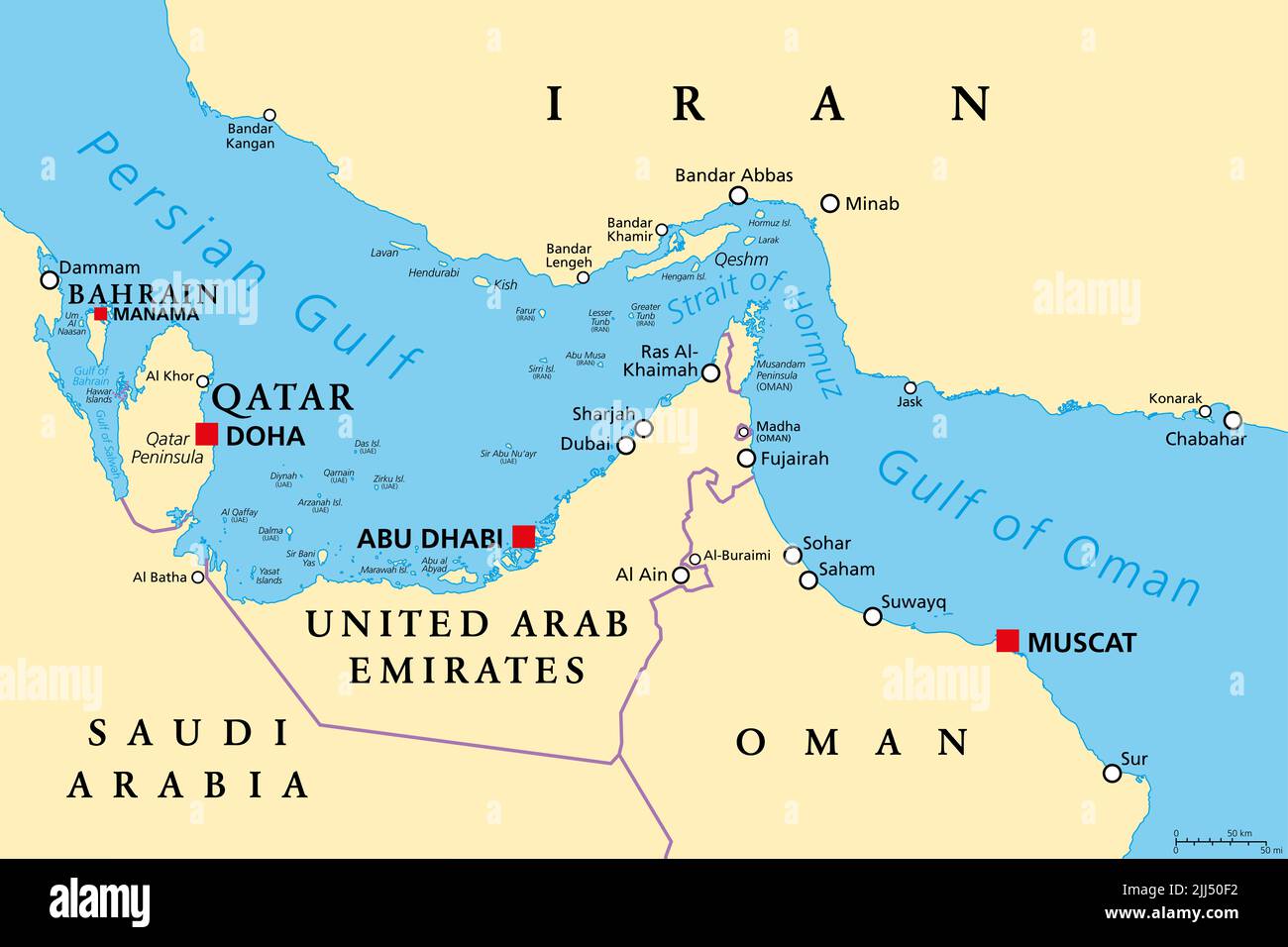
Control over maritime choke points dictates the operational limits of global energy logistics. Recent political declarations regarding the Strait of Hormuz highlight a fundamental friction point between unilateral power projections and sovereign maritime claims. Analyzing this standoff requires stripping away rhetorical posturing to examine the underlying economic variables, legal constraints, and military mechanics governing the Persian Gulf corridor.
The Economic Mechanics of the Choke Point
The strategic importance of the corridor stems from spatial concentration rather than absolute volume. Prior to the ongoing military engagements initiated in late February, approximately one-fifth of global petroleum and liquefied natural gas consumption transited this narrow passage. When access is restricted through naval blockades or localized skirmishes, the impact is immediately observable across international commodity markets.
The mechanism of disruption operates through two distinct channels:
- Physical throughput restriction: The absolute reduction in barrels per day successfully navigating the passage from extraction hubs in the Persian Gulf to open ocean markets.
- Risk premium inflation: The exponential escalation of hull insurance, crew hazard compensation, and security escort overhead for commercial vessels willing to transit a contested zone.
Even when physical blockades permit selective passage, the compounding of these financial variables forces persistent baseline inflation in international energy pricing. Imposing external governance, such as a proposed security tax or a cargo transit surcharge, internalizes these security costs directly onto importing nations, fundamentally altering trade economics for energy-dependent economies in Asia and Europe.
Legal Constraints and Territorial Declarations
Proposing to designate an international strait as a domestic territory encounters immediate barriers under the United Nations Convention on the Law of the Sea. International straits used for international navigation are governed by the legal regime of transit passage, which prevents littoral or third-party states from suspending or impeding the continuous and expeditious movement of commercial and military vessels.
A unilateral declaration seeking to reclassify the waterway as sovereign territory creates a systemic contradiction:
- Enforcement mechanics require continuous military dominance over both littoral coasts and subsurface domains, replacing legal frameworks with a permanent posture of enforcement.
- Countervailing sovereignty claims from regional states, such as Iran's insistence that the channel remains under its operational command, turn the waterway into a contested zone where legal titles hold zero operational value without overwhelming kinetic backing.
- Third-party intermediaries, including neighboring Gulf states engaging in separate bilateral transit frameworks, introduce diplomatic friction that complicates any centralized attempt at monopoly control.
Strategic Dependencies and Regional Fallout
The friction surrounding the waterway is symptomatic of a broader strategy designed to dismantle state-level economic capacity through targeted isolation. By enforcing a naval exclusion zone that restricts adversary merchant shipping while permitting allied access, the intervening power attempts to weaponize geography.
This strategy generates clear feedback loops across regional actors. When maritime pathways are constrained, secondary logistics hubs experience congestion, and regional neighbors face direct coercion regarding their diplomatic and transit alignments. The threat of secondary escalation against states attempting to negotiate independent transit arrangements demonstrates the high cost of maintaining a unilateral security umbrella. Rather than stabilizing the commercial corridor, prolonged enforcement transitions the waterway from a neutral global utility into a permanently managed asset requiring continuous, high-intensity resource allocation.
Full Speech: Trump says Strait of Hormuz will be declared U.S. Territory during New York event
This video provides primary source footage of the political announcements regarding the future status of the strategic maritime corridor.
http://googleusercontent.com/youtube_content/1