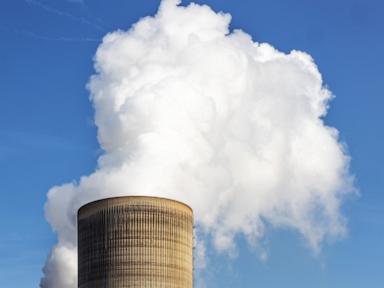
The media has established a lazy consensus on coal: Donald Trump calls it "beautiful and clean" because he thinks miners literally wash the rocks with soap, while environmental journalists counter with the absolute declaration that "there is no such thing as clean coal."
Both sides are failing a basic chemistry test.
The mainstream critique of coal focuses entirely on the smokestack, treating Carbon Capture and Sequestration (CCS) as an expensive, unworkable myth designed to prolong the life of a dying industry. Critics point out that only a couple of commercial coal-fired CCS plants are operating worldwide, such as the Boundary Dam project in Canada. They scream about the "energy penalty"—the fact that running a carbon capture system devours up to 30% of the electricity the plant generates. They declare the technology dead on arrival.
They are looking at the wrong machine.
The future of clean fossil energy was never going to be achieved by bolting a multi-billion-dollar chemical scrubbing unit onto a legacy 1970s pulverized coal boiler. That is the equivalent of taping a solar panel onto a horse-drawn carriage and calling it a hybrid. The true disruption of solid carbon energy bypasses combustion entirely.
The Combustion Delusion
To understand why the current debate is broken, you have to understand the thermal dynamics of traditional power generation. When you burn coal in the presence of ambient air, you are creating a massive, chaotic chemical mess. Ambient air is roughly 78% nitrogen. When coal burns in air, that nitrogen dilutes the flue gas, resulting in an exhaust stream where carbon dioxide ($\text{CO}_2$) is diluted to a concentration of just 10% to 15%.
Trying to pull $\text{CO}_2$ out of that massive, fast-moving volume of nitrogen is an engineering nightmare. It requires gigantic absorption columns, specialized chemical solvents like monoethanolamine, and a staggering amount of thermal energy just to boil the solvent and release the captured gas. This is exactly where the high costs and crippling energy penalties come from.
The actual solution is gasification, specifically through technologies like Integrated Gasification Combined Cycle (IGCC) and Allam-Cycle systems. Instead of burning the coal, the feedstock is subjected to high temperature and pressure in an oxygen-rich, fuel-rich environment. This breaks the coal down into its fundamental molecular components: hydrogen and carbon monoxide, a mixture known as synthesis gas, or syngas.
$$\text{C} + \text{H}_2\text{O} \rightarrow \text{CO} + \text{H}_2$$
From this concentrated stream, shifting the carbon monoxide to carbon dioxide via the water-gas shift reaction allows for the extraction of pure $\text{CO}_2$ at high pressure before anything is ever burned for electricity.
$$\text{CO} + \text{H}_2\text{O} \rightarrow \text{CO}_2 + \text{H}_2$$
The resulting fuel is pure hydrogen. The $\text{CO}_2$ is already separated, pressurized, and ready for industrial use or sequestration. The energy penalty plummets because you are no longer searching for a needle in a nitrogen haystack; you are managing a concentrated, pressurized stream of pure gas.
The Upstream Blind Spot
I have seen energy startups blow tens of millions of dollars attempting to optimize post-combustion scrubbers. It is a fool’s errand. But the absolute failure of the "clean coal is a myth" narrative is not just technological; it is structural. Even if a power plant achieves a 99% carbon capture rate, the current supply chain remains fundamentally broken due to an invisible environmental tax: Spontaneous Coal Combustion (SCC).
Coal is not inert. When low-rank coals (like sub-bituminous coal and lignite) are mined and stored in massive open-air stockpiles, they naturally react with atmospheric oxygen at ambient temperatures. This exothermic oxidation builds up heat within the pile. If the heat cannot dissipate, the temperature rises until the coal reaches its self-ignition point.
This is not a rare anomaly. In major coal-producing nations like China and India, unmanaged subsurface fires in mines and stockpiles burn continuously. Estimates suggest that spontaneous coal fires consume millions of tons of coal annually before it ever reaches a power plant, releasing millions of metric tons of unmetered $\text{CO}_2$, sulfur dioxide, and toxic particulate matter directly into the atmosphere.
Any serious energy framework must acknowledge this downside. If you do not reinvent the extraction, transport, and storage mechanics to eliminate low-temperature oxidation, calling the final electricity "clean" is an exercise in creative carbon accounting.
The Commodity Pivot
The media frames the carbon problem as an existential waste management crisis: we have too much $\text{CO}_2$, and we must pay billions to hide it in deep saline aquifers. This perspective assumes carbon has zero intrinsic value.
The transition occurring right now turns carbon from a liability into a highly structural commodity asset. Pressurized, pure $\text{CO}_2$ captured from gasification facilities is a core feedstock for:
- Enhanced Oil Recovery (EOR): While environmental purists recoil at using $\text{CO}_2$ to extract more oil, the subsurface physics are undeniable. Injecting $\text{CO}_2$ into depleted reservoirs traps the gas permanently in the rock matrix while displacing stranded crude, creating a lower-carbon barrel of oil than traditional extraction.
- Synthetic Aviation Fuels (e-SAF): Aviation cannot be easily electrified. Batteries are too heavy. By combining captured carbon dioxide with green hydrogen, chemical plants can synthesize drop-in kerosene fuels that utilize existing airport infrastructure.
- Carbon-Cured Concrete: Companies are already injecting $\text{CO}_2$ into concrete during mixing, where it chemically reacts with calcium ions to form solid calcium carbonate ($\text{CaCO}_3$). This permanently traps the carbon within the infrastructure of our cities while actually increasing the compressive strength of the material.
The premise that we must phase out solid carbon fuels to save the grid ignores the reality of global industrial demand. Renewables like wind and solar are highly efficient at providing intermittent electrons for domestic consumption. They are completely useless at providing the high-density molecular carbon required to manufacture steel, plastics, and industrial cement.
The question isn't whether we should burn coal. We shouldn't. The question is whether we can afford to abandon the planet's most abundant source of elemental carbon when our entire modern material infrastructure depends on it. Stop trying to scrub the smoke. Redesign the molecule.