The United States Department of State and U.S. Central Command (CENTCOM) are not offering a $20 million bounty and relocation package because Iran’s nuclear infrastructure is intact; they are offering it because kinetic military strikes destroyed physical facilities while simultaneously severing international visibility into where the fissile material went.
When physical infrastructure is degraded by aerial bombardment—such as the June 2025 Operation Midnight Hammer strikes on Fordow, Natanz, and Isfahan, followed by the broader conflict that erupted in February 2026—a proliferation program transitions from an industrial footprint to a clandestine logistical network. Overhead satellite imagery can track heavy construction at hardened sites like Pickaxe Mountain in central Iran, yet satellites cannot see inside shipping containers, subterranean vaults, or decentralized centrifuge workshops. The November 2026 Rewards for Justice notice represents a deliberate shift in counter-proliferation doctrine: using asymmetric financial incentives to buy human intelligence (HUMINT) where technical intelligence (TECHINT) and International Atomic Energy Agency (IAEA) safeguards have hit a hard ceiling. If you liked this article, you should read: this related article.
The Verification Deficit and the Continuity of Knowledge
To understand the operational necessity of a $20 million reward, one must examine the mechanics of nuclear accounting. The IAEA relies on a principle known as Continuity of Knowledge (CoK)—an unbroken chain of surveillance, seals, and physical inspections verifying that declared nuclear material is not diverted for weapons production.
Before kinetic hostilities escalated, Iran had accumulated stocks of uranium enriched to 60% purity, making it the only non-nuclear-weapon state to produce fissile material just one short technical step away from weapons-grade (90%). Because enrichment work scales non-linearly—most of the separative work units (SWU) required to reach weapons-grade are expended getting from natural uranium (0.7%) to 60%—a stockpile of 60% enriched uranium represents roughly 90% of the enrichment effort required for a nuclear device. For another look on this event, check out the latest coverage from Al Jazeera.
When Tehran halted compliance with IAEA monitoring protocols and kinetic strikes damaged primary declared sites, CoK collapsed. This created an acute intelligence blind spot across four distinct operational variables:
- Fissile Material Accounting: Whether existing stocks of 60% enriched uranium hexafluoride ($UF_6$) were buried beneath rubble at Fordow and Natanz, or covertly dispersed to undeclared locations prior to the strikes.
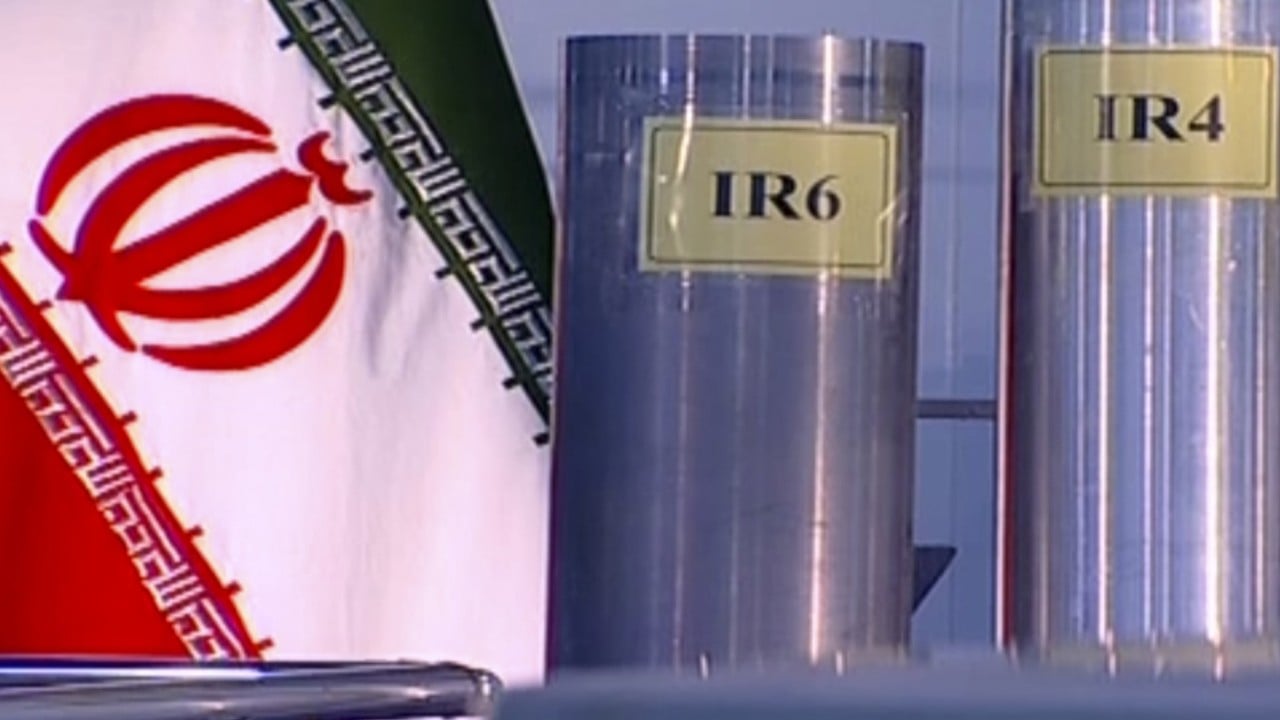
- Centrifuge Cascade Survivability: The operational status and geographic dispersion of advanced IR-6 and IR-8 centrifuge rotors, which can be assembled in small, hardened facilities undetectable by thermal or optical reconnaissance.
- Weaponization Personnel: The physical locations, movement patterns, and organizational reporting lines of nuclear metallurgists, explosive-lens engineers, and former AMAD Plan scientists.
- Hardened Subterranean Expansion: The exact internal layout and functional purpose of deep-tunnel facilities, specifically Pickaxe Mountain near Natanz, which sits beyond the penetration depth of conventional bunker-busting munitions.
Deconstructing the Bounty Mechanism
Standard wire reports treat a $20 million offer as a headline number. In intelligence operations, a bounty of this magnitude is an engineered market intervention designed to alter the risk-reward calculus of mid-to-senior-level insiders.
The Asymmetric Payoff Matrix
State-sponsored counterintelligence apparatuses—specifically Iran’s Ministry of Intelligence (MOIS) and the Islamic Revolutionary Guard Corps (IRGC) Intelligence Organization—maintain internal security through extreme deterrence. For an Iranian nuclear engineer, logistics officer, or procurement broker, the cost of detection is execution, asset forfeiture, and collective punishment of immediate family members.
A financial reward only functions as an operational recruitment tool if the expected utility exceeds the catastrophic downside risk. The Rewards for Justice architecture addresses this through a dual-incentive structure:
- Capital Accumulation ($20 Million Ceiling): A payout at the $20 million tier places the program near the upper limit of U.S. statutory reward authorities (which cap at $25 million for top-tier terrorism and proliferation targets). This figure is calibrated not merely as compensation for data, but as multi-generational capital capable of sustaining an extended family in exile indefinitely.
- Sovereign Exfiltration ("Possible Relocation"): Cash inside a sanctioned economy under wartime blockade has zero utility if the recipient cannot spend it or survive to access it. The explicit inclusion of relocation signals that the U.S. intelligence community is offering physical extraction and new legal identities—a logistical commitment far more expensive and operationally complex than wire transfers.
Target Segmentation
The joint announcement by CENTCOM and the State Department deliberately casts a wide net across four target categories: facilities, equipment, scientific personnel, and material movements. This segmentation reflects an understanding of compartmentalization inside covert programs.
A senior physicist at a research institute rarely knows the physical route used to transport $UF_6$ cylinders. Conversely, a transport driver or customs broker working for an IRGC front company knows the transit coordinates and warehouse addresses, even if they do not understand the isotopic assay of the cargo. By targeting the entire supply chain—from procurement brokers to logistics coordinators—the U.S. lowers the barrier to entry for actionable tips.
Strategic Duality Diplomacy Under Kinetic Pressure
The timing of the $20 million bounty exposes a calculated duality in Washington’s coercive strategy. On one track, U.S. officials maintain that military strikes have already crippled Iran’s conventional military and core nuclear infrastructure, while backchannel diplomatic mediators work to formalize a ceasefire and end eight months of open conflict. On the parallel track, CENTCOM is actively soliciting defectors and warning that remaining hardened targets like Pickaxe Mountain remain in the crosshairs.
This is not a contradiction; it is a classic coercive bargaining framework known as compellence paired with intelligence preparation of the battlefield (IPB).
- Degrading Tehran’s Negotiating Hand: In diplomatic talks led by President Masoud Pezeshkian’s administration, Iran’s primary remaining point of deterrence is nuclear ambiguity—the implicit threat that an unmonitored stockpile of enriched uranium remains hidden and accessible. If U.S. intelligence acquires precise coordinates for those hidden assets via human sources, Iran loses its strategic ambiguity at the negotiating table.
- Inducing Internal Paranoia: Even if zero high-level scientists defect, the public announcement of a $20 million payout triggers immediate defensive friction inside Tehran. Security services must divert resources to polygraph testing, surveillance of their own technical staff, and compartmentalization audits. This self-imposed friction slows down covert reconstitution timelines.
- Target Acquisition for Contingency Strikes: Should diplomatic mediation collapse, the intelligence gathered through this channel provides the exact subterranean coordinates and structural vulnerability data required for follow-on special operations or deep-penetration strikes.
Operational Limitations and Friction Points
Financial bounties are not precision weapons. Treating a $20 million reward as a guaranteed intelligence breakthrough ignores severe structural vulnerabilities inherent to crowdsourced espionage.
- The Signal-to-Noise Ratio Collapse: High-dollar public rewards attract massive volumes of fabricated intelligence, "paper mills" (forged documents manufactured by third-party brokers), and opportunistic fabricators. Vetting incoming tips through Tor-based portals requires immense counterintelligence bandwidth to separate genuine insider telemetry from disinformation.
- Hostile Counterintelligence Penetration: The MOIS and IRGC actively monitor Rewards for Justice intake channels. Tehran routinely runs "dangles"—controlled agents fed to foreign intelligence services with a mix of accurate low-level data and poisoned high-level disinformation—to identify U.S. collection priorities, compromise communication protocols, and trap American case officers.
- Compartmentalization Barriers: True "crown jewel" intelligence—such as the exact underground inventory of 60% enriched uranium—is restricted to a tiny circle of ideologically vetted personnel. Those individuals are under continuous physical and electronic surveillance, making unmonitored contact with foreign intelligence platforms exceptionally difficult.
- Exfiltration Bottlenecks: Executing a physical relocation out of Iran during a period of heightened wartime border security and maritime blockade is an extreme operational hazard. A single failed extraction destroys the credibility of the relocation guarantee, freezing future recruitment.
The Strategic Play for Counter-Proliferation Analysts
Monitoring the success or failure of this $20 million intelligence campaign requires looking past diplomatic rhetoric and tracking specific operational indicators over the next 90 days.
First, watch for unexplained behavioral shifts in Tehran’s internal security apparatus, specifically sudden purges, travel bans, or abrupt leadership replacements within the Atomic Energy Organization of Iran (AEOI) and IRGC logistics units. These personnel disruptions indicate that counterintelligence units suspect an active leak.
Second, track precision kinetic or covert disruptions targeting obscure transit nodes rather than declared nuclear cities. If the U.S. or allied forces interdict specific maritime vessels, warehouse compounds, or mid-level procurement brokers outside traditional nuclear zones, it confirms that human intelligence has successfully mapped the decentralized supply chain.
Third, observe concessions in backchannel diplomatic frameworks. If Iranian negotiators abruptly agree to restore IAEA access to previously contested sites like Pickaxe Mountain, the most probable driver is that Washington has already demonstrated—privately, at the negotiating table—that it possesses verifiable insider intelligence on what lies inside.