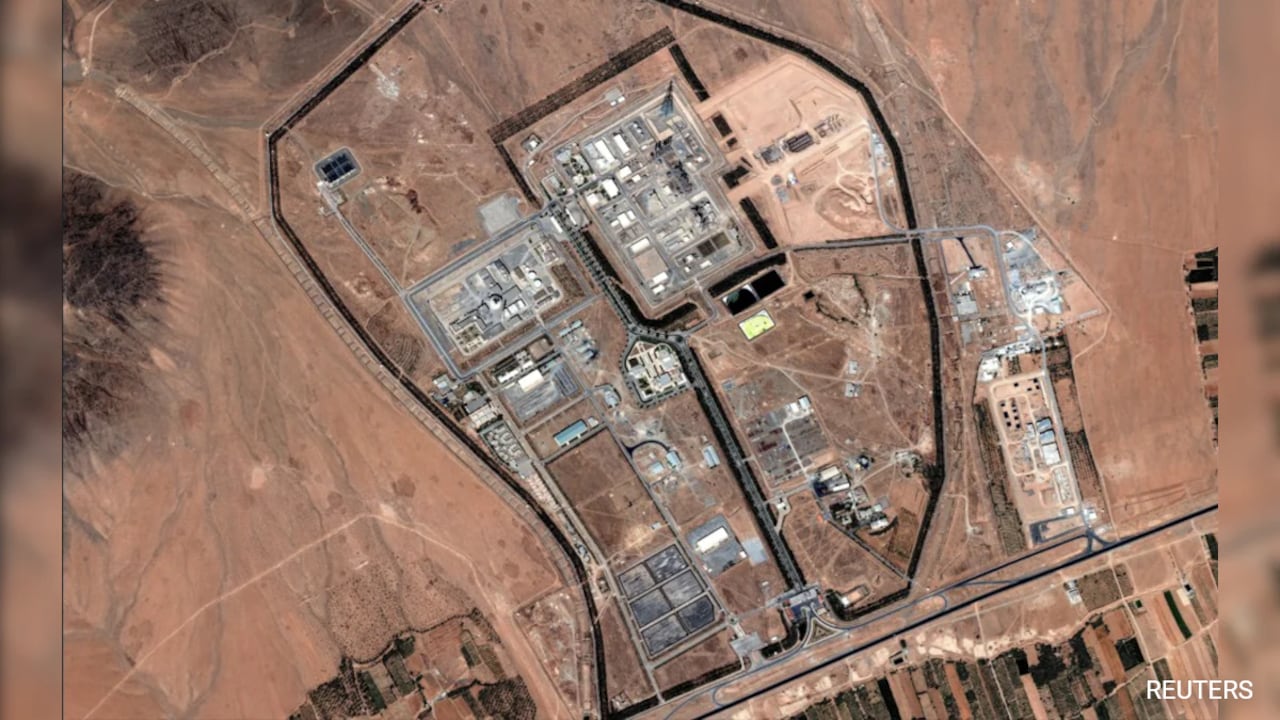
Washington just slapped a $20 million price tag on tips about Iran’s nuclear program, and the mainstream press is eating it up like a Tom Clancy plot twist.
Stop cheering. It is not an intelligence breakthrough. It is an admission of failure wrapped in a press release.
Every time the U.S. State Department’s Rewards for Justice program drops a massive dollar figure on a geopolitical adversary, the standard media narrative follows a predictable script. Journalists treat the bounty like a silver bullet—a high-stakes, market-driven shortcut that will suddenly convince an Iranian centrifuge engineer in Natanz to risk torture and execution for a wire transfer and a beige townhouse in Northern Virginia.
Having spent years tracking counter-proliferation mechanics and intelligence procurement, I can tell you how this actually plays out. When an intelligence agency resorts to public crowd-sourcing for one of the hardest targets on earth, it means their traditional human intelligence (HUMINT) pipelines have hit a brick wall.
The Lazy Consensus About Bounties
Most coverage of the $20 million offer operates on a deeply flawed premise: that intelligence collection is a simple supply-and-demand market. Offer enough cash, and someone inside the Islamic Revolutionary Guard Corps (IRGC) or the Atomic Energy Organization of Iran (AEOI) will flip.
That logic works fine when you are hunting a cartel boss in Sinaloa or a mid-level cybercriminal in Eastern Europe. Those actors are motivated by greed, and their operational security is notoriously sloppy.
Nuclear proliferation is a completely different animal.
The individuals who actually possess actionable, high-tier intelligence on Iran’s nuclear threshold—specifically weaponization research, undeclared enrichment cascades, or illicit procurement networks—are not disgruntled mid-level bureaucrats looking for a payday. They are vetted, ideologically hardened specialists living inside one of the most paranoid counter-intelligence apparatuses on the planet.
Why Cash Fails Against Counter-Intelligence
Iran’s Ministry of Intelligence (MOIS) and the IRGC Intelligence Organization do not mess around. Following the 2018 Israeli raid that lifted half a ton of nuclear archives out of a Tehran warehouse, and the 2020 assassination of top nuclear scientist Mohsen Fakhrizadeh, Tehran turned its internal security apparatus inside out.
Today, anyone with access to sensitive nuclear data lives under total surveillance. Their communications are air-gapped. Their finances are monitored. Their extended families are effectively hostages to their loyalty.
Imagine a scenario where a senior metallurgist working on explosive lenses at Parchin decides to take the U.S. up on its $20 million offer. How does he make initial contact?
- Encrypted apps? Compromised or heavily flagged by domestic telecom filters.
- Dead drops? Impossible without leaving his designated security perimeter, which triggers immediate alarms.
- Foreign travel? Scientists at that level are barred from leaving the country without a dedicated security detail.
Even if he manages to pass a thumb drive to a cutout, how does he spend $20 million? You cannot walk into a currency exchange in Tehran and cash a check from the U.S. Treasury. Exfiltrating a scientist and his entire extended family out of Iran requires a massive, multi-agency covert operation that costs far more than the bounty itself—and carries a high probability of getting everyone involved killed.
What the $20 Million Offer Actually Does
If the State Department knows that top-tier scientists aren't going to cold-call the Rewards for Justice hotline, why put $20 million on the table?
Because the bounty isn't aimed at informants. It is aimed at Tehran’s leadership.
This is classic psychological operations (PSYOP) masquerading as intelligence collection. By publicly announcing a massive reward, Washington is trying to weaponize paranoia inside the Iranian regime.
When a $20 million bounty hits the news, every IRGC counter-intelligence officer has to justify their budget by proving they are hunting for moles. Suddenly, routine meetings become suspect. Minor delays in centrifuge testing look like sabotage. Engineers stop sharing data across departments out of fear that a colleague is building a dossier to sell to the CIA.
The Friction Tax
In intelligence circles, we call this imposing a "friction tax." You don't need to actually recruit a spy to slow down a nuclear program; you just need to convince the regime that a spy is already in the room.
However, there is a massive downside to this strategy that the cheerleaders in Washington refuse to acknowledge: noise-to-signal collapse.
Public bounties act like a magnet for fabricators, con artists, and rival intelligence services running double agents. I have seen intelligence desks completely paralyzed for months because a public reward triggered thousands of tips, 99.9% of which were recycled open-source data, doctored satellite imagery, or deliberate disinformation fed by the adversary to waste analyst hours.
Remember "Curveball"? The Iraqi defector Rafid Ahmed Alwan al-Janabi fabricated intelligence about mobile biological weapons labs to secure asylum and cash in Germany. That single stream of bad, financially incentivized intelligence helped grease the skids for the 2003 invasion of Iraq. When you dangle $20 million in front of the public, you aren't buying truth. You are buying creative writing from desperate people.
Why We Are Asking the Wrong Question
If you search for details on this bounty, the top "People Also Ask" queries revolve around the mechanics of the payout: How does the US pay out Rewards for Justice tips? or Can someone claim the reward anonymously?
Those questions miss the point entirely. The real question isn't how Washington pays for intelligence. The real question is why the U.S. needs to beg for tips on a program that was supposed to be transparent a decade ago.
Under the 2015 Joint Comprehensive Plan of Action (JCPOA), the International Atomic Energy Agency (IAEA) had continuous, real-time surveillance of Iran’s declared nuclear sites. Inspectors had access to tamper-resistant cameras, online enrichment monitors, and daily physical access to Natanz and Fordow.
When the U.S. unilaterally withdrew from the accord in 2018 under the "maximum pressure" campaign, Tehran systematically dismantled that visibility. Iran turned off the IAEA cameras, restricted inspector access, and spun up advanced IR-6 centrifuges that enrich uranium at a fraction of the time required by older models.
Washington traded verified, on-the-ground eyes and ears for blindfolds, and is now offering $20 million to anyone who can describe what is happening behind the curtain.
The Real Bottleneck Isn't Information—It's Leverage
Let’s strip away the diplomatic euphemisms and look at the cold, hard physics of Iran’s nuclear status.
According to public IAEA assessments and U.S. intelligence community reports, Iran is already a threshold nuclear state. They have stockpiled uranium enriched to 60% purity—just a short technical step away from weapons-grade 90%. Their "breakout time" (the time needed to produce enough fissile material for a single nuclear weapon) is measured in days, not months.
Knowing more about what Iran is doing inside deeply buried facilities like Fordow or the new tunnel complexes near Natanz does not solve the strategic problem.
Even if an informant walked into the U.S. Embassy in Vienna tomorrow with the complete blueprints for an Iranian warhead and the exact coordinates of every hidden centrifuge, what is Washington going to do with that data?
- Military Strikes? Deeply buried facilities like Fordow are built beneath hundreds of feet of solid rock, specifically engineered to survive conventional bunker-busters like the GBU-57 Massive Ordnance Penetrator. A military strike wouldn't destroy the knowledge; it would simply guarantee that Iran sprints for a bomb in total secrecy.
- More Sanctions? Iran’s economy is already under one of the heaviest sanctions regimes in modern history. They have built a shadow banking network and an oil-smuggling fleet that routes billions of dollars through China and regional intermediaries. Adding ten more shell companies to the Treasury Department’s blacklist won't stop a centrifuge from spinning.
- Cyber Sabotage? Stuxnet worked in 2010 because Iran’s industrial control systems were naively connected and poorly defended. Fifteen years later, Iranian cyber defenses are hardened, air-gapped, and backed by Russian technical cooperation.
The $20 million bounty creates the illusion of decisive action while dodging the reality that Washington has run out of good options.
How Real Counter-Proliferation Works
If you actually want to disrupt an illicit nuclear supply chain, you don't put up a digital billboard offering reward money. You follow the boring, unglamorous, hyper-technical trail of dual-use components.
Nuclear weapons programs cannot exist in a vacuum. Even a domestic program requires specialized materials that Iran cannot easily manufacture at scale: high-grade maraging steel, carbon fiber for centrifuge rotors, specialized vacuum pumps, precision pressure transducers, and radiation-hardened electronics.
Instead of waiting for a whistleblower to magically appear, effective counter-proliferation relies on three quiet mechanisms:
- Financial Forensic Interdiction: Tracking the front companies in Dubai, Hong Kong, and Istanbul that process payments for dual-use goods. You don't sanction the company after the shipment arrives; you freeze the letters of credit while the cargo is sitting on a dock in Rotterdam or Busan.
- Supply Chain Poisoning: Infiltrating the manufacturing brokers who sell specialized alloys or control valves, ensuring that the components delivered to Iranian procurement agents have subtle, microscopic metallurgical flaws that cause catastrophic failure at 60,000 RPM.
- Allied Export Control Alignment: Plugging the loopholes in European and Asian customs enforcement so that a Chinese manufacturer cannot ship high-precision CNC machines to a shell company in Turkey that immediately re-exports them across the Iranian border.
None of these tactics make for a flashy headline. None of them generate cable news segments about $20 million payouts. Yet, every single one of them does infinitely more damage to a nuclear timeline than a State Department tip line ever will.
The Brutal Truth About the Bounty
To be clear, Rewards for Justice has had genuine successes over the decades. The program has helped track down high-profile terrorists and disrupted specific financial networks where greed outweighed ideological loyalty. I am not arguing that financial incentives have zero utility in intelligence work.
I am arguing that applying a counter-terrorism tool to a state-sponsored nuclear program is a fundamental category error.
When the U.S. government puts $20 million on the table for information on Iran’s nuclear program, it is not demonstrating strength. It is signaling desperation. It is admitting that human penetration of Tehran’s inner circle has failed, that technical surveillance has been blinded, and that policymakers are grasping for a shortcut out of a strategic dead end.
No Iranian nuclear scientist is going to trade their life for a State Department press release, and no amount of reward money will put the nuclear genie back in the bottle.