When news breaks about contamination inside a nuclear power facility, panic follows fast. Headlines splash red alerts across social feeds, and people immediately envision radiation leaking into nearby cities.
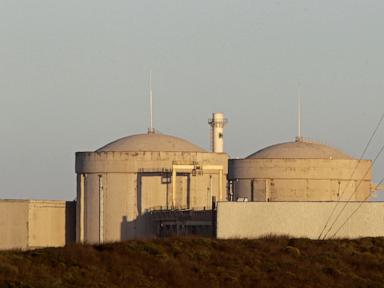
That exact scenario played out recently when South Africa's National Nuclear Regulator dropped a statement about Africa's only commercial nuclear power station. Three separate contamination incidents hit the Koeberg Nuclear Power Station within days of each other. June 30, July 2, and July 7.
Naturally, alarm bells rang across Cape Town, located just 27 kilometers south of the facility.
Here is the truth. Zero radioactive material escaped into the environment. Nobody in the surrounding communities faced any danger. In fact, the workers involved received radiation doses smaller than what you get during a routine dental X-ray.
Understanding what actually happened inside the reactor building cuts through the sensationalism and reveals how modern nuclear safety systems handle minor mechanical failures.
What Triggered the Contamination Inside Koeberg Unit 2
The trouble started during scheduled maintenance on Unit 2. Mechanics and engineers were working inside temporary enclosures—essentially specialized containment tents—set up inside the reactor building.
These temporary structures keep localized dust and airborne particles contained while technicians work on reactor components. They rely on dedicated ventilation units to maintain continuous negative pressure, pulling air through heavy filtration systems.
Power failed on those ventilation units.
When the ventilation shut down unexpectedly, air stopped flowing through the filters. Airborne radioactive particles, previously trapped inside the work enclosures, leaked out into the broader atmosphere of the reactor building.
This happened three times over eight days.
Because the containment systems inside the reactor building functioned exactly as designed, the airborne particles stayed locked inside the thick reinforced structure. The outer containment shell did not breach. The atmospheric monitors around the facility perimeter registered normal background levels throughout the entire timeframe.
How Worker Exposure Compares to Everyday Radiation
Mention worker contamination to anyone outside the industry, and they assume severe sickness or hospitalizations. The reality in this case was vastly different.
Health physics teams screened every technician who was working in the Unit 2 reactor building when the power failures hit the ventilation units. Screening personnel found low-level surface contamination on clothing and equipment, alongside tiny amounts of inhaled airborne particles.
The calculated radiation dose for these workers measured lower than a single dental X-ray.
To put that in perspective, a standard digital dental X-ray exposes a patient to roughly 0.005 millisieverts of radiation. A round-trip commercial flight from New York to London exposes passengers to about 0.04 millisieverts due to cosmic rays at high altitudes.
The physical exposure inside Koeberg was negligible.
The National Nuclear Regulator reviewed the screening data and formally stated that none of the three events met the criteria for classification as a nuclear emergency or radiological incident. The events rated at the lowest end of the International Nuclear and Radiological Event Scale.
Why Technical Definitions Matter in Nuclear Safety Reports
The gap between public perception and regulatory language creates confusion. Regulatory bodies operate on strict terminology that sounds terrifying to non-experts.
When a regulator uses the word contamination, they do not mean toxic waste spreading across farmland. They mean radioactive atoms appeared in an area where they were not supposed to be, even if those atoms were confined to a plastic tent inside a sealed building.
The Koeberg facility relies on multiple defense layers.
- Primary containment keeps reactor coolant locked away inside heavy steel piping.
- Secondary containment uses thick concrete walls built to withstand extreme external impacts and internal pressure spikes.
- Ventilation control systems route air through high-efficiency particulate air filters before releasing anything to the atmosphere.
When the maintenance tent ventilation failed, layer one of local isolation broke down. Layer two—the reactor building itself—held without issue.
This multi-tiered setup is why nuclear engineering relies on defense in depth. Single point failures happen in industrial machinery. Electrical components short out. Blowers trip. The entire design strategy ensures that when a localized ventilation unit cuts out, secondary barriers absorb the issue completely.
The Long Road for Africa's Only Nuclear Station
Koeberg isn't a new facility. Commissioned in the mid-1980s, the station operates two pressurized water reactors with a combined output of 1,854 megawatts. That single plant generates roughly 5 percent of South Africa's entire electricity supply.
Power grid operator Eskom has faced immense pressure over the last decade. Rotating blackouts, aging coal plants, and financial struggles have made every megawatt from Koeberg vital for keeping the lights on in Cape Town and Johannesburg.
The plant reached the end of its original 40-year design life recently.
Regulators evaluated the plant's structural integrity, safety systems, and operational history before granting a 20-year license extension for Unit 1 and Unit 2, allowing operations to continue past 2040.
That extension required massive overhauls, including steam generator replacements and extensive maintenance cycles. The recent contamination incidents occurred right in the middle of these complex outage programs.
Replacing decades-old components requires opening sealed systems, which naturally increases the frequency of maintenance activities inside reactor buildings. Higher activity levels mean a higher probability of minor operational bumps, like tripping ventilation breakers.
How Other African Nations Are Approaching Nuclear Energy
South Africa won't be the only player on the continent for much longer. Energy demand across Africa is surging, driven by fast-growing urban populations and expanding industrial sectors.
Coal remains heavy, expensive, and polluting. Solar and wind help, but grid operators need reliable baseload power that runs continuously regardless of weather conditions.
Egypt is constructing its first commercial nuclear plant at El Dabaa on the Mediterranean coast. That massive project involves four Russian-designed VVER-1200 reactors capable of supplying about 10 percent of Egypt's power grid when fully operational around 2030.
Ghana, Nigeria, Kenya, and Rwanda are actively laying regulatory groundwork and evaluating small modular reactor technologies.
When small operational hiccups like the Koeberg ventilation trips happen, anti-nuclear advocacy groups seize on them to argue against new builds. Meanwhile, proponents point out that three consecutive mechanical failures resulted in zero environmental impact and zero public risk—proving that modern nuclear oversight works.
What Happens Next at Koeberg
The National Nuclear Regulator isn't brushing these three incidents aside just because nobody got hurt. Repeated failures of temporary power setups during maintenance point to procedural gaps or equipment reliability problems with temporary supply lines.
Inspectors from the regulator are conducting deep audits of Eskom's temporary maintenance power systems.
Eskom must revise its operating procedures for temporary ventilation units during reactor outages. That includes implementing redundant power supplies for temporary filtration tents, so a single electrical trip won't shut off airflow again.
If you follow energy policy or live near nuclear infrastructure, keep an eye on official NNR inspection releases rather than social media chatter. Check the International Atomic Energy Agency newsroom for standardized safety event ratings, and monitor Eskom's quarterly public safety information updates to verify how maintenance upgrades are executed.
.jpg?width=1200&auto=webp&trim=593%2C249%2C275%2C1053)