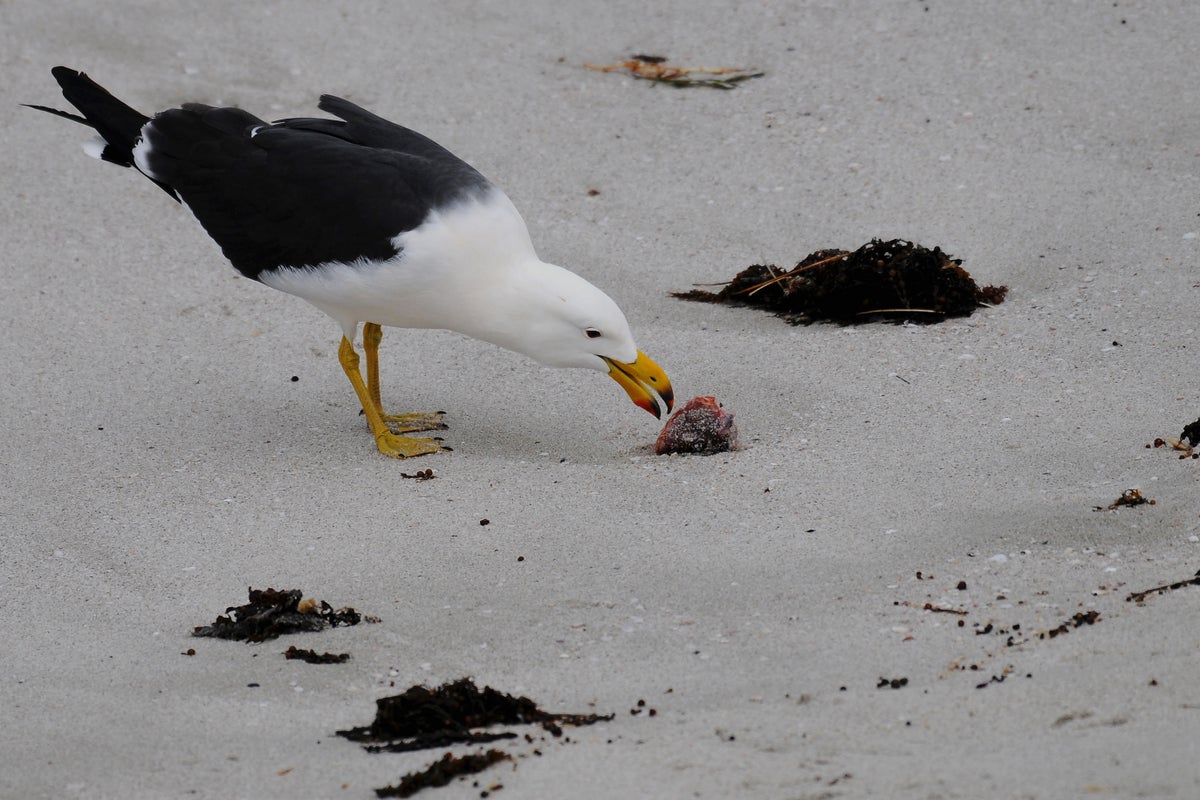
For years, geographic isolation functioned as Australia’s primary epidemiologic shield. That insulation officially expired when a long-nosed fur seal found dead on a South Australia beach tested positive for the H5N1 avian influenza virus, marking the nation's first documented mammalian case. Discovered in the coastal town of Beachport, the animal's death brings an ugly reality to a continent that long imagined itself immune to the global panzootic. The virus, specifically the B3.2 genotype of the clade 2.3.4.4b lineage, did not arrive via commercial trade. It drifted in on the wings of migratory seabirds, sweeping down from sub-Antarctic outposts and breaching the last major continental stronghold on Earth.
When the virus first touched down in mainland Australia in June, agricultural officials insisted that strict biosecurity measures and geographic boundaries would contain the biological fallout. They pointed to the ocean gap. They pointed to strict quarantine protocols. But pathogens do not respect administrative borders or coastal buffer zones. Once highly pathogenic avian influenza establishes circulation in wild animal populations, stopping its momentum becomes an exercise in futility. The transition from avian vectors to a marine mammal signals an escalation that veterinarians and virologists have spent years dreading.
The Anatomy of a Continental Spillover
The trajectory of this virus follows a predictable, terrifying script written across the Americas, Europe, and the sub-Antarctic islands. First arrive the infected migratory birds. Then come the localized die-offs in coastal seabird colonies. Finally, opportunistic carnivores and scavengers—or animals simply sharing crowded coastal rookeries—come into contact with massive viral loads shed by sick or dying birds.
Long-nosed fur seals occupy the exact ecological intersection required for a spillover event. Living in dense colonies directly adjacent to seabird nesting grounds, these marine mammals are constantly exposed to environmental contamination. When a seal breathes, swims, or feeds in waters saturated with avian fecal matter and respiratory secretions, the statistical probability of exposure climbs toward certainty.
Federal and state authorities are eager to project calm, emphasizing that Australia's domestic poultry and livestock sectors remain uninfected. That clean sheet will not last forever. Biosecurity fences work against human error and livestock movement, but they are entirely useless against free-flying birds and migratory marine life. To treat the seal's death as an isolated anomaly is to ignore the global epidemiology of H5N1. Every marine mammal death recorded from South America to the sub-Antarctic has been a precursor to wider mammalian adaptation.
Why the Silence on Structural Vulnerability Endangers Us All
Public health messaging relies heavily on reassurance. Officials state correctly that the immediate risk to the general human population remains low. Yet, framing this crisis entirely around human infection rates misses the broader ecological catastrophe unfolding in real time. We are watching the permanent alteration of coastal ecosystems.
Consider what happened on Heard Island in late 2025, where the virus decimated local wildlife populations, killing thousands of baby seals before the mainland incursion even began. The strain currently circulating is not a static organism. Every single replication cycle inside a new mammalian host provides an opportunity for the virus to acquire adaptive mutations. While these mutations do not automatically guarantee efficient human-to-human transmission, they lower the evolutionary hurdles standing between an avian pathogen and a mammalian pandemic virus.
The institutional response has been reactive rather than strategic. Surveillance programs rely on passive reporting—waiting for beachgoers, fishers, or wildlife officers to stumble upon a carcass and call an emergency hotline. Passive surveillance guarantees that authorities are always operating weeks behind the actual spread of the virus. By the time a dead seal tests positive, the pathogen has already circulated through the local ecosystem undetected.
The Blind Spot in Wildlife Management
Australia’s wildlife management frameworks were never designed for a panzootic of this scale. Parks agencies, marine mammal rescue networks, and agricultural departments operate in bureaucratic silos, divided by state lines and jurisdictional boundaries that wildlife simply ignores.
When a marine mammal washes ashore showing neurological symptoms or sudden death, the immediate priority should be rapid genomic sequencing to track potential mammalian-adapting mutations in real time. Instead, samples often face logistical bottlenecks, delayed transport, and backlogged laboratory analysis.
The economic implications for Australia's multi-billion-dollar agricultural export economy are staggering, yet discussions remain curiously muted in mainstream public forums. Poultry producers have battened down the hatches, implementing indoor sheltering protocols and heightened biosecurity. But biosecurity at the farm gate does nothing to address the viral reservoir exploding in the wild environment. Once a pathogen saturates native wildlife, it becomes an unmanageable background threat that persistently knocks at the door of commercial facilities.
The Reality Beyond the Coastline
We have entered a permanent phase of ecological vulnerability. The notion that an island continent can quarantine itself from a global wildlife crisis is a comforting fiction. The long-nosed fur seal found in Beachport is not a statistical outlier; it is the opening chapter of a profound biological transition.
As the southern migration season peaks and environmental conditions shift, federal agencies will face mounting pressure to abandon their passive monitoring posture. Waiting for the virus to reveal itself in commercial livestock or agricultural holdings before mounting an aggressive, unified response is a catastrophic gamble. The pathogen is already writing the rules of engagement along the coastline, and the ecosystem is absorbing the cost of every delayed decision.