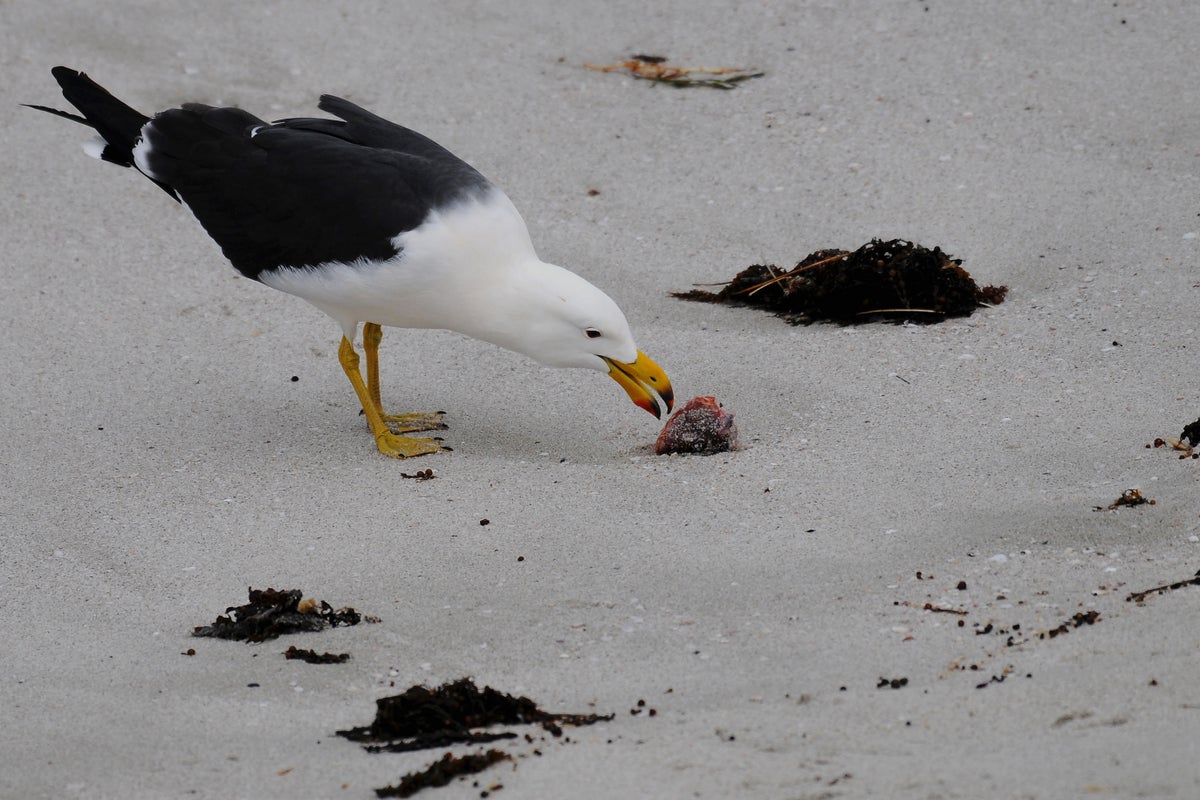
Another dead seal on a desolate South Australian beach, another hysterical media cycle, and another chorus of experts acting like H5N1 just dropped out of the clear blue sky to rewrite biology.
Let's get one thing straight immediately. The confirmation of H5N1 in a long-nosed fur seal down in Beachport is not a shocking plot twist. It is basic, predictable virology. For months, headline writers have treated Australia's status as the final clean continent like an impenetrable forcefield, as if migratory seabirds check their passports and viral loads at the oceanic border. When the virus finally landed via migratory routes and hit sub-Antarctic outposts like Heard Island, anyone with a basic grasp of epidemiology knew mainland mammal spillovers were an absolute mathematical certainty.
Yet the mainstream reaction has defaulted to pearl-clutching panic. We are told to view every dead marine mammal as a countdown timer to human apocalypse. This is lazy, unscientific alarmism.
The Myth of Virgin Territory Vulnerability
The lazy consensus dominating newsrooms right now is that Australia's native wildlife is uniquely doomed because it was isolated from the global panzootic until recently.
This narrative falls apart the second you look at the data coming out of South America and the sub-Antarctic. When H5N1 tore through South American sea lion populations, tens of thousands died not because South American fauna were uniquely fragile, but because high-density mammalian colonies function as viral amplifiers. Fur seals and sea lions share crowded breeding rocks with infected seabirds. They scavenge. They breathe the same aerosolized filth.
Imagine a scenario where a human city of ten million people had zero sanitation infrastructure and birds dropped infected feces by the metric ton over every public square. You would expect mass casualties. That is essentially what a seal colony looks like to an aggressive influenza strain.
Blaming the "virgin soil" status of Australian wildlife is an excuse for institutional laziness. Federal and state agencies had months to watch South America, the UK, and South Africa get battered. They knew the genotype. They knew the vectors. Treating a dead fur seal in South Australia as an unexpected emergency rather than a logged operational probability reveals a profound failure of foresight.
Why the Poultry Panic is Misplaced
If you listen to the talking heads, the domestic food supply is next on the chopping block. The common narrative claims that mammalian spillovers directly foreshadow a catastrophic collapse of commercial poultry operations.
Look closer at the mechanics. Australia's commercial poultry industry operates under some of the strictest biosecurity biosecure zoning and indoor containment protocols on earth. Wild bird crossover into a high-tech, multi-million-dollar shed is an engineering failure, not an inevitable act of God. The real threat isn't commercial chicken farms; it's backyard hobby coops and free-range setups where owners refuse to net their runs against wild waterfowl.
We need to stop conflating environmental wildlife mortality with agricultural collapse. The virus is circulating fiercely in wild avian populations—manifesting in mass seabird die-offs from Victoria to South Australia—and yes, spillover into apex predators or scavengers like seals is tragic. But ecological tragedy in the wild is not the same thing as a generalized public health emergency for the human population. Conflating the two generates clicks, but it poisons rational policy-making.
The Uncomfortable Truth About Mitigation
Here is the part nobody wants to say out loud: Once a highly pathogenic avian influenza establishes itself in migratory wild bird flyways, you cannot eradicate it.
Government ministers standing behind microphones promising total containment are selling fairy tales. When Federal Agriculture Minister Julie Collins remarks that avoiding significant losses in the natural environment is impossible once the virus spreads, she is accidentally speaking the truth that bureaucratic press releases usually bury.
Trying to vaccinate every single little penguin on Phillip Island or cordon off hundreds of kilometers of rugged coastline is ecological theater. It makes stakeholders feel proactive while shifting resources away from the only metric that actually matters: genomic surveillance.
We do not need more hand-wringing over every single carcass found on a remote stretch of sand. We need targeted, rapid-sequence tracking of viral mutations. The single terrifying milestone that changes the game is mammalian-to-mammalian adaptation—mutations in the PB2 gene segment that allow efficient respiratory transmission between mammals. As of today, the Beachport seal represents dead-end spillover from environmental exposure, just like the thousands of elephant seal pups on Heard Island. It is an environmental casualty, not patient zero of a human pandemic.
Stop hyperventilating over the animal toll while ignoring the actual genomic markers. Track the mutations, secure the high-risk captive populations, and accept that nature is rewriting the baseline.
The virus is here. Grow up and deal with the actual science.