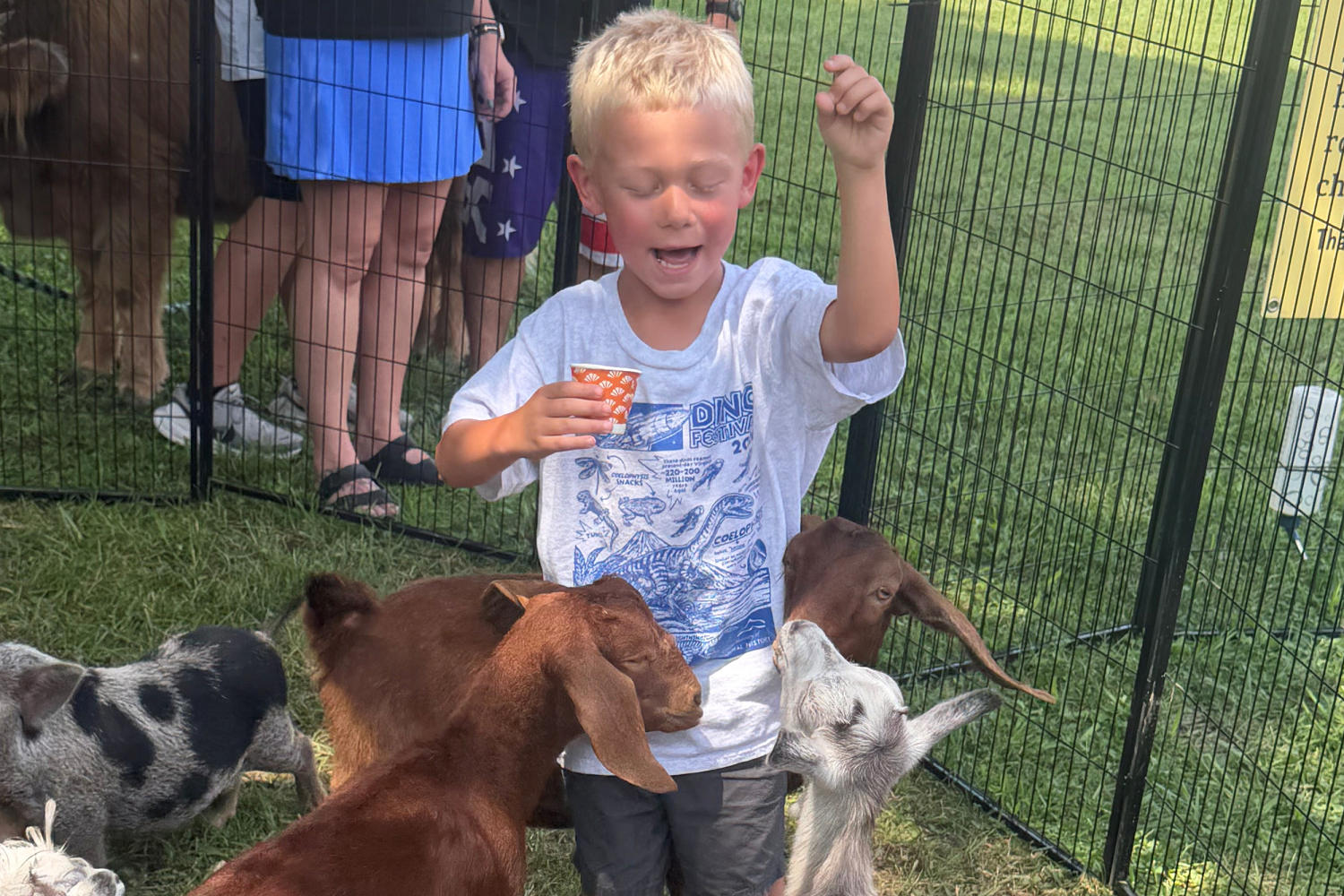
The wool was softer than expected. It felt like spun cloud beneath small, sticky fingers, dusted with the honest, earthy musk of dry hay and warm sun. Julian was four years old, and to him, the world was entirely composed of things to touch, taste, and question. When the small goat nudged its velvet muzzle against his open palm, searching for compressed alfalfa pellets, Julian laughed. It was the high, ringing sound that parents store away in the amber of memory.
Ten feet away, holding a paper cup of lukewarm lemonade, I watched.
Nothing seemed amiss. The petting zoo was sunlit, buzzing with the low murmur of tired parents and the occasional bleat of an overcrowded enclosure. The hand-washing station was right there by the exit, fitted with a cheerful wooden sign shaped like a sheep. We washed. We scrubbed. We drove home with the windows cracked, listening to the rhythmic thump of tires on asphalt, blissfully unaware of the microscopic theater that had just opened in the warm dark of a corner stall.
Three days later, the phone call came.
It is strange how a single voice through a tiny plastic speaker can pivot an entire existence on its axis. The public health official was polite, measured, and terrifyingly calm. There had been a batch of animals. A stray goat, brought in late on a Tuesday, showing subtle signs that nobody caught until it was too late. A positive lab result. A list of exposed families.
Rabies.
The word sits heavy on the tongue. It carries the weight of centuries of dread, the dark folklore of foaming mouths and locked jaws, the absolute, unyielding finality of a virus that creeps along the nervous system in absolute silence. We think of rabies as an artifact of wild woods, of rabid raccoons slinking through midnight suburbs or feral dogs in distant places. We do not think of it while buying a two-dollar cup of feed pellets under a cheerful yellow banner.
Consider what happens next in the human mind. The calm exterior cracks. The rational adult dissolves, replaced instantly by the primal custodian who would tear the earth apart to keep a child safe.
I stared at Julian across the living room rug, where he was busy trying to convince a plastic dinosaur to eat a blade of grass. He looked entirely whole. His skin was clear. His laugh was easy. There was no fever, no twitch, no sudden aversion to water or light. He was just a boy with skinned knees and a smudge of dirt behind his ear.
And yet, the invisible stakes were astronomical.
The medical reality of rabies is a masterclass in biological horror. Once the virus breaches the peripheral nerves, it begins a slow, agonizing crawl toward the central nervous system. It moves silently, stealthily, dodging the body’s immune patrols by hiding within the very pathways that let us feel the world. For days, weeks, sometimes months, the host feels nothing. There are no alarms. There is no fever to warn you. By the time the first neurological symptoms appear—a vague tingling, a prickling of the skin, an inexplicable anxiety—it is almost universally too late. The mortality rate sits stubbornly at ninety-nine point nine percent. Medicine offers a handful of desperate, experimental interventions, but history shows they rarely work once the shadow takes root.
The only weapon we possess is preemptive strike.
That is why we found ourselves in a harshly lit pediatric examination room forty-eight hours later, staring at a tray of needles that looked entirely too large for a small boy's arm.
The protocol is precise, unforgiving, and deeply human. Because Julian could not articulate whether the goat’s teeth had broken his skin or merely brushed it with enthusiastic saliva, public health guidelines treat ambiguity with absolute aggression. When in doubt, you assume the worst. You must.
The doctor was kind. She knelt down to Julian's eye level, holding out a colorful sticker of a space shuttle, talking about brave explorers who travel into the unknown. Julian took the sticker, distracted for a precious few seconds. Then came the human immunoglobulin.
If you have never seen a child receive rabies immunoglobulin, it is an experience that etches itself permanently into your nervous system. It is not a standard vaccine injection. It is a calculated flood of concentrated antibodies, designed to form an immediate chemical shield around any potential viral entry points before the body can mount its own defense. The volume is significant. It has to be injected directly around the suspected site of exposure, and the remainder is split into intramuscular doses.
Julian’s cry was not the cry of a scraped knee. It was the sharp, betrayed wail of a child who trusted the world and found out, abruptly, that the world could hurt him for his own good.
I held his shoulders. I pressed my face against his hair, breathing in the scent of baby shampoo that suddenly felt like a fragile lifeline against the dark. I whispered lies every parent tells in moments of crisis. It’s okay. I’ve got you. It’s almost over.
My hands were shaking.
We live in a culture that likes to sanitize risk. We put rubber padding on playground corners, install apps to track our children's heart rates, and sign digital waivers before letting them bounce on a trampoline. We crave the illusion of control. We want to believe that if we just read enough labels, choose the right organic brands, and stay inside the lines of modern safety culture, the chaos of the natural world will politely step aside.
The petting zoo shatters that illusion with a gentle nudge of a velvet muzzle.
Nature does not care about our color-coded schedules or our hand-sanitizer stations. Animals are wild things, even the domesticated ones, operating on biological imperatives that predate human civilization by millions of years. A goat is not a stuffed animal. A farm is not a theme park exhibit. They are living, breathing ecosystems of bacteria, viruses, and unpredictable impulses.
To bring a child into contact with that world is an act of calculated risk. We do it because we must. The alternative—raising children in sterile, hermetically sealed bubbles of concrete and purified air—strips them of something essential. You cannot learn empathy for living things through a screen. You cannot understand the weight of stewardship if you never feel the warm, heavy thrum of another heartbeat in the palm of your hand.
We accept the risk because the alternative is a quiet, sterile isolation that costs more in the long run. But accepting the risk means accepting its consequences when the invisible dice roll the wrong way.
The series of post-exposure prophylaxis injections takes days. Day zero. Day three. Day seven. Day fourteen. Each visit to the clinic was a smaller, quieter echo of the first. Julian learned to bargain. He negotiated for extra dinosaur stickers. He learned to look at the nurse not with terror, but with the weary resignation of a veteran campaigner.
And slowly, day by day, the invisible threat receded.
The incubation period for rabies is notoriously variable, but with every passing week without symptoms, the mathematical probability of infection dropped closer and closer to zero. The human body, backed by modern medical science, held the line.
We returned to the park last weekend. Not the petting zoo—we aren't quite ready for that particular pasture yet—just a quiet city park with a duck pond and some overgrown grass.
Julian ran ahead, chasing a brown rabbit that darted under a juniper bush. He didn't catch it. He didn't try to pet it. He just watched it disappear into the green shadows, his small face intense with curiosity and a newfound, healthy respect for the boundaries that separate our world from theirs.
I watched him from a wooden bench, feeling the afternoon sun warm through my jacket. The memory of the clinic room still lingered, sharp and metallic at the back of my throat. But beside it was something else. A quiet, hard-won clarity.
We cannot protect our children from the universe. We can only stand between them and the dark when it comes too close, holding their small, trembling hands while the medicine does its work, hoping that the lessons they learn along the way are worth the price of admission.