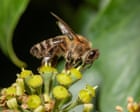
Honeybees are not villains in combat boots. They are not bullies kicking solitary mason bees off daisies. Yet every few months, a headline pops up claiming honeybees are "barging aside" wild pollinators in a ruthless grab for pollen and nectar, and conservationists lose their minds.
Here is the problem with that narrative. It treats a complex ecological food-web dynamic like a bar fight.
When a managed hive sits next to a meadow, flower counts drop. Wild bee counts sometimes dip locally. Lazy science journalism leaps straight to the punchline: Apis mellifera—the western honeybee—is outcompeting native bees and driving them toward extinction.
That is lazy consensus. It mistakes correlation in cramped patches for universal ecological doom, ignores land-use history, and distracts from the actual killers of wild pollinators.
What Lazy Headlines Miss About Competition
Let's get the terminology straight before we go any further. Exploitative competition happens when two species consume the same limited resource—here, nectar and pollen—so less remains for the other. Interference competition happens when one organism physically blocks, chases, or intimidates another away from a resource.
Honeybees are champions of exploitative competition. A single colony can number tens of thousands of workers, coordinate recruits via the waggle dance, and strip a rich patch of blooms in hours. Direct, aggressive interference? Much rarer, and usually opportunistic rather than a coordinated turf war.
I have watched land managers spend tens of thousands of dollars—and seen conservation groups burn through millions in grant money—fighting the wrong war. They slap arbitrary moratoriums on apiaries near public parks while ignoring a sprawling housing subdivision paving over winter nesting soil three miles away. I have seen urban beekeeping projects hyped as ecological cures, and I have seen knee-jerk bans on hives passed with zero data on local floral density. Both extremes miss the mechanics.
Ecological thinkers like Charles Darwin laid out the logic of resource overlap generations ago, and modern pollination ecologists—researchers such as Dave Goulson, Marcelo Aizen, and Alexandra-Maria Klein—have spent decades documenting how managed bees, wild bees, and fragmented habitats interact. Their work shows something far messier than "honeybee bad, wild bee good."
Sometimes honeybees depress wild bee abundance or reproductive output in resource-poor landscapes. Other times, competition is weak or absent because floral supply outstrips demand or species partition flowers by tongue length, time of day, or microhabitat.
Why "Barging Aside" Is the Wrong Mental Model
Picture a crowded diner with a single plate of pancakes. If a table of forty people shows up and eats every pancake, the person sitting alone at the corner booth goes hungry. Nobody had to throw a punch.
Now imagine a scenario where you drop three thousand honeybee hives onto a tiny, degraded scrubland during a summer drought. Wild bees in that patch will likely face tighter foraging margins. That is a real ecological effect. Calling it "barging aside" turns an energy-budget and resource-depletion problem into a soap opera. Worse, it makes people think the fix is simply counting fewer yellow-and-black stripes.
You Are Asking the Wrong Question
Most articles on this topic ask: Are honeybees outcompeting wild pollinators?
Wrong question. That question invites a binary tug-of-war between two groups of insects that both depend on flowering plants.
The real question is: Why is there so little food and safe nesting habitat across the landscape that a few extra foraging insects trigger a crunch?
Think about what happens when you blame the honeybee for scarcity:
- You let habitat loss off the hook. Pavement, monoculture lawns, frequent mowing, and clean-farming practices wipe out both nesting sites and continuous bloom sequences. Honeybees are a symptom of a crowded table, not the architect of the barren dining room.
- You ignore pesticide drift and disease spillover. Neonicotinoids and other systemic insecticides hammer wild bees that never set foot near a beekeeper's smoker. Meanwhile, shared flowers can act as transmission hubs for pathogens moving between managed and wild insects.
- You confuse managed livestock with wild nature. Apis mellifera is essentially agricultural livestock in many regions—moved on flatbeds to pollinate almonds, apples, or canola. Treating a managed pollinator like an invasive monster ignores the agricultural systems that keep grocery shelves stocked.
Brutal Answers to What People Actually Search
People type questions into search bars hoping for clean moral clarity. Nature rarely hands it over.
Do honeybees push native bees toward extinction?
Not by themselves in intact, diverse ecosystems. Habitat destruction, fragmentation, climate shifts, and chemical exposure do the heavy lifting in wild pollinator declines. Where honeybee densities are artificially cranked up in small or degraded reserves, local competitive pressure on certain wild species can rise—especially generalist bees that overlap heavily in diet. That is a local management issue, not a global apocalypse caused by honeybees.
Should we ban or limit honeybees in nature reserves?
In sensitive, protected habitats or areas with threatened specialist bees, capping hive density or setting buffer zones can make sense. Blanket bans everywhere else are theater. If you ban hives in a city park surrounded by sterile turfgrass and ornamental shrubs that offer zero nutrition, you haven't saved a single mason bee. You just felt virtuous for free.
Are wild bees actually better pollinators than honeybees?
For certain crops and wildflowers, yes—often dramatically so. Bumblebees perform buzz pollination (sonication), vibrating their flight muscles to shake pollen loose from poricidal anthers like tomatoes, blueberries, and eggplants. Honeybees cannot do that trick efficiently. Solitary bees often deposit more pollen per single flower visit than a honeybee packing pollen neatly into corbiculae (pollen baskets) on its hind legs.
Yet honeybees win on sheer numbers and rapid mobilization across vast acreages. Comparing them isn't about crowning a champion; it's about matching the pollinator's traits to the flower and the scale of the landscape.
What Actually Works Instead of Bee Witch Hunts
If you care about wild pollinators—and you should—stop obsessing over hive counts and start fixing bottlenecks.
- Plant continuous bloom from early spring to late fall. A burst of flowers in May followed by a dead zone in July starves colonies and solitary females alike. Mix early willows or crocuses with mid-summer perennials and late asters or goldenrod.
- Leave bare ground, pithy stems, and dead wood. Roughly seventy percent of native bee species nest in the ground; others nest in hollow or pith-filled plant stems. Tilling every inch of soil and tidying up every dead stalk in autumn destroys nurseries.
- Cut mowing frequency and shrink ornamental lawns. Turfgrass is an ecological desert. Letting clover, dandelions, and native wildflowers persist—or converting strips into perennial plantings—multiplies available forage without spending a fortune.
- Match hive placement to floral carrying capacity. Beekeepers who want healthy hives and ethical neighbors should avoid packing hundreds of colonies into small, flower-poor patches. More flowers per hive means less stress for everyone.
The Downside of Taking This Stance
Let's be honest about where a contrarian pushback on honeybee-versus-wild-bee hype can go wrong.
If you downplay competition too far, hobbyists and commercial operators can rationalize dumping massive numbers of hives into fragile ecosystems or right next to rare native flora. Overstocking is real. When floral resources are tight, adding thousands of extra foragers can reduce seed set or reproductive output in vulnerable wild species.
There is also a practical blind spot: focusing solely on big-picture habitat loss can make people feel powerless because they can't rezone a county overnight. Telling someone to "fix land use" is easy; helping them make smart choices on a quarter-acre yard or a local town council takes real trade-offs.
Acknowledge the limit. High density in low-resource patches creates real competition. Pretending otherwise is just the flip side of lazy headline writing.
How to Read the Next Study Without Getting Played
Next time a study claims honeybees are "barging aside" wild pollinators, check three things before sharing it:
- Look at the scale and density. Was this a small island, a tiny meadow, or an experimental array with unusually high hive numbers?
- Check the baseline floral abundance. Did the researchers measure whether total pollen and nectar were already scarce, or were flowers plentiful?
- Separate presence from population crash. Seeing fewer wild bees on a flower while honeybees are around doesn't automatically prove local extinction or long-term decline.
Science advances through careful measurement and replication, not punchy verbs in press releases. Wild pollinators need room to nest, food all season long, and fewer poisons in the air and soil. Pick up a shovel and plant a native perennial—and leave the honeybee out of your scapegoat rotation.