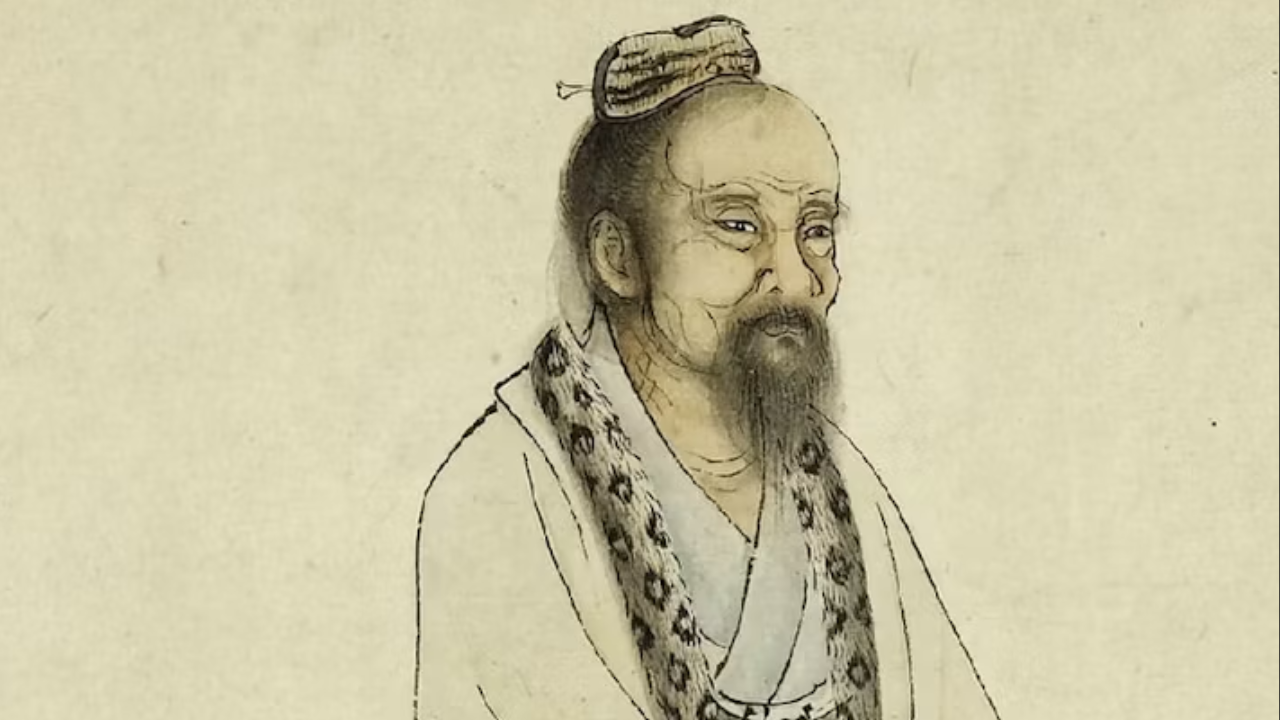
Every amateur philosopher loves dragging out Zhuangzi to sound deep at a dinner party. They nod sagely, sip their natural wine, and quote the ancient Daoist text: rewards and punishment are the lowest form of education. It sounds enlightened. It flatters our modern desire for frictionless harmony. It suggests that if we just communicate enough, vibe correctly, and trust human nature, compliance and excellence will naturally sprout like organic kale.
It is absolute nonsense.
I have spent twenty years watching organizations, schools, and teams try to run on pure intrinsic motivation. I have seen founders blow millions building utopias where nobody gets fired, nobody gets scored, and performance metrics are treated like toxic waste. Every single time, the exact same thing happens. Chaos consumes the room, the high performers pack their bags, and the mediocre coast until the lights go out.
The lazy consensus loves Zhuangzi because it lets us off the hook. Real growth requires friction, and friction has teeth.
The Myth of Pure Intrinsic Drive
Let us dismantle the core premise of the anti-incentive crowd. The argument goes like this: if you tie an outcome to a reward or a penalty, you corrupt the soul. You turn a pure act of creation into a transactional hustle.
Imagine a scenario where you run a software engineering team. You tell them that shipping code on time doesn't matter, quotas are an illusion, and everyone is paid the exact same flat rate regardless of output because external metrics kill inner passion. Within three months, your deployment pipeline resembles a medieval drainage ditch.
Human beings are wired for feedback loops. Rewards and punishments are not moral failures; they are high-speed communication channels.
When B.F. Skinner ran his operant conditioning experiments, critics shrieked about manipulation. But ignore the academic hand-wringing for a second and look at the raw mechanics. Operant conditioning is just reality talking back to you. Touch a hot stove, your skin blisters. That is a punishment delivered by physics. Build a bridge that stands, your tribe lets you eat. That is a reward delivered by survival.
To pretend that human education, business, and socialization should exist in a vacuum devoid of consequences is to reject the fundamental laws of cause and effect.
The Hypocrisy of the Modern Workplace
Corporate wellness gurus love to lecture us about dropping carrots and sticks. They want to replace compensation structures with mindfulness apps and ping-pong tables, pretending that a well-placed sticky note praising someone's "journey" replaces a bonus check.
This is not enlightenment. It is wage suppression dressed up in ancient robes.
When companies ditch hard metrics, clear incentives, and objective accountability, political maneuvering takes over. Without transparent rewards and punishments, performance becomes subjective. The loudest person in the room wins. The boss's favorite nephew gets promoted. Favoritism replaces fairness.
I’ve lived this from the inside. Early in my career, I worked at a firm that eliminated formal performance reviews because some consultant claimed ratings caused anxiety. Suddenly, nobody knew where they stood. Raises were handed out based on who stayed late to chat with the CEO about craft beer. The engineers who actually shipped the product saw their output ignored while office politicians thrived. Attrition skyrocketed by forty percent in six months.
Clear punishments—such as missing out on a promotion, losing an account, or getting shown the door—create psychological safety for the competent. They establish the boundaries of the sandbox. Knowing the rules means you never have to guess if you are safe.
Redefining the Hierarchy of Education
Zhuangzi claimed external control is the lowest form of education. Let us flip that completely on its head.
External structure is the foundation of education. It is not the ceiling; it is the scaffolding. You do not hand a toddler a set of car keys and tell them to find their own intrinsic driving style through mindfulness. You put them in a car seat with a five-point harness. You lock the doors. You teach them that crossing the street without looking yields a terrifying, non-negotiable consequence.
Internal motivation—the holy grail that modern thought leaders obsess over—is a lagging indicator. It is the byproduct of competence, not the precursor to it.
Think about learning to play the piano. For the first two years, it is tedious, painful, and driven entirely by external pressure. Your teacher threatens to cancel the lesson. Your parents ground you if you do not practice your scales. The reward is a gold star or the chance to stop practicing for the day.
If you wait for a child to discover an unprompted, organic passion for finger exercises, they will never touch an instrument. The discipline comes first. The intrinsic love for the art form arrives years later, once mastery unlocks flow. Rewards and punishments build the bridge to the state where internal drive can finally survive.
The Dangerous Trap of Outcome-Free Environments
We see the downstream effects of this anti-punishment philosophy everywhere today. Universities coddle students out of failing grades, corporate environments banish negative feedback to avoid hurting feelings, and society acts as though every opinion, output, and behavior holds equal weight.
The result is a generation of adults paralyzed by low-stakes evaluation because they were never inoculated against failure.
When you remove negative consequences from the environment, you do not eliminate suffering. You merely delay it and multiply it. A student who never receives a hard failing grade in high school gets obliterated by the merciless feedback loop of the real world at age twenty-two. An employee who is never told their work is sub-standard until the company goes bankrupt pays a far higher price than someone who received a harsh performance warning six months prior.
Punishment, correctly applied, is an act of honesty. It respects the intelligence of the recipient. It says: You are capable of better, and this boundary is where you stop hurting yourself and everyone else.
The Mechanics of Clean Leverage
If you want to build high-performing systems, stop trying to transcend human psychology. Work with it.
- Tie rewards directly to verifiable output. Never tie them to attendance, attitude, or how much you like someone.
- Make punishments swift, predictable, and impersonal. Drop the emotional theater. A system that penalizes failure automatically is far healthier than a boss who plays favorites.
- Use external pressure to build internal muscle. Treat discipline as an investment portfolio. You start with heavy guardrails and gradually strip them away only as competence compounds.
The romanticized view of education wants a world where everyone does the right thing simply because it is beautiful. That world does not exist, has never existed, and would collapse into tribal warfare within a week if it did.
Stop apologizing for setting boundaries. Stop pretending that incentives are dirty.
Clarity is kindness. Consequences are reality.
Get used to both.