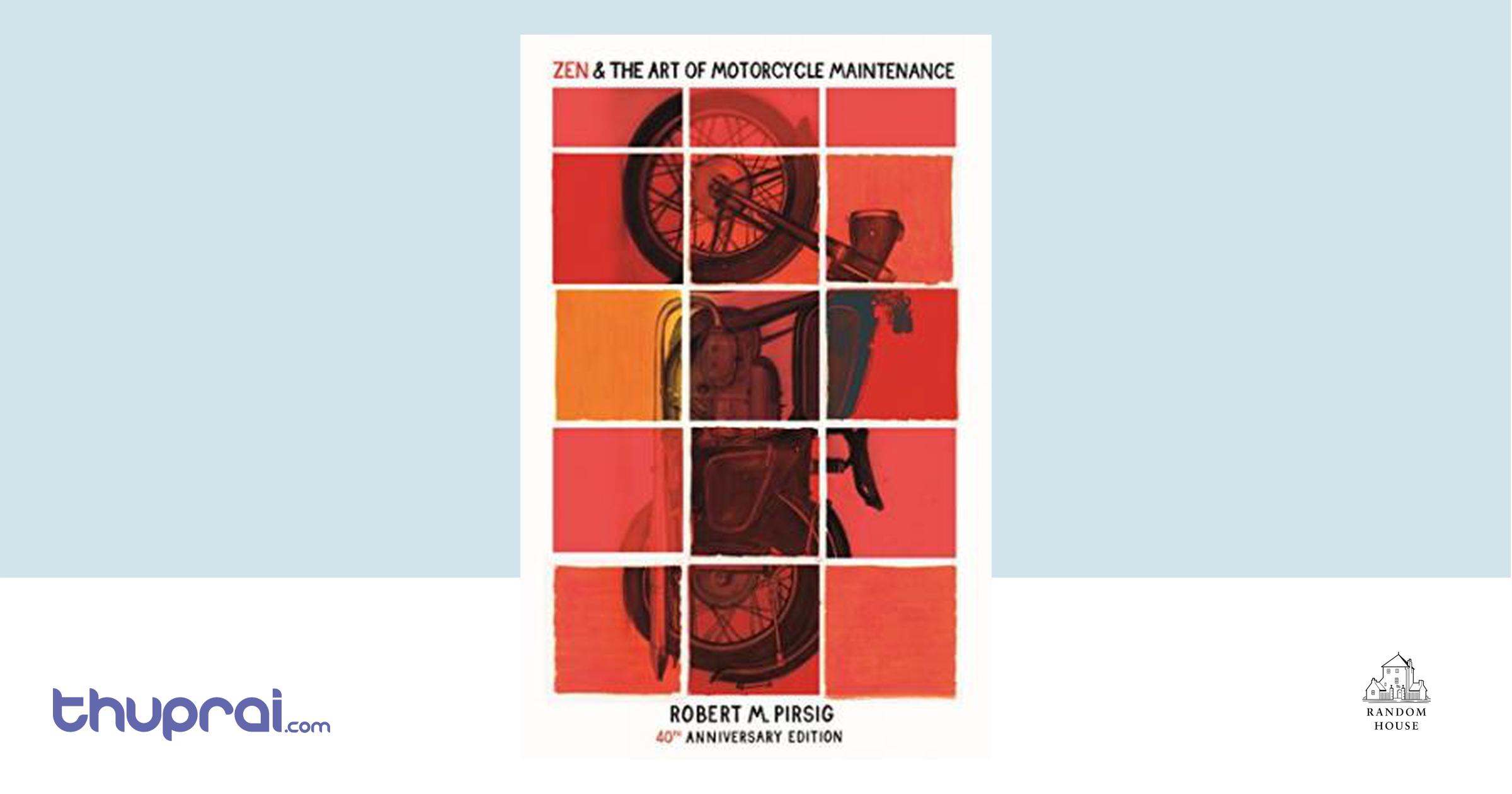
Robert Pirsig didn't really want to write about bikes. Not in the way you’re thinking. If you pick up Zen and the Art of Motorcycle Maintenance expecting a DIY manual on how to clean a carburetor or adjust a chain, you’re going to be deeply, profoundly confused by page fifty. Honestly, you might even be bored at first. It’s a dense, winding, and sometimes frustrating journey through the mind of a man trying to reconcile the cold logic of technology with the warmth of human spirit.
It’s been over fifty years since the book hit the shelves in 1974. Since then, it’s sold millions of copies, yet most people who own it haven't actually finished it. That’s a shame. Pirsig’s work isn't just a "hippie classic" or a relic of the seventies. It’s a survival guide for living in a world that feels increasingly fragmented and digital. It’s about the "Ghost" of reason and the "Quality" of our work.
The Road Trip That Wasn't Just a Trip
The plot is simple enough on the surface. A father and his son, Chris, are riding a motorcycle from Minnesota to California. They’re joined by their friends, the Sybil-like John and Sylvia Sutherland. But as they move across the American West, the narrator—who we later realize is a version of Pirsig himself—begins a series of internal monologues he calls "Chautauquas."
These aren't just random thoughts. They are an attempt to piece back together a mind that was literally broken by electroconvulsive therapy. The narrator is haunted by "Phaedrus," the man he was before he went mad. Phaedrus was a teacher of rhetoric who became obsessed with a single question: What is Quality? It sounds like a college philosophy stoner question. But for Pirsig, it was a life-or-death pursuit. He wasn't interested in just defining "good." He wanted to know why we feel a disconnect between the things we use and the lives we lead.
Why the Motorcycle?
Pirsig chose the motorcycle as his central metaphor because it demands engagement. When you’re in a car, you’re a passive observer. You’re in a "compartment," watching the scenery go by like a movie. On a bike, the frame is gone. You’re in the scene. The wind is hitting you. The smell of the road is in your nose.
More importantly, the motorcycle represents the ultimate marriage of the "romantic" and the "classic."
John Sutherland, the narrator's friend, represents the romantic view. He loves his BMW motorcycle because it’s beautiful and fast, but he refuses to learn how to fix it. When it breaks, he’s helpless. He views technology as a cold, alien force that he’d rather not understand.
The narrator, conversely, represents the classic view. He sees the bike as a system of parts and functions. To him, the beauty isn't just in the chrome; it’s in the logic of the engine. He argues that by refusing to understand the machine, John is actually a slave to it.
What Most People Get Wrong About "Quality"
When people talk about Zen and the Art of Motorcycle Maintenance, they usually focus on the "Zen" part. They think it’s about being calm while you work. It’s not. Or at least, not only that.
Pirsig’s core "discovery"—the thing that drove Phaedrus to the brink—was that Quality is neither objective nor subjective. It’s a third thing. It’s the point where the subject and the object meet.
Think about it this way:
Imagine you’re painting a wall. If you’re just doing it for a paycheck, checking the clock every ten minutes, you have no "Quality" in your work. You’re bored, and the wall reflects that. But if you’re deeply engaged, if you’re "at one" with the paint and the brush, the work becomes something else. You aren't just a person painting a wall; you are part of a process.
This is what Pirsig calls "Gumption." It’s the psychic gasoline that keeps a person going. If you lose your gumption, you’re done. You’ll start stripping bolts, losing tools, and eventually, you'll give up.
- The Gumption Trap: Pirsig identifies things that drain your mental energy. A "value trap" might be your own ego—you can’t fix the bike because you’re too proud to admit you don't know what’s wrong.
- The Muscle Memory of Quality: It’s about being "stuck." Being stuck isn't a bad thing. For Pirsig, being stuck is the moment when you actually start to learn. It’s the moment when the old ways of thinking fail and you have to look at the problem with fresh eyes.
The Tragedy of Robert Pirsig
You can't talk about the book without talking about the man. Pirsig was a genius with an IQ of 170. He lived a life of intense intellectual isolation. The book wasn't just a philosophical exercise; it was a way for him to talk to his son, Chris.
The relationship between the narrator and Chris is the emotional heartbeat of the story. Chris is struggling. He’s showing signs of the same mental instability that plagued his father. The ending of the book—which I won't spoil here, though it's decades old—is one of the most poignant moments in American literature.
Tragically, the real-life Chris Pirsig was murdered in 1979 during a mugging outside the San Francisco Zen Center. This event casts a long, dark shadow over the book for modern readers. It makes the narrator’s attempts to reach his son feel even more desperate and precious.
Applying Pirsig to the 2026 Digital World
So, why read this now? We aren't exactly a society of shade-tree mechanics anymore. Most of us can’t even change the oil in our cars because the engines are covered in plastic shrouds and controlled by proprietary software.
But that’s exactly why Zen and the Art of Motorcycle Maintenance is more relevant than ever. We are surrounded by "black boxes." We use phones we can't repair, apps we don't understand, and algorithms that dictate our moods.
Pirsig’s message is a call to reclaim our agency. It’s an argument against "spectatoritis"—the disease of watching life happen instead of participating in it.
Care as a Form of Resistance
The book argues that the "ugly" parts of technology—the grease, the noise, the cold metal—only feel alien because we don't care about them. When we approach a task with care, the division between "us" and "the machine" disappears.
This applies to everything. Coding. Cooking. Writing. Managing a team. If you do it with Quality, you aren't just "working." You’re engaging in a spiritual act.
It sounds lofty. Maybe a bit pretentious. But Pirsig grounds it in the reality of a stripped bolt. There is nothing more humbling than a stripped bolt. It doesn't care about your philosophy. It doesn't care about your IQ. It just is. To fix it, you have to be present. You have to be quiet. You have to have Zen.
How to Actually Live This (Actionable Insights)
You don't need to buy a 1960s Honda Superhawk to practice what Pirsig preached. You can start today by changing how you interact with the physical and digital world.
- Identify Your Gumption Traps: Next time you’re frustrated by a task—whether it’s a glitchy spreadsheet or a leaky faucet—stop. Don't push through the anger. That’s how you "strip the bolt." Ask yourself if your ego or your hurry is the real problem.
- Learn the "Why" Behind the "How": Don't just follow instructions blindly. Whether you’re using a new software tool or a kitchen appliance, try to understand the logic of the system. This moves you from being a "romantic" who is at the mercy of the world to a "classic" who understands it.
- Practice Being "Stuck": When you hit a wall, don't immediately reach for your phone to distract yourself. Sit with the "stuckness." Pirsig argued that this is the only time real growth happens. It’s the "Quality" moment.
- Value the Process Over the Product: We’re obsessed with the "win." Pirsig reminds us that the journey across the country is the point, not the arrival in California. If you hate the process of what you’re doing, the end product will inevitably lack Quality.
- Assemble Your Own "Tool Kit": This isn't just about wrenches. It’s about your mental tools. Do you have the patience, the analytical skills, and the emotional resilience to handle a breakdown? Build those skills intentionally.
Zen and the Art of Motorcycle Maintenance isn't an easy read. It’s a mountain of a book. But once you reach the top, the view of the world is entirely different. You stop seeing a world of "things" and start seeing a world of relationships and Quality.
It’s about the fact that the real motorcycle you’re working on is a motorcycle called "yourself." The machine and the person are not separate. They grow together, or they decay together. Choose to grow.
Next Steps for Deep Engagement:
- Read the 10th Anniversary Introduction: Pirsig wrote a powerful intro that discusses the "aftermath" of the book and the tragic death of his son. It provides essential context.
- Track Your Gumption: For one week, keep a small notebook. Every time you feel a "dip" in your motivation, write down what caused it. Was it a physical obstacle, or a mental "value trap"?
- Pick a "Black Box": Choose one piece of technology you use every day but don't understand. Research its basic mechanics or code. Break the "romantic" barrier.