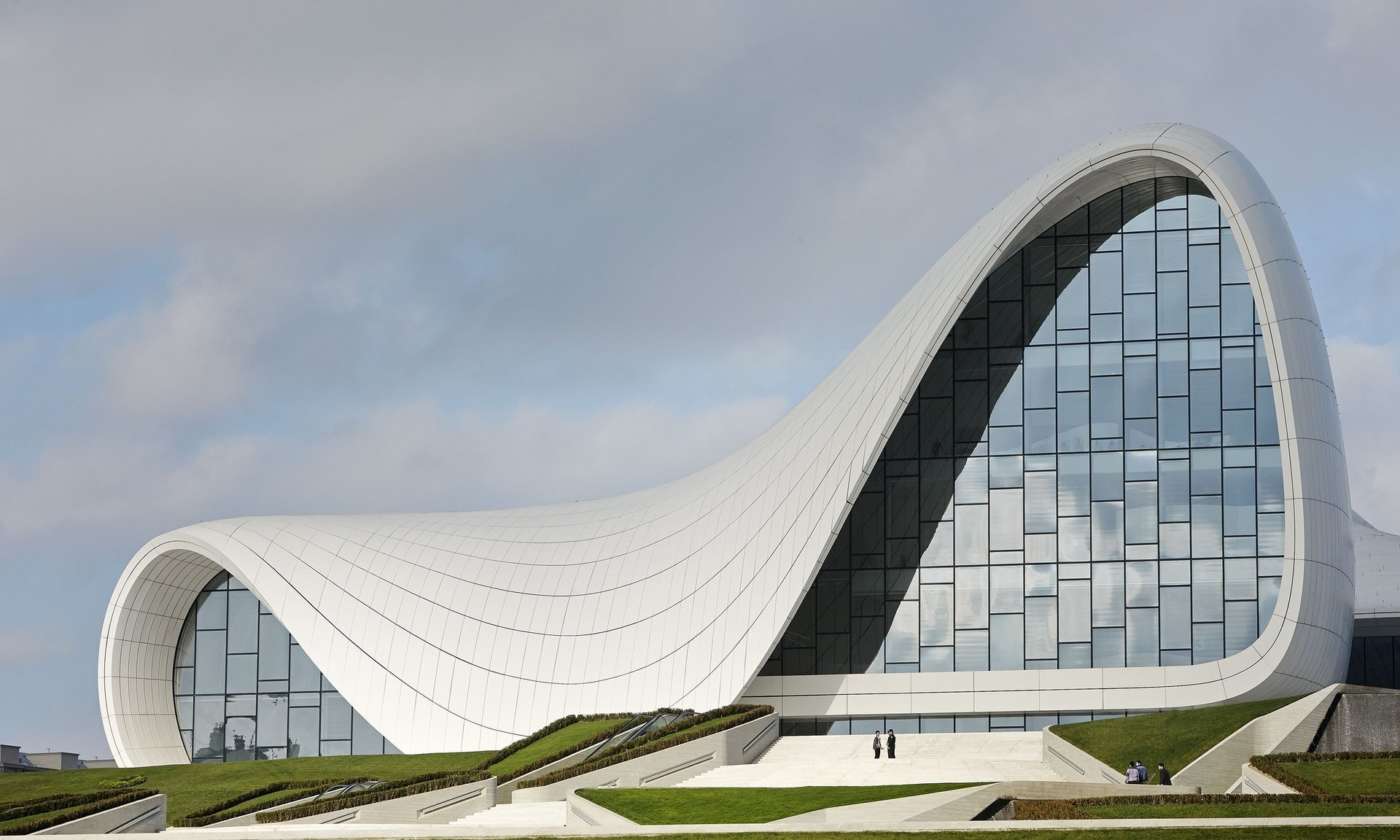
Walk down Biscayne Boulevard and you'll see it. That massive, bone-white structure that looks less like a building and more like something a giant alien left behind. Most people call it the Scorpion Tower. Its real name is One Thousand Museum, and it’s the definitive piece of Zaha Hadid architecture Miami locals and tourists alike can't stop staring at.
Honestly, it’s kind of a miracle it exists at all.
When Zaha Hadid first proposed this thing, plenty of engineers probably wanted to run for the hills. We're talking about a 62-story residential skyscraper that doesn't rely on a traditional internal skeleton. Instead, she flipped the script. She moved the support to the outside. This created a "curvaceous exoskeleton" that actually carries the weight of the tower and fights off those nasty 170 mph hurricane winds we get down here.
The Engineering Nightmare That Actually Worked
You've probably heard the term "starchitect." Hadid was the queen of them. She was the first woman to win the Pritzker Prize, and she didn't do "boring boxes." For One Thousand Museum, her team used 5,000 pieces of glass-fiber reinforced concrete (GFRC).
Here’s the wild part: they didn't make them in Florida. They were custom-fabricated in Dubai and shipped across the ocean. Why? Because the curves were so specific and the structural demands so high that only a few places on Earth could handle the "impossible build."
- Weight Matters: GFRC is way lighter than traditional concrete.
- Column-Free Living: Because the "bones" are on the outside, the apartments inside don't have those annoying pillars blocking your view of the Atlantic.
- The Foundation: To keep a 707-foot "scorpion" from tipping over in Miami’s sandy soil, they had to drill 165 feet deep. That’s record-breaking territory for a residential build in the city.
It’s easy to think this is just a playground for the 1%, but it changed how we think about what a skyscraper can do. It isn't just a facade; it's a "hybrid bracing system." Basically, the art is the structure, and the structure is the art.
Why Zaha Hadid Architecture Miami Isn't Just One Building
While everyone talks about the tower on 1000 Biscayne Blvd, Hadid’s influence in Miami is spreading even after her passing in 2016. She actually died right here in Miami, which adds a layer of heavy local legacy to her work.
Fast forward to 2026, and we're seeing the next wave. Zaha Hadid Architects (ZHA) recently unveiled "The Delmore." It’s tucked away in what people are calling the Billionaire’s Triangle. It’s shorter—only 12 stories—but it’s got these "mansions in the sky" that start at 7,000 square feet.
The coolest feature? A 75-foot transparent swimming pool suspended 125 feet in the air. If you're walking down Collins Avenue and look up, you’ll literally see people swimming over your head. It’s theatrical. It’s slightly terrifying. It’s quintessentially Hadid.
Getting the "Vibe" Right
Critics sometimes say her work is "cold" or "anti-contextual." I disagree. If you spend time at One Thousand Museum, you notice how the curves mimic the water of the bay.
Inside, they even have custom scenting. Yeah, you read that right. A company called 12.29 designed specific smells for the lobby and spa to match the "architectural vision." It sounds pretentious, but when you’re standing in a double-height aquatic center with a faceted metal ceiling reflecting the pool water, it kind of fits.
"One Thousand Museum's organic forms seem to grow out of the earth and reach skyward," says Louis Birdman, one of the developers who worked closely with Hadid.
It’s a stark contrast to the rigid, glass-and-steel boxes that dominate the rest of the skyline. Hadid’s work feels like it’s breathing.
The Reality of Living in a Sculpture
Is it practical? Sorta. Is it expensive? Absolutely. Units have sold for anywhere from $5 million to well over $20 million for the full-floor penthouses.
- The Helipad: It’s the first residential helipad in Miami. If you’re a CEO or a celebrity, you don't do the I-95 traffic. You just land on the roof.
- The Vault: There’s a bank-quality vault with individual safe deposit boxes for every resident.
- The Views: Every unit has "flow-through" floor plans. You get the sunrise over the ocean and the sunset over the city.
But the real value isn't just the Gaggenau appliances or the Italian kitchens. It’s the fact that you’re living inside a piece of history. This was one of the last projects Zaha Hadid personally touched before she passed away.
Actionable Insights for Architecture Lovers
If you're in Miami and want to actually experience Zaha Hadid architecture Miami style without a $10 million bank account, here’s what you do:
- The Public View: Head to Museum Park (across from the Pérez Art Museum). It’s the best spot to photograph the exoskeleton. Go at "golden hour" when the light hits the GFRC panels—they glow.
- Look for the Details: Even the door handles in the building were designed by Hadid (the Valli & Valli Duemila Cinque series). If you ever get a chance to tour a unit, pay attention to the hardware.
- Watch the Documentary: Check out the "Impossible Builds" episode on PBS. It shows the actual struggle of moving those 5,000 pieces from Dubai to Miami. It'll make you appreciate the "Scorpion" a lot more.
- Follow the New Projects: Keep an eye on the Surfside site and The Delmore. ZHA is continuing her "parametricism" style, using algorithms to create shapes that humans used to think were impossible to build.
Architecture in Miami used to be about Art Deco and pastel colors. Now, thanks to Hadid, it’s about curves, structural bravado, and proving that a building can be a masterpiece and a home at the same time.
Next Step: If you're planning a visit, start at the Frost Science Museum. From their observation deck, you get a bird's-eye view of how the One Thousand Museum exoskeleton integrates into the skyline. It’s the best way to see the "Scorpion" in its natural habitat.