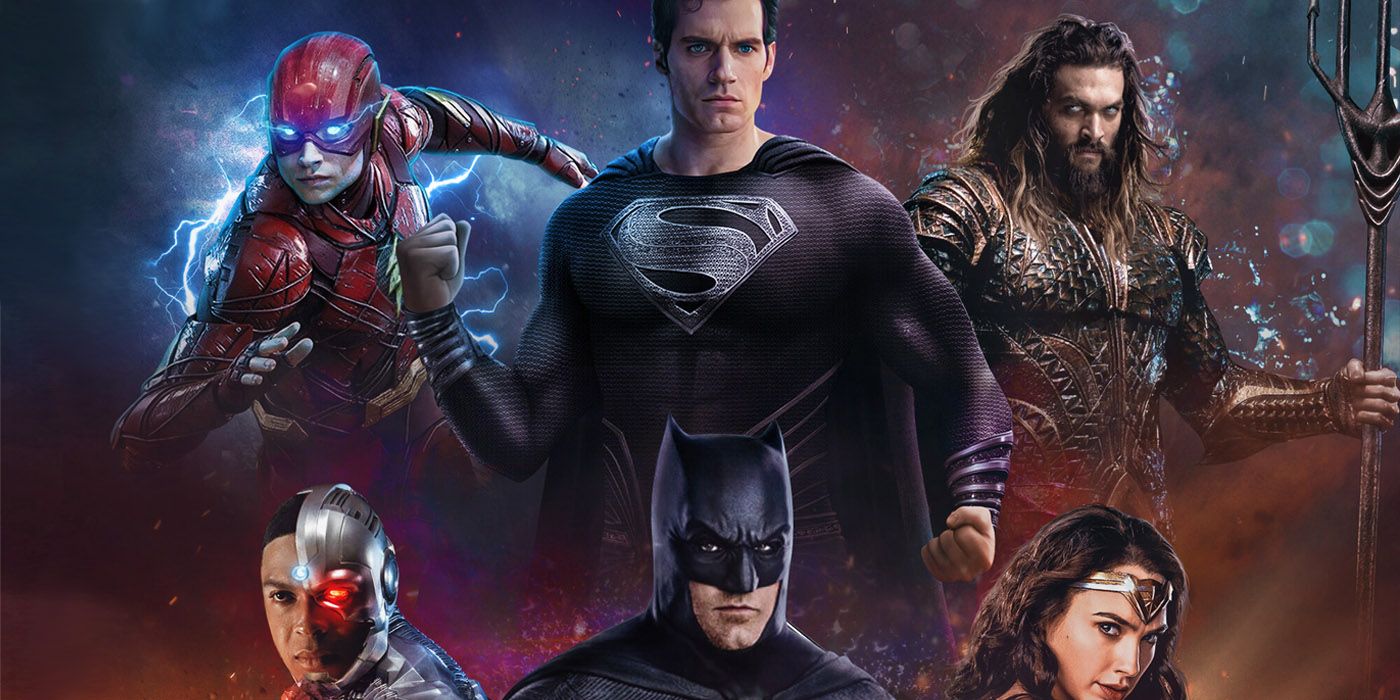
Honestly, the story behind Zack Snyder's Justice League is way more dramatic than the movie itself. And that is saying something for a film where a literal god-killer tries to turn Earth into a scorched-earth cube. You remember 2017. We all do. We walked into theaters expecting a grand follow-up to Batman v Superman and walked out wondering why Henry Cavill’s upper lip looked like it had been attacked by a malfunctioning lawnmower.
It was a mess. A weird, Frankenstein-like mess.
But then something happened. A hashtag started. People mocked it. Then, four years later, a 4-hour R-rated epic dropped on HBO Max. It wasn't just a "director's cut." It was a complete overhaul that changed how we think about fan power and studio interference.
The Tragedy and the "Piece of S***"
To understand why Zack Snyder's Justice League exists, you have to look at the wreckage of the original production. Zack Snyder had to walk away. His daughter, Autumn, took her own life at age 20. It’s a heartbreaking reality that often gets lost in the noise of "superhero discourse." While he was grieving, Warner Bros. brought in Joss Whedon.
The mandate? Make it funny. Make it short.
The result was a disaster. Executives later admitted behind closed doors that the 2017 theatrical version was a "piece of s***." They knew. They just didn't want to admit it at the time. Whedon rewrote about 80 pages of the script. He changed the color grading to a bright, almost garish orange. He cut the heart out of the film.
Basically, only about 30 minutes of Snyder's original footage made it into that first version. The rest was a frantic attempt to mimic the Marvel "quippy" style that just didn't fit these versions of the characters.
What Most People Get Wrong About the Snyder Cut
There’s a common myth that the "Snyder Cut" didn't exist until fans started tweeting. That's kinda true, but also mostly false. Snyder had a 214-minute "assembly cut" that was basically done, minus the expensive CGI. When Warner Bros. needed a massive win for their new streaming service (then HBO Max), they finally blinked. They handed Snyder roughly $70 million to finish the visual effects, record a new score with Tom Holkenborg (Junkie XL), and shoot about four minutes of new footage—most notably that bizarre, "we live in a society" Joker interaction in the Knightmare sequence.
The Cyborg Factor
If you’ve only seen the theatrical version, you haven't actually seen the real movie. Ray Fisher’s Victor Stone (Cyborg) was reduced to a background character who occasionally shouted "Booyah!" It was insulting. In Zack Snyder's Justice League, Victor is the actual soul of the story. His journey from an angry, broken athlete to a techno-god who accepts his new self is the emotional anchor.
Steppenwolf’s Glow-up
Let's talk about the villain. In 2017, Steppenwolf looked like a generic video game boss from 2005. In the 2021 version, he’s covered in reactive, spiked armor that looks like it’s breathing. He has motivation. He’s a disgraced general trying to win back the favor of Darkseid. You actually sort of feel bad for him right before his head gets chopped off.
The Four-Hour Elephant in the Room
Yeah, it’s four hours long. It’s massive. It’s presented in a 4:3 aspect ratio (that square box look) because Snyder wanted it to fill up an IMAX screen. On your 65-inch OLED at home, it leaves black bars on the sides. It feels more like a limited series than a movie, which is why it's broken into chapters.
Is every minute necessary? Probably not. There are a lot of slow-motion shots. Like, a lot. If you took out the shots of people walking slowly toward the camera or staring wistfully at the horizon, you’d probably save 40 minutes. But that's the point. It's uncompromised. It's the "all-you-can-eat" buffet of DC filmmaking.
The Movement and the Toxicity
We have to talk about the fan base. The #ReleaseTheSnyderCut movement was a double-edged sword. On one hand, these fans raised over $500,000 for the American Foundation for Suicide Prevention. That is an objective, massive win for humanity.
On the other hand, the movement was plagued by targeted harassment against executives and critics. It proved that if you scream loud enough online, you can actually change what a multi-billion dollar corporation does. That's a powerful—and slightly terrifying—precedent. It's why we see similar demands for the "Ayer Cut" of Suicide Squad or the "Schumacher Cut" of Batman Forever.
Why It Still Matters Today
As we sit here in 2026, the "SnyderVerse" is technically dead. James Gunn has taken the reins of the DCU. But Zack Snyder's Justice League remains a singular moment in film history. It is the only time a studio has ever spent nearly $100 million to "fix" a movie they already released because of a fan petition.
It’s a story of artistic redemption. It’s a story of a father finishing a project dedicated to his late daughter. Whether you love the "grimdark" aesthetic or find it pretentious, you have to respect the sheer audacity of its existence.
Actionable Insights for the Modern Viewer:
- Watch it in Chapters: Don't try to power through all 242 minutes in one go. Treat it like a 6-episode miniseries. The chapter breaks are built-in for a reason.
- Pay Attention to the Flash: The "Speed Force" sequence at the end is widely considered one of the best superhero moments ever put to film. It’s a complete 180 from his portrayal in the theatrical cut.
- Compare the Colors: If you have the chance, look at side-by-side screenshots of the two versions. The 2021 version uses high-contrast blacks and desaturated tones that make the CGI look significantly more grounded.
- Ignore the "Knightmare" Ending: Honestly, the Joker/Batman scene at the very end is a teaser for a sequel that isn't coming. It’s cool fanservice, but it doesn't affect the main plot of the film.
The movie isn't just a superhero flick anymore. It’s a historical artifact of the streaming wars. It's a reminder that sometimes, the "official" version of a story isn't the right one.
To get the most out of it, start with Chapter 1: "Don't Count on It, Batman," and see how much the tone has shifted from the Joss Whedon era. You'll notice the difference within the first five minutes.



