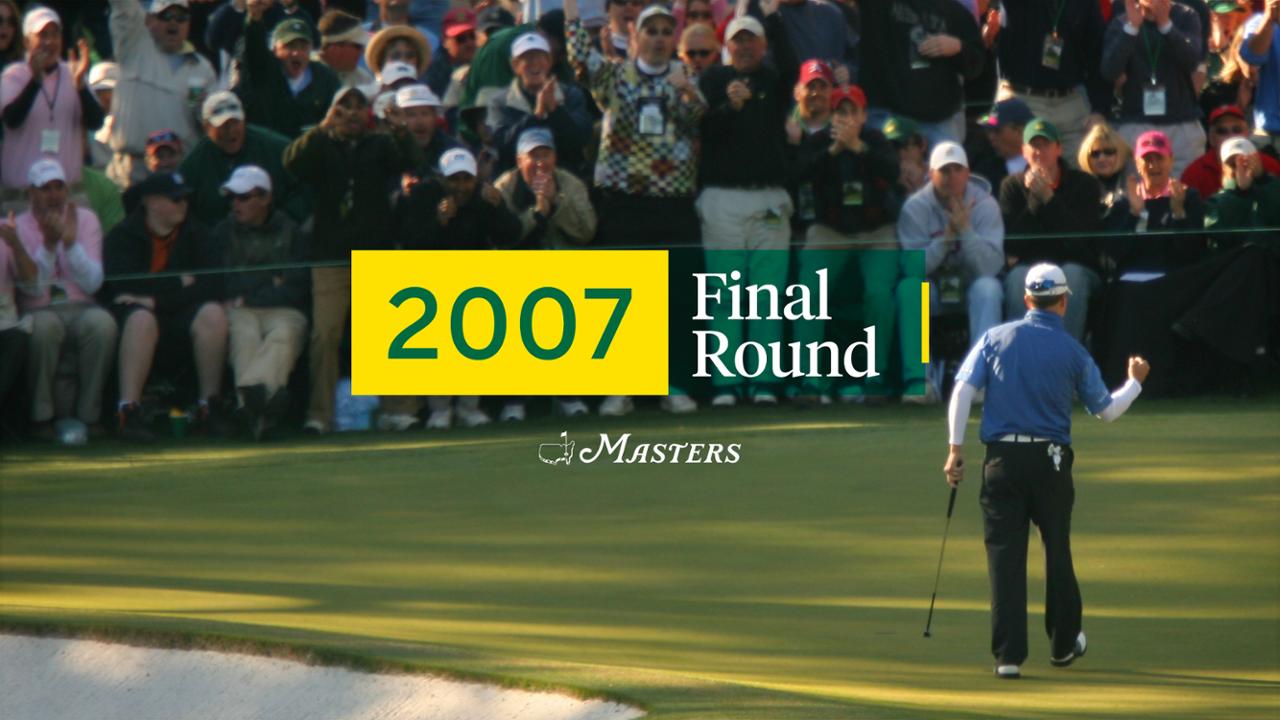
The 2007 Masters wasn't supposed to happen this way. Honestly, if you were sitting in a sportsbook in Vegas that April, the last person you were looking at was a guy from Cedar Rapids who couldn't reach the par-fives in two. Augusta National had just been "Tiger-proofed," stretched out to a monstrous length that favored the high-launch, high-velocity bombers. Then the wind started howling. The temperature plummeted.
By the time Sunday rolled around, the leaderboard looked like a survivalist's manual. Zach Johnson won the Masters in 2007, but he did it by playing a version of golf that felt almost rebellious at the time. He didn't overpower the course; he negotiated with it. He finished at 289, which is 1-over par. That tied the record for the highest winning score in the history of the tournament. It was gritty. It was cold. It was arguably the most strategic display of golf we've seen in the modern era.
The Year Augusta Fought Back
Usually, the Masters is about the "Roars." You expect to hear that distant, echoing thunder of a Sunday charge where someone like Tiger Woods or Phil Mickelson goes 6-under on the back nine. 2007 was different. It was quiet. The wind was swirling at 20 to 25 miles per hour, making the greens feel like glass tabletops covered in olive oil.
The conditions were so brutal that players weren't hunting birdies; they were just trying to avoid "others"—those dreaded double and triple bogeys that ruin a jacket run. Look at the scoring averages. On Saturday, the field averaged 77.3. That’s insane for the best golfers in the world. Stuart Appleby held the 54-hole lead at 4-over par. You don't see that anymore. It felt more like a US Open at Shinnecock than a spring afternoon in Georgia.
How Zach Johnson Won the Masters in 2007 Without a Long Ball
If you talk to golf purists about this specific win, they always bring up the par-fives. It’s the stuff of legend. Zach Johnson played the par-fives in 11-under par for the week.
Here is the kicker: He didn't go for a single green in two. Not once.
In an era where every coach was telling kids to swing out of their shoes, Johnson and his caddie, Damon Green, stuck to a disciplined yardage map. He laid up on every single par-five, every single day. He trusted his wedges. He trusted his flatstick. While guys like Tiger Woods and Retief Goosen were hacking out of the pine needles after trying to muscle a 3-iron onto the green, Zach was hitting a comfortable wedge to 6 feet.
It was a masterclass in knowing your limitations. Most pro golfers have an ego that wouldn't let them lay up on the 13th or 15th with a green jacket on the line. Zach checked his ego at the Magnolia Lane gate.
The Sunday Charge That Nobody Saw Coming
Starting the final round two shots back, Johnson didn't look like a guy about to take down the titans. But he started pouring in putts. He birdied 13, 14, and 16. That birdie on 16 was the dagger. He stuck a tee shot on the par-3 to about 8 feet and drained it while the pressure was mounting behind him.
Tiger Woods was looming. He always is. Tiger actually had a share of the lead at one point on Sunday, but a broken club on a tree trunk at the 11th and a few missed opportunities left him two strokes back. It’s easy to forget that Rory Sabbatini and Retief Goosen were also right there, finishing in that tie for second at 3-over.
The Gear and the Gritty Details
People forget how much the equipment mattered that week. The greens were so firm that if you didn't have the right spin rate, your ball was ending up in the patrons' laps. Johnson was using a Titleist 905R driver and those classic 735.CM irons. But the real hero was his SeeMore FGP blade putter.
That putter became a superstar overnight. The "RifleScope" technology—that little red dot you hide with the shaft—became the must-have item for every amateur golfer struggling with alignment. It was the perfect tool for a guy who needed to make every 6-footer for par to stay in the hunt.
- Winning Score: 289 (+1)
- Runner-ups: Tiger Woods, Retief Goosen, Rory Sabbatini
- Key Stat: 11-under on par-fives despite zero attempts to reach in two.
- Weather: Average temps in the 50s, gusts over 25mph.
Why This Win Changed the "Tiger-Proofing" Narrative
For years, the USGA and Augusta National thought the only way to protect a course was to make it longer. "Add a tee box here, move a fence there." Zach Johnson's victory proved that firmness and wind are the ultimate equalizers. You can make a hole 600 yards long, but if the greens are fast enough and the wind is blowing, a guy with a great wedge game will beat a guy with a 120mph clubhead speed every time.
It also humanized the Masters. Seeing a guy from Iowa, who was a relative underdog, out-duel the greatest player to ever live (Tiger was in his absolute prime in '07) gave hope to the "short hitters." It showed that course management isn't just a boring cliché your local pro shouts at you; it's a legitimate weapon.
The Lingering Legacy of 2007
Some critics at the time called it a fluke or a "boring" Masters because of the high scores. I disagree. It was a fascinating psychological study. We watched the best players in the world get frustrated. We watched them tilt. Meanwhile, Zach Johnson just kept hitting his spots, laying up, and tipping his cap.
He didn't just win a trophy; he won a lifetime exemption and a spot in the Champions Locker Room. He went on to prove it wasn't a one-off by winning the Open Championship at St. Andrews in 2015—another "Home of Golf" where strategy outweighs brute force.
If you’re looking to apply the lessons from how Zach Johnson won the Masters in 2007 to your own game or just want to appreciate the history, start by looking at your own "unreachable" par-fives. The 2007 tournament is the ultimate proof that the shortest distance between two points isn't always a straight line—sometimes it’s a calculated layup and a confident putt.
Practical Takeaways from the 2007 Leaderboard
To truly understand the impact of this win, you have to look at how you approach difficult conditions.
- Identify your "Go-To" yardage. Johnson knew he could hit his wedge to a specific distance every time. Stop trying to hit "half-shots" and play for a full swing.
- Short memory is a requirement. Johnson made bogeys. Everyone did. The difference was he didn't follow them up with doubles.
- Respect the wind. In 2007, the wind didn't just move the ball; it moved the players' minds. Staying patient when the weather is trash is a skill in itself.
Study the 2007 final round highlights if you get a chance. Pay attention to the silence of the crowd and the way the players were bundled up in sweaters. It’s a stark reminder that golf is an outdoor sport, and sometimes, the winner is just the person who refuses to let the elements break them.