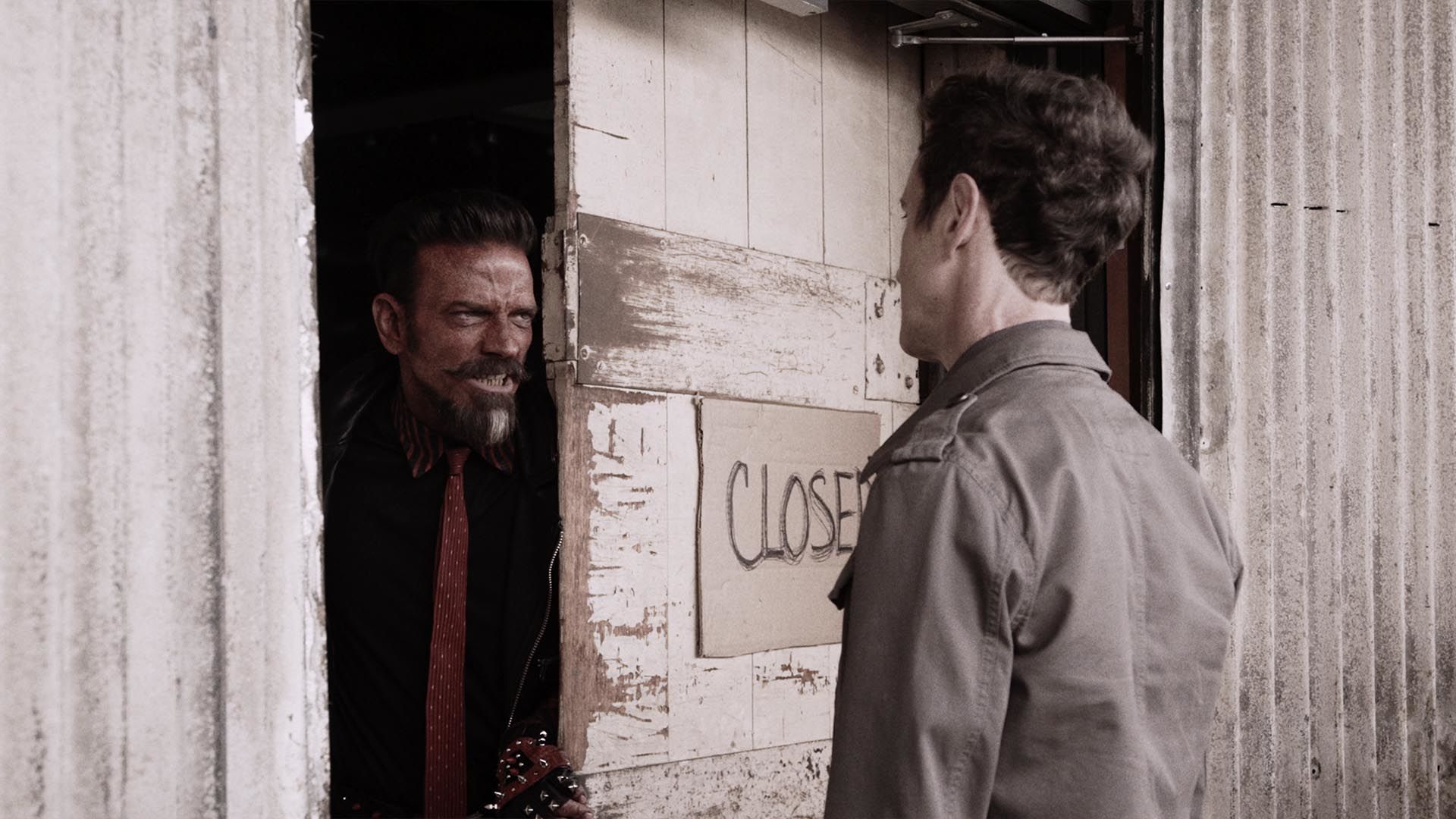
Z Nation season 5 was weird. Even for a show that once featured a giant rolling cheese wheel crushing zombies, the final outing felt like a massive tonal pivot. It wasn't just about surviving the apocalypse anymore. Suddenly, the Syfy cult classic was asking questions about democracy, civil rights, and whether a zombie that can talk is still a person.
Honestly, it caught a lot of fans off guard.
When you look back at the show's run, the jump from "zany road trip" to "political allegory" in Z Nation season 5 is jarring. But it worked. Mostly because the show never lost its heart, even when it was knee-deep in "Talker" politics. If you’ve been scrolling through streaming platforms wondering if it’s worth finishing the journey to Newmerica, you’ve gotta understand that this season isn’t just a wrap-up. It's a complete reimagining of what a post-apocalyptic world looks like once the initial panic dies down and the boring, difficult work of building a society begins.
The Talker Problem and the Shift in Stakes
The core of Z Nation season 5 revolves around "Talkers." These are zombies who haven't quite lost their minds yet. They’re dead, sure, but they’re conscious. They think. They feel. They just happen to need "biscuits"—a specific type of nutritional supplement made from brains—to keep from going full "Z."
It’s a metaphor that isn’t exactly subtle.
By introducing the Talkers, the writers forced Murphy, Warren, and the rest of the gang to stop shooting first and start asking questions. For years, the rule was simple: see a Z, give it mercy. Now? If you give mercy to a Talker, you might be committing murder. This shifted the show from an action-horror romp into a messy exploration of the "other." Newmerica, the promised land our heroes were trekking toward, became a powder keg of racial and social tension. You had people who wanted a "humans-only" world, led by figures like Pandora and Estes, and you had those trying to integrate the living and the dead.
George, played by Katy O'Brian, was a breath of fresh air here. She wasn't just another soldier; she was a political leader. Watching her try to draft a constitution while zombies were literally rotting in the streets gave the show a sense of weight it hadn't had since the early days of the Murphy cure arc.
Why Newmerica Felt Different
Newmerica wasn't the sanctuary everyone hoped for. It was a dump. But it was a dump with a voting booth.
The production design in Z Nation season 5 reflected this gritty reality. Everything felt lived-in and precarious. The showrunners, including Karl Schaefer and Craig Engler, leaned into the idea that the "end of the world" is a long, slow process rather than a single event. While The Walking Dead often circles back to "who can we trust?", Z Nation decided to ask "how do we live together?"
It's a much harder question to answer in 13 episodes.
Roberta Warren’s Evolution and the Black Rain
We can't talk about this season without mentioning Roberta Warren. Kellita Smith has always been the anchor of this show, but in Z Nation season 5, her character reached a strange, almost ethereal peak. After the "Black Rain" event at the end of the previous season, Warren wasn't entirely human herself.
She was haunted.
Her connection to the environment and her visions added a layer of mystery that balanced out the heavy political plotting. The season kicks off with her in a drone wreckage, and that feeling of being "lost in the machine" persists. Throughout the season, her relationship with Murphy—which has always been the best part of the show—evolves into something deeply respectful and almost weary. They are two veterans of a war that keeps changing its rules.
Murphy, meanwhile, stayed Murphy. Red Murphy was a vibe. Keith Allan played the character with his signature blend of arrogance and hidden empathy, but seeing him interact with the Talkers was fascinating. He was their accidental messiah, again. He didn't want the job, but he couldn't stop himself from caring, even if he bitched about it the whole time.
The Problem With the Lithium Arc
Look, not everything was perfect. The whole subplot involving lithium and the hackers sometimes felt like it was dragging its feet. In the middle of the season, there were moments where the pacing stumbled as the group moved from one outpost to another. The "biscuits" plot point also got a bit repetitive. We get it—they need the biscuits or they go crazy.
But even when the plot slowed down, the character beats kept it afloat. Doc (Russell Hodgkinson) remained the soul of the group. His "Doc's Stoned History" bits and his general ability to find a joint in a graveyard provided the much-needed levity that prevented the season from becoming too grim. Without Doc, the Newmerica politics might have been a bit too dry for a show that once featured a zombie stripper pole.
The Real-World Legacy of Z Nation Season 5
It’s easy to forget that this show was often the underdog. It didn't have the massive budget of other prestige TV, but it had more imagination in its pinky finger than most shows have in a full season. Z Nation season 5 proved that you could do "high-concept" on a budget if you had a clear vision.
The show was canceled shortly before the season 5 finale aired.
This led to a finale that felt like both a goodbye and a new beginning. We finally got some answers about the cure, the nature of the virus, and the fate of the survivors. The revelation about Murphy's blood and the true purpose of the Talkers tied the mythology together in a way that felt earned. It wasn't a "happily ever after," but it was a "maybe we'll be okay." In the world of Z Nation, that's as good as it gets.
Misconceptions About the Ending
Some fans were annoyed that we didn't get a season 6 to see the fully formed Newmerica. While Black Summer acted as a prequel, it was a completely different beast—dark, nihilistic, and devoid of the Z Nation "spark."
The truth is, the ending of season 5 is actually a perfect closing circle. The mission was always about finding a way to survive, not just as individuals, but as a species. By the end, "species" had been redefined to include the Talkers. The journey from New York to the Pacific and then to Newmerica was a journey of expanding the definition of humanity.
How to Revisit the Series Today
If you’re planning a rewatch or diving in for the first time, keep these things in mind to get the most out of the experience:
- Watch for the Background Details: The signs and graffiti in Newmerica are filled with lore that isn't always explained in the dialogue.
- Pay Attention to George: She is essentially the viewer's proxy in the final season. Her idealism is the foil to the group's cynicism.
- Embrace the Weirdness: If a plot point seems absurd (like the "hackers" or the specific way the biscuits are made), just roll with it. The show is at its best when it's being fearless.
The biggest takeaway from the final episodes is the idea of "The Reset." The world didn't go back to the way it was before the Zs. It became something new entirely. It was a messy, loud, violent, and occasionally hilarious transition.
To truly appreciate the finale, you have to look at the very first episode. Compare the ragtag group of strangers in the pilot to the family they became by the end of Z Nation season 5. They didn't just survive the apocalypse; they outlasted it. They outgrew it.
The next step for any fan is to look at the series as a complete work. Don't just cherry-pick the action scenes. Look at how the show handled Murphy's skin color changes as a barometer for his humanity. Notice how Warren's leadership style shifted from military precision to intuitive guiding. When you see the final frame of the series, it shouldn't feel like a cliffhanger. It should feel like a hand-off to the next generation of survivors.
Go back and watch the "Water Keepers" episode in season 5 again. It’s one of the best examples of how the show used a small, isolated conflict to mirror the massive struggles of the new world. It's gritty, it's personal, and it's exactly why this show deserved more credit than it ever got during its initial run.
Instead of looking for a season 6 that isn't coming, spend some time exploring the fan theories regarding the "Talker" virus evolution. There is a wealth of community-created lore that fills in the gaps left by the Syfy cancellation. The story doesn't have to end just because the cameras stopped rolling.
Final Insights for Fans
- Context is Everything: Season 5 makes much more sense if you view it as a political thriller wrapped in a zombie skin.
- Character over Plot: If you find the lithium plot confusing, focus on the Murphy/Warren dynamic. That is the true "north star" of the season.
- The Newmerica Constitution: Take a second to realize how radical it was for a zombie show to spend time on the legal rights of the undead. It’s a level of depth that most horror media avoids.
The end of the road wasn't a destination; it was a realization that the road never actually ends. You just get better at driving it.



