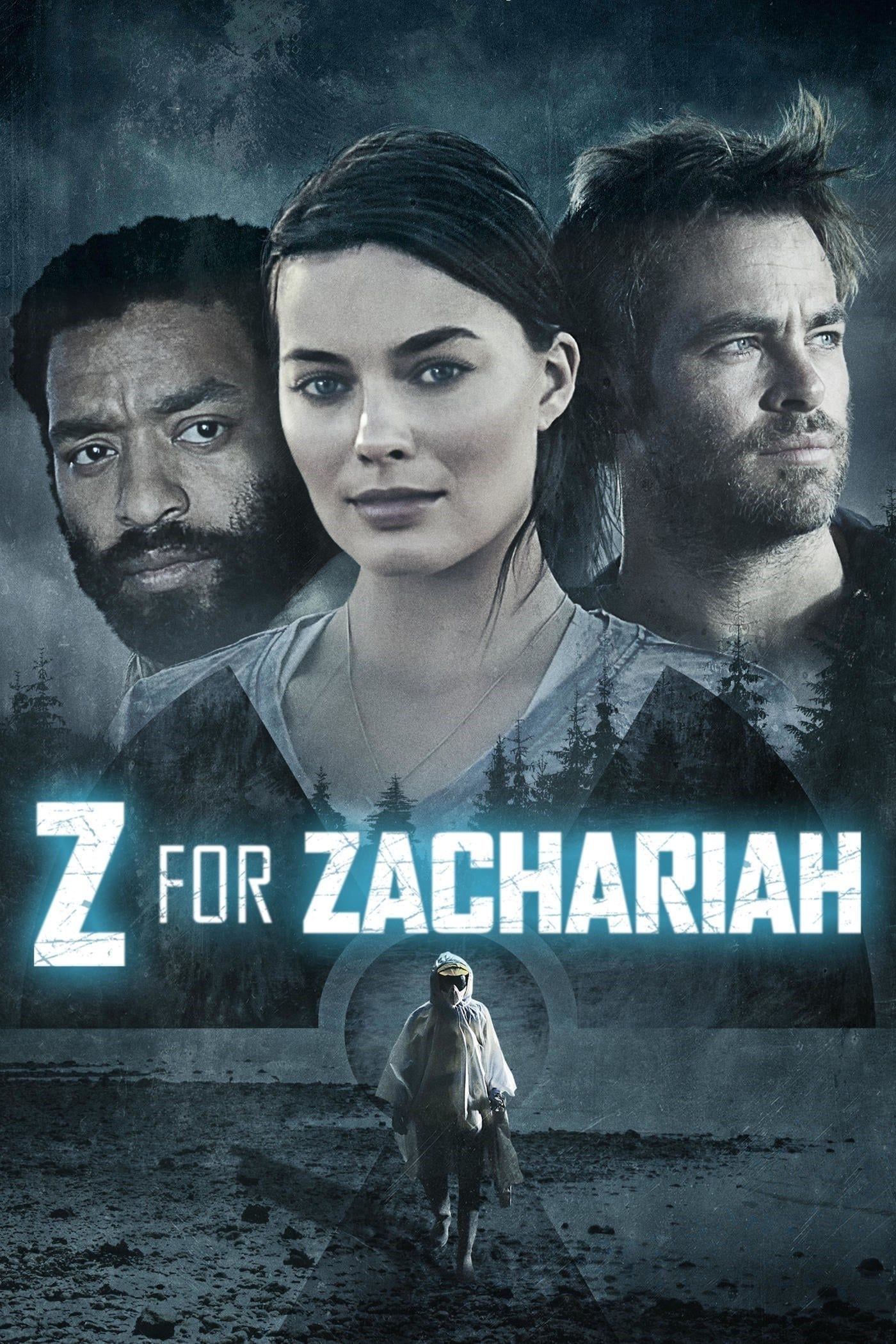
You’ve probably seen the posters. Margot Robbie looking sun-drenched and soulful on a farm, Chiwetel Ejiofor looking intense, and Chris Pine lurking with that "maybe-I'm-a-villain" beard. On the surface, the movie Z for Zachariah looks like just another post-apocalyptic flick. You know the drill: world ends, people get dusty, someone finds a shotgun.
But this isn't Mad Max. Honestly, it’s barely even a sci-fi movie. It’s a psychological pressure cooker.
Released in 2015 and directed by Craig Zobel, this film takes the "end of the world" trope and shrinks it down to a single, lush valley. It’s basically a three-person stage play with a lot of heavy lifting by the actors and a very confusing organ. People still argue about what actually happened in those final ten minutes. Was there a murder? Did someone just leave? Why is everyone so quiet?
Let’s get into why this movie stays in your brain long after the credits roll.
What Actually Happens in the Valley?
The setup is simple. Ann Burden (Margot Robbie) is living alone on her family farm. She thinks she’s the last human on Earth because a nuclear event—never fully explained, but clearly nasty—has wiped out everything. Her valley is a "miracle" spot where the air is clean and the water is safe, thanks to specific weather patterns and geography.
Then John Loomis (Chiwetel Ejiofor) shows up.
He’s a scientist in a bulky radiation suit. He’s smart, he’s traumatized, and he almost dies immediately because he decides to take a victory swim in a contaminated pond. Ann saves him. They start a life. It’s awkward, it’s sweet, and it’s deeply tense. Then Caleb (Chris Pine) arrives, and the "two’s company, three’s a crowd" rule hits like a freight train.
The Adam, Eve, and Snake Dynamic
The film is dripping with Biblical imagery. Ann is the piously religious "Eve." Loomis is the man of science, the "Adam" who wants to build a water mill and generate power. Caleb is the "Snake." Or maybe he isn't. That’s the brilliance of the movie.
In the original 1974 novel by Robert C. O'Brien, there is no Caleb. The book is a much darker, more predatory story about Loomis trying to control Ann. By adding a third person, the movie turns a survival horror story into a study of jealousy and tribalism.
Caleb is a "country boy" like Ann. They share the same faith. Loomis is an outsider in more ways than one, and you can see the resentment boiling under his skin. It’s not just about who gets the girl; it’s about who belongs.
That Ending: Did Loomis Kill Caleb?
This is the big one. If you’ve seen the movie Z for Zachariah, you know the ending is frustratingly ambiguous.
During the construction of the water wheel, Caleb and Loomis are up on a slippery cliff. Caleb is wearing the heavy radiation suit. He slips. Loomis catches the rope. They lock eyes. The movie cuts away.
When Loomis returns to the farmhouse, he tells Ann that Caleb decided to leave. He says Caleb headed south to find other survivors. But there are some massive red flags:
- The Gear: Caleb left all his supplies. Nobody leaves their gear in a nuclear wasteland.
- The Eyes: The look on Loomis’s face when he returns isn't "I'm sad my friend left." It’s "I have a secret that is eating my soul."
- The Organ: In the final scene, we see that the heavy church organ has been moved into the barn.
Wait, the organ?
Basically, Ann’s father built a church that Loomis wanted to tear down for parts. Ann hated the idea. By the end, the church is gone, the water wheel is working, and the organ is inside. Some fans argue that moving that organ would require two men. If it’s in the barn, Caleb must be alive, right?
Kinda. But consider this: Loomis is an engineer. He has a tractor. He’s spent the whole movie proving he can do anything with enough "science." The most likely reality is that Loomis let Caleb fall (or pushed him), and then moved the organ himself as a guilt-ridden peace offering to Ann. He gave her the lights and the music, but he took away the only other person who truly understood her.
The Science of the "Safe Zone"
Is a place like Ann’s valley even possible?
Real-world experts, like evolutionary biologists who study Chernobyl, have noted that radiation doesn't just "stop" at a hill. However, the film uses the idea of an "inversion layer" or specific topographical shielding. It’s a bit of a stretch, but it works for the narrative.
What’s more accurate is Loomis’s radiation sickness. The "Silkwood shower" scene where Ann has to scrub him down is a real-deal protocol. If you get radioactive dust on your skin, you have to get it off now. The film does a great job showing that even in "paradise," death is just one wrong step into the wrong stream away.
Why It Fails as a "Blockbuster" but Excels as Cinema
If you go into this expecting A Quiet Place, you’re going to be bored. The pace is slow. Very slow.
But the performances are top-tier. This was one of the first times people realized Margot Robbie wasn't just a "pretty face" from The Wolf of Wall Street. She disappears into Ann. She’s rugged, capable, and heartbreakingly lonely.
Chiwetel Ejiofor plays Loomis with a simmering, quiet desperation. You want to like him, but you’re also a little afraid of him. And Chris Pine plays the "charming threat" better than almost anyone. He’s so likable that you almost miss the subtle ways he undermines Loomis.
Actionable Insights for Your Next Watch
If you're planning to revisit the movie Z for Zachariah or watch it for the first time, keep these things in mind to get the most out of it:
- Watch the eyes, not the hands: Most of the plot happens in the glances between the two men. The dialogue is often a lie.
- Listen to the soundscape: Notice how the sounds of nature change when Caleb arrives. It gets louder, more chaotic.
- Don't look for a hero: There isn't one. Ann is naive, Loomis is potentially a murderer, and Caleb is a liar. They are just people trying not to be alone.
- Compare it to the book: If you want a much darker, more straightforward "villain" story, read the Robert C. O'Brien novel. It’ll make you appreciate the nuance of the film’s changes even more.
The movie doesn't give you a neat bow at the end. It leaves you in that barn with Ann and Loomis, surrounded by electricity and music, but trapped in a silence that will probably never be broken. It’s a bleak, beautiful look at how even when the world ends, our smallest, ugliest impulses—jealousy, pride, and the need for control—survive.
Next Steps: To fully grasp the subtext, you should look up the "A for Adam" book mentioned in the film's library. It's the key to understanding why the title refers to "Zachariah" even though no character has that name.



