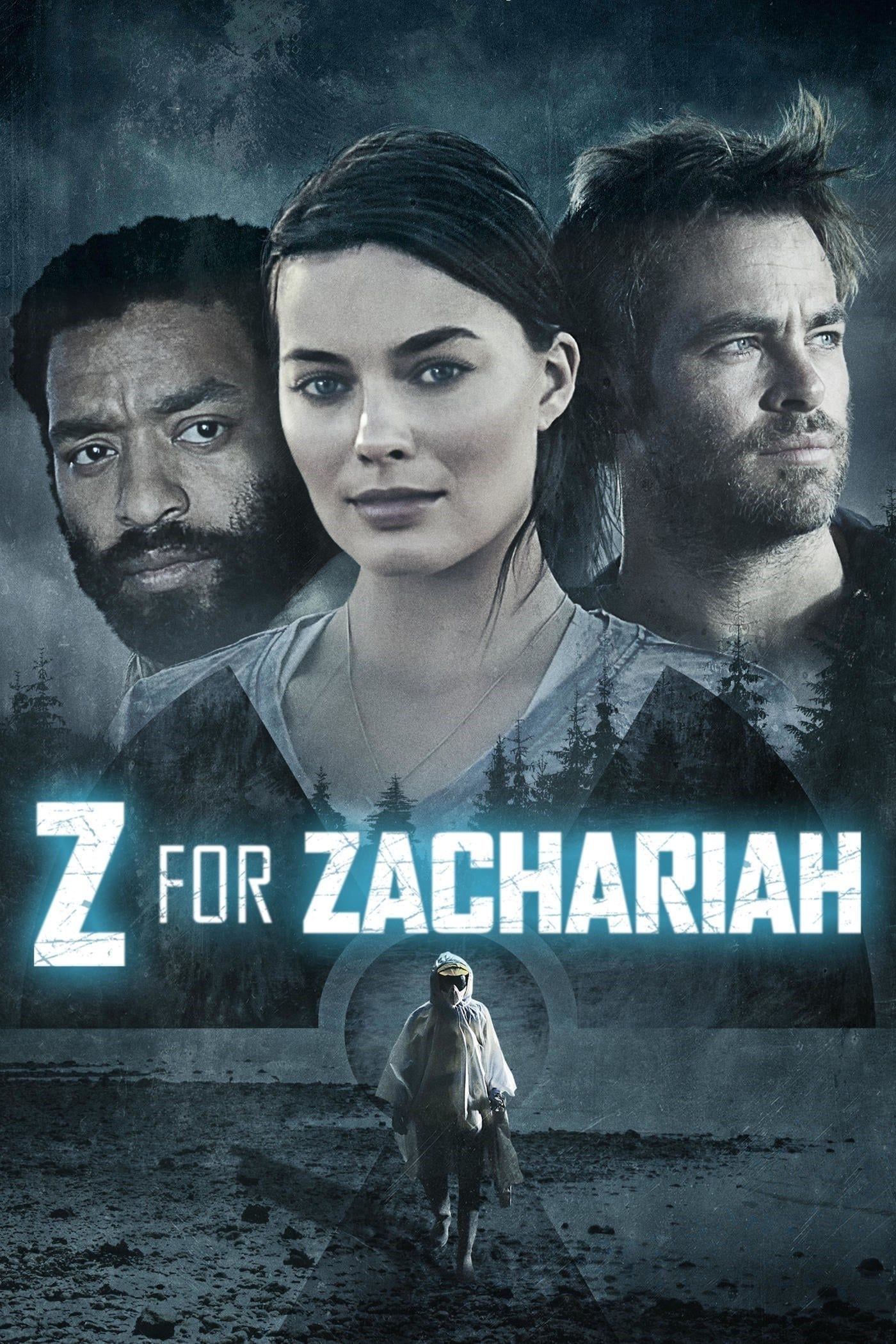
You’ve probably seen a hundred movies about the end of the world. Usually, it's all about zombies, exploding skyscrapers, or some hero in a leather jacket scavenging for gas. Z for Zachariah the movie takes a hard left turn from all that. It’s quiet. Honestly, it’s almost uncomfortably still. Directed by Craig Zobel and released back in 2015, this film strips away the typical blockbuster noise to focus on something way more terrifying: how three people basically lose their minds trying to build a new world in a tiny, radioactive valley.
It’s a slow burn. Really slow. But that’s the point.
The film is loosely—and I mean loosely—based on the 1974 novel by Robert C. O'Brien. If you read the book in middle school, you might remember it as a tense cat-and-mouse game between a young girl and a creepy scientist. The movie adds a third person to the mix, and that one change turns the whole thing into a psychological pressure cooker.
Why the setting of the valley actually matters
Location is everything here. Ann Burden, played by Margot Robbie in a performance that really proved she could do more than just the "bombshell" roles, lives in a valley that was somehow spared from the nuclear fallout.
It’s lush. It’s green.
It’s a literal Eden. But it’s also a cage.
When John Loomis (Chiwetel Ejiofor) shows up in a radiation suit, the dynamic shifts immediately. He’s a scientist, he’s logical, and he’s carrying a massive amount of trauma. The way Zobel frames the valley makes it feel both beautiful and claustrophobic. You’re constantly looking at the edges of the frame, wondering if the "dead zone" is creeping in. The cinematography by Tim Orr uses natural light in a way that feels organic, making the eventual arrival of the third character feel like a literal smudge on a clean painting.
The Caleb problem: How Chris Pine breaks the balance
For the first third of Z for Zachariah the movie, it’s a two-hander. It’s about trust. Loomis wants to build a water wheel to generate power. Ann wants to preserve her father’s church. It’s a clash between science and faith, but they’re making it work.
Then Caleb shows up.
Chris Pine plays Caleb with this "shucks, I'm just a guy" energy that you immediately know is trouble. He’s younger than Loomis. He shares Ann’s religious background. Suddenly, the "last man on earth" vibe gets complicated. It becomes a movie about the male gaze and territoriality.
Loomis, who spent weeks building a life with Ann, is suddenly the outsider again. It’s subtle stuff. A look across a dinner table. A hand lingering too long. You’ve seen this happen at a dive bar at 2 AM, but when it’s the end of the world, those jealousies become life-and-death stakes.
Faith versus the wheel
One of the best scenes involves the dismantling of the church. Loomis needs the wood to build a wheel for electricity. Ann, whose father was a preacher, sees the church as the only thing left of the "old" world worth saving.
It’s a classic conflict.
- Loomis represents progress and survival.
- Ann represents soul and tradition.
- Caleb? He represents the wild card of human nature.
The movie doesn't take sides. It doesn't say "science is better" or "faith is better." It just shows how hard it is for people with different worldviews to coexist when there’s nowhere else to go.
Where the movie deviates from the Robert C. O'Brien book
If you’re a purist, the existence of Caleb might annoy you. In the book, the conflict is purely between Ann and Loomis. The book is more of a thriller about domestic abuse and control. Loomis becomes a tyrant, and Ann has to escape.
The movie is more interested in the "grey area."
Ejiofor’s Loomis isn’t a villain. At least, not at first. He’s a man who has seen the worst of humanity and is trying desperately to hold onto some semblance of order. When Caleb arrives, it triggers Loomis’s deepest insecurities. The film suggests that even if we survived the apocalypse, we’d still bring our petty jealousies and racial tensions with us.
It’s a darker take, honestly.
The ending that people are still arguing about
Let’s talk about that ending. Without spoiling the literal final frame, Z for Zachariah the movie leaves a lot of the heavy lifting to the audience. Did something happen at the waterfall? Did someone make a choice, or was it an accident?
The ambiguity is what makes it stick in your brain.
Most post-apocalyptic movies want to give you a sense of hope or a definitive "bad guy gets his." This movie gives you a cold, hard look at a dinner table. It’s about the silence that follows a terrible act. If you’re looking for a neatly tied bow, you’re going to be frustrated. But if you like movies that make you feel like you need a shower afterward—not because they're gross, but because they're so heavy—this is it.
Technical details and trivia
- The film was shot in New Zealand, even though it’s set in the Eastern United States. The "valley" feel is much easier to capture in the rolling hills of the South Island.
- Margot Robbie actually learned how to milk a cow and chop wood for the role. She wanted the "farm girl" aesthetic to feel lived-in, not choreographed.
- The title comes from a Bible alphabet book Ann had as a child: "A is for Adam, Z is for Zachariah." If Adam was the first man, Zachariah is the last.
Why isn't this movie more famous?
It’s probably because it’s a "quiet" movie. In 2015, we had Mad Max: Fury Road. People wanted high-octane action. Z for Zachariah the movie is the opposite of that. It’s a chamber piece.
It’s three actors in a house.
But looking back a decade later, it feels more relevant. We’re living in a time where people are more divided than ever, and this movie is basically a microcosm of that. It’s about how we destroy the things we love because we’re afraid of losing them.
The performances are top-tier. Chiwetel Ejiofor is one of the best actors of his generation, and the way he portrays Loomis’s descent from "saviour" to "paranoid rival" is masterclass stuff. Chris Pine sheds the "Captain Kirk" swagger and plays someone much more slippery. And Robbie? This was the bridge between Wolf of Wall Street and her becoming a powerhouse producer.
How to watch it today
You can usually find it streaming on platforms like Max or available for rent on Amazon. It’s best watched on a rainy night when you’re in the mood to think.
If you're going to dive in, here is how to get the most out of it:
- Don't check your phone. The movie relies on micro-expressions. If you miss a glance between Caleb and Ann, the tension in the next scene won't make sense.
- Watch the background. The way the environment changes—from the garden to the waterfall—mirrors the internal states of the characters.
- Read the book after. It’s worth comparing the two because they explore two very different types of "end of the world" loneliness.
Ultimately, the movie isn't about the radiation or the world ending. It’s about the fact that even when there are only three people left on the planet, they still can't find a way to just be okay. It’s cynical, sure. But it feels deeply, hauntingly human.
To truly understand the nuance of the film's climax, pay close attention to the sound design during the final fifteen minutes. The shift from the roaring water of the falls to the absolute silence of the farmhouse is a deliberate choice by Zobel to highlight the emotional vacuum left by the characters' decisions. If you want to explore more psychological thrillers that use isolated settings, look into films like The Lighthouse or Ex Machina, which operate on a similar frequency of "three people in a room" tension. After watching, consider how the addition of Caleb changed the moral compass of the story compared to the original novel's binary structure. It's a fascinating study in how modern screenwriting adapts older themes for a more cynical, complex audience.



