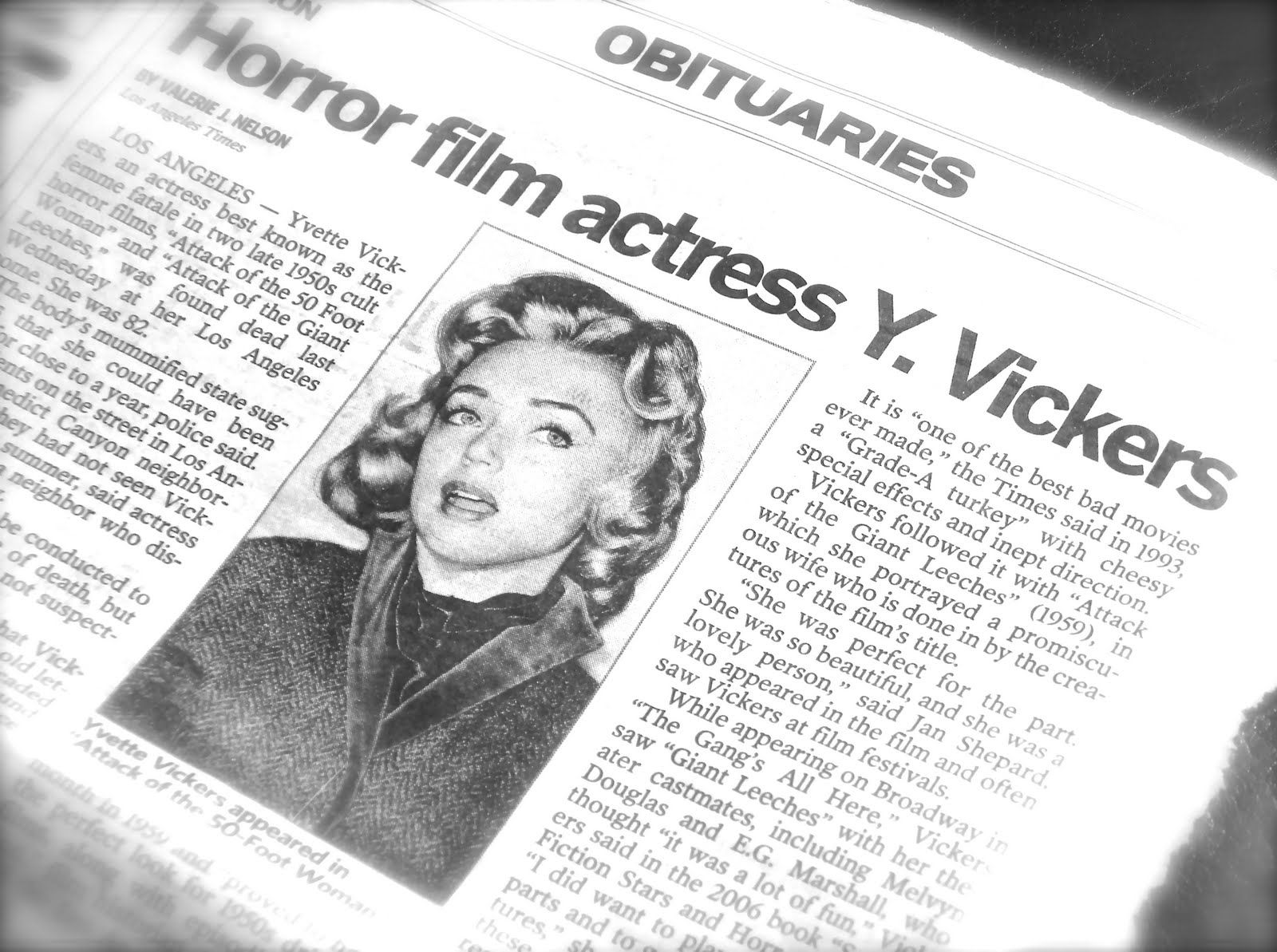
Hollywood is full of ghosts, but Yvette Vickers is a special kind of haunting. Most people today know her name because of a headline that sounds like a plot from one of her B-movies: "Mummified Playmate Found in Beverly Hills Home." It’s gruesome. It’s tragic. Honestly, it’s a little unfair to a woman who was once the literal definition of a bombshell.
Before the cobwebs and the isolation of her Benedict Canyon cottage, Yvette was a force. She was the girl on the poster for Reform School Girl. She was the "town floozy" in the cult classic Attack of the 50 Foot Woman. And, most notably for the collectors and historians out there, she was a centerpiece of a cultural revolution.
When you talk about Yvette Vickers in Playboy, you’re talking about a very specific moment in 1959. This wasn't just another photo shoot. It was a collision of B-movie stardom, mid-century masculine fantasy, and a photographer who knew exactly how to push the envelope.
The July 1959 Issue: A Risky Gamble
Playboy was still a toddler in 1959. It was only six years old and definitely still considered scandalous enough to get you a side-eye from the neighbors. Hugh Hefner was always looking for that "it" girl—someone who had a bit of an edge. Yvette Vickers fit the bill perfectly.
She wasn't just a model; she was an actress with a reputation for playing "bad girls." That mattered.
The July 1959 issue featured Yvette as the Playmate of the Month, and the photos were... well, they were a problem for the legal team. The centerfold, shot by the legendary Russ Meyer (the "King of the Nudies"), featured Yvette on a sofa. It was a back-view shot that showed a bit more than the lawyers were comfortable with at the time.
Hefner actually recalled later that his lawyer wanted to "stop the presses." He was terrified the photo would get them into legal hot water or shut down by censors. Hefner, being Hefner, basically told him to relax and kept the machines running. It was a smart move. The issue became a massive hit, and Yvette’s status as a cult icon was cemented.
Why the Russ Meyer Connection Mattered
Russ Meyer wasn't your typical magazine photographer. He was a filmmaker who loved "larger than life" aesthetics. You can see that influence in the way he captured Yvette.
- The Lighting: It was moody, unlike the bright, "girl next door" style often seen in earlier issues.
- The Vibe: It felt cinematic.
- The Subject: Yvette had this incredible screen presence that translated to the page.
Because Yvette had already starred in Attack of the 50 Foot Woman (1958), readers weren't just looking at a random pretty face. They were looking at Honey Parker. They were looking at the woman who had just shared the screen with a giant Allison Hayes. This crossover between "Scream Queen" and "Playmate" was gold for Playboy’s branding.
Life Beyond the Centerfold
People assume that being a Playmate in 1959 meant you were set for life. It didn't. Yvette was talented—she studied drama at UCLA and was a gifted jazz singer—but Hollywood is a brutal place for women as they age.
She had some high-profile romances. We're talking about Cary Grant and Jim Hutton. She was part of the inner circle. But as the 60s turned into the 70s, the roles got smaller. She had a tiny part in Hud with Paul Newman, but a lot of her scenes were reportedly cut.
She eventually moved into real estate to keep things afloat. She was smart with her money for a long time, but the isolation of her later years is what really sticks in the public's mind. She became a regular at fan conventions, which she loved. It was an ego boost, a way to be the "1950s starlet" again. But when those invitations stopped coming, the paranoia and the drinking started to take over.
The Tragedy of Westwanda Drive
It's impossible to talk about Yvette Vickers in Playboy without acknowledging how it ended. In April 2011, a neighbor named Susan Savage noticed yellowing mail and cobwebs. She climbed through a broken window and found Yvette's body.
The autopsy showed she died of heart disease, likely a year before she was found. A space heater was still running. Her computer was still on.
It was a lonely end for a woman who had once been the focus of millions of eyes. Hugh Hefner himself was publicly saddened by it, noting how tragic it was that someone who lived such a "full life" could disappear so completely.
How to Appreciate Yvette’s Legacy Today
If you’re a collector or just a fan of film history, there’s a lot more to Yvette than just a tragic headline.
- Watch the Classics: Don't just look at the photos. Watch Attack of the 50 Foot Woman or Attack of the Giant Leeches. She had a spark on camera that most "models turned actresses" never quite catch.
- Listen to the Music: In the 90s, she released a jazz tribute to her parents (A Tribute to Charlie and Maria). It shows a completely different side of her personality—one that was sophisticated and deeply personal.
- Find the Original Print: If you can find a vintage July 1959 Playboy, look at the Russ Meyer photography. It’s a masterclass in mid-century glamour.
Yvette Vickers wasn't just a victim of Hollywood's "use them and toss them" culture. She was a woman who grabbed her 15 minutes of fame and stretched it into a decades-long career. She was a journalist, a singer, a scientist of the screen, and a symbol of an era that was much more complicated than the history books suggest.
The best way to honor her isn't to focus on how she died, but to look back at that 1959 centerfold and see the woman who dared the censors to look away.
Next Steps: If you want to dive deeper into 1950s cult cinema, I can look up the filming locations for Attack of the 50 Foot Woman or find more details on her jazz recordings from the 1990s.



