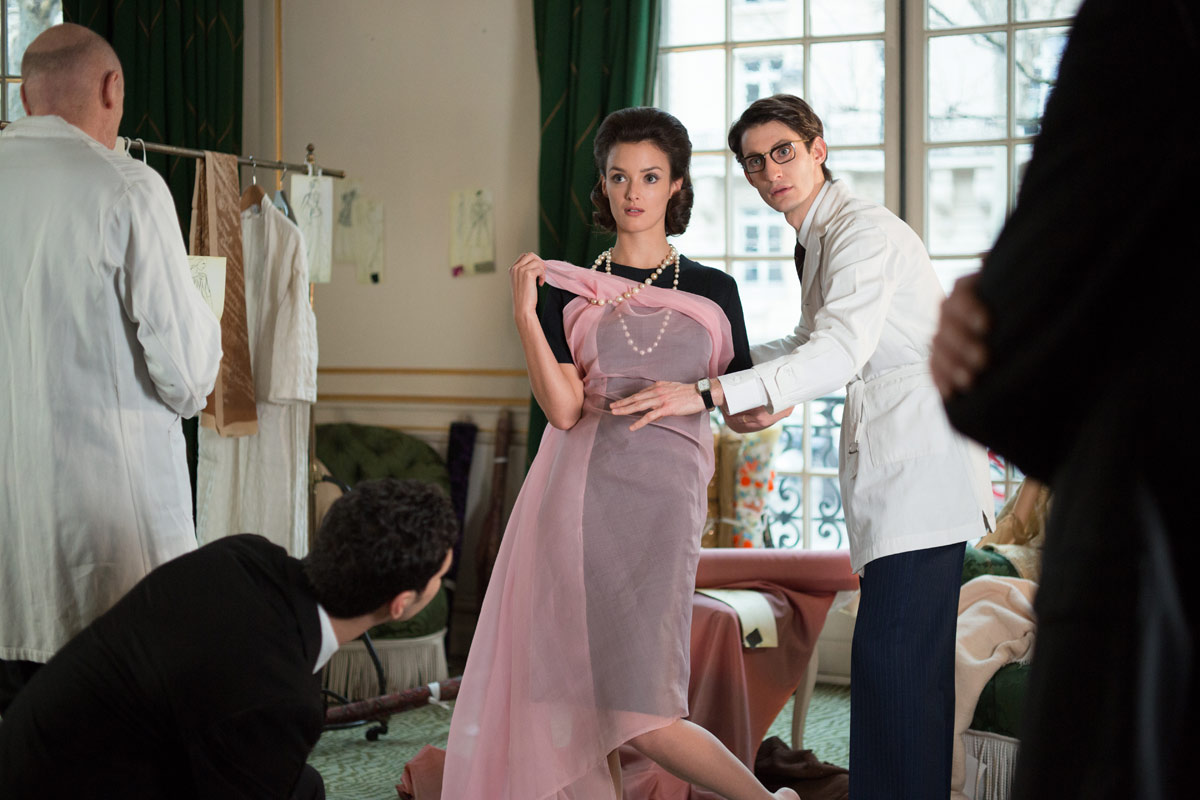
In 2014, something weird happened in French cinema. We didn't just get one Yves Saint Laurent movie. We got two. It was basically a "Deep Impact" vs. "Armageddon" situation, but with more silk, way more cocaine, and a lot of French chain-smoking. If you're looking for a simple biopic, you're actually spoiled for choice, but picking the "wrong" one might leave you totally confused about who this guy actually was.
Honestly, the drama behind the scenes was almost as catty as a front-row seat at a 1970s runway show. You had one director, Jalil Lespert, who got the "official" blessing from Pierre Bergé—Saint Laurent’s lifelong partner and the man who basically ran the business. Then you had Bertrand Bonello, who decided he didn't need permission. He made a movie that felt more like a fever dream than a history lesson.
The Tale of Two Yves: Which Movie is Which?
If you're searching for the Yves Saint Laurent movie, you have to distinguish between the two by their titles and their vibes. It's kinda confusing because they came out within months of each other.
- Yves Saint Laurent (2014) – Directed by Jalil Lespert. This is the "authorized" version. Pierre Bergé literally opened the archives for this one. They used real vintage clothes from the Foundation Pierre Bergé – Yves Saint Laurent. If you want to see the actual 1976 Ballets Russes collection on screen, this is your movie.
- Saint Laurent (2014) – Directed by Bertrand Bonello. This is the "rebel" version. Bergé hated it. He even threatened legal action. Because they couldn't use the original archive pieces, they had to recreate the clothes. But weirdly, a lot of critics think this one captures the soul of the man better.
Pierre Niney vs. Gaspard Ulliel
The performances are where it gets really interesting. In the official Yves Saint Laurent movie, Pierre Niney plays the designer. He’s thin, he’s fragile, and he has that specific, high-pitched, hesitant voice that the real Yves had. Bergé supposedly cried when he saw Niney because the resemblance was so haunting. It covers the early years—his time at Dior, the nervous breakdown during his military service, and the founding of the YSL brand.
Then you have the late Gaspard Ulliel in Bonello’s film. Ulliel doesn't just play Saint Laurent; he inhabits the myth. This version isn't interested in the "greatest hits" of his career. It focuses on the hedonistic peak between 1967 and 1976. It’s sweaty. It’s dark. It spends a lot of time in nightclubs and on the floor of a messy apartment with a French bulldog named Moujik.
What the Movies Get Right (And What They Skip)
Both films deal with the fact that Saint Laurent was a genius who was also, frankly, a bit of a mess. He struggled with what we’d now call bipolar disorder and severe addiction.
The Lespert film (the official one) is great at showing the business side. You see how Bergé was the "iron fist" that allowed Yves to be the "velvet glove." It’s a love story. It’s about two men who couldn't live with or without each other. But some people find it a bit too "safe," like a corporate video for a luxury brand.
Bonello’s film is the opposite of safe. It has a 10-minute scene where Yves just writes a letter to his lover, Jacques de Bascher. It uses split screens to show fashion shows next to news footage of the 1968 student riots. It’s trying to say that while the world was burning, Saint Laurent was redesigning the uniform of the modern woman.
The Real History vs. Cinematic Flourish
- The Army Breakdown: Both movies show his time in the military hospital. In real life, Saint Laurent was conscripted during the Algerian War in 1960. He lasted about 20 days before having a total mental collapse. He was treated with electroshock therapy and massive doses of sedatives. This likely fueled his lifelong struggle with drugs.
- The Dior Firing: The Lespert movie shows how he was basically dumped by Dior while he was in the hospital. This led to the lawsuit that gave him the money to start his own house.
- The Lifestyle: If you think the drug use in the Yves Saint Laurent movie is exaggerated, it’s actually not. In the 70s, his intake of cocaine and pills was legendary. He famously said he was "born with a nervous breakdown."
Why the "Unsanctioned" Version Might Be Better
There’s a specific scene in Bonello’s Saint Laurent where the designer is so wasted he accidentally kills his dog, Moujik, by leaving his pills on the floor. It’s brutal. It’s something the official biopic would never dwell on.
But that’s the point.
The official Yves Saint Laurent movie is about the legacy. The unofficial one is about the person. If you want to understand why his clothes looked the way they did—the sharp lines, the "Le Smoking" tuxedo, the sheer blouses—you sort of need to see the chaos he was trying to control.
Actionable Insights for Fashion Film Fans
If you're planning a movie night, don't just watch one. You'll get a lopsided view of history.
- Watch the Lespert film first: It gives you the chronological framework. You'll understand who the players are (Bergé, Loulou de la Falaise, Betty Catroux).
- Watch the Bonello film second: Use it as a deep dive into the psychological state of a man at the height of his fame.
- Check out the 2010 documentary "L'Amour Fou": If you want the actual facts without the actor portrayals, this documentary by Pierre Thoretton is the gold standard. It features Bergé himself talking about the art collection they sold after Yves died.
The Yves Saint Laurent movie isn't just about clothes; it's about the cost of being a visionary. You've got two very different lenses to look through—one that respects the icon and one that dissects the man. Both are worth the time if you want to understand why we're still talking about him in 2026.
To truly understand the Saint Laurent aesthetic, look for the 1971 "Libération" collection in either film—it was the moment he turned fashion into a political statement, proving he was always more than just a dressmaker.



