Yuma is hot. That isn't breaking news to anyone who lives there, but when a Yuma AZ power outage hits in the middle of a July afternoon, "hot" takes on a whole new meaning. It's not just an inconvenience. It's a race against a clock that’s ticking toward triple-digit misery.
The lights flicker. The hum of the AC dies. Silence.
If you've lived in Yuma long enough, you know that silence is the scariest sound in the desert. Suddenly, the fact that you're living in one of the sunniest places on Earth feels like a personal attack from the atmosphere. Most people think a power outage is just about candles and dead Wi-Fi, but in Yuma, it’s a logistics puzzle involving infrastructure, extreme heat safety, and a grid that’s constantly fighting the elements.
Why the Grid Struggles in Yuma
The Arizona Public Service (APS) and the Wellton-Mohawk Irrigation and Drainage District handle most of the heavy lifting for the region's electricity. It’s a massive job. You have to consider the sheer physical toll the heat takes on transformers.
Equipment wears out faster when it’s baking in 115-degree heat. Think about it. Metal expands. Lubricants thin out. Insulation becomes brittle. When every single household in a neighborhood has their AC units cranked to the max simultaneously, the load on those local transformers is staggering.
Sometimes it’s not even the heat. It’s the monsoons.
Yuma gets those wild summer storms where the dust kicks up—haboobs—followed by microbursts that can snap power poles like toothpicks. I’ve seen lines go down just because a stray piece of corrugated metal roofing from a shed flew three blocks and clipped a wire. It happens fast. One minute you're watching the sky turn orange, the next, you're looking for your flashlight.
The Infrastructure Reality
People often ask why the lines aren't just buried underground. It seems like an easy fix, right? Well, it’s complicated. Digging in the desert involves dealing with caliche—that rock-hard layer of soil that’s basically natural concrete—and the cost of undergrounding thousands of miles of line is astronomical. Plus, when an underground line fails, finding the break is way harder than just spotting a downed pole on 4th Avenue.
APS actually spends millions on "grid hardening." They’ve been replacing wooden poles with steel ones in high-risk areas. They use drone inspections to spot cracked insulators before they explode. But even with all that tech, nature usually finds a way to poke a hole in the plan.
Surviving the Heat During a Yuma AZ Power Outage
This is where things get serious. In many parts of the country, a power outage is a "stay inside and wait" situation. In Yuma, staying inside can actually become dangerous if the outage lasts more than a couple of hours.
The "Heat Index" isn't just a number on the news. Your house is basically a thermal box. Once the cooling stops, the walls start radiating the heat they've been soaking up all day.
Hydration is your first line of defense. Don't wait until you're thirsty. If the power goes out, start sipping water immediately. Avoid the temptation to crack open a beer; alcohol dehydrates you faster, and when it’s 110 degrees, you need every drop of moisture in your system.
The "Cooling Center" Strategy
If the Yuma AZ power outage is widespread and looks like it’s going to last, you need to know where the cooling centers are. The City of Yuma and various non-profits usually open up places like the North End Community Center or local libraries.
- Check the Yuma County Emergency Management social media pages.
- Listen to local radio like KUMA 560 AM. They are old-school but reliable when the internet is spotty.
- Don't be "tough." If you feel dizzy or stop sweating, get to a place with AC immediately.
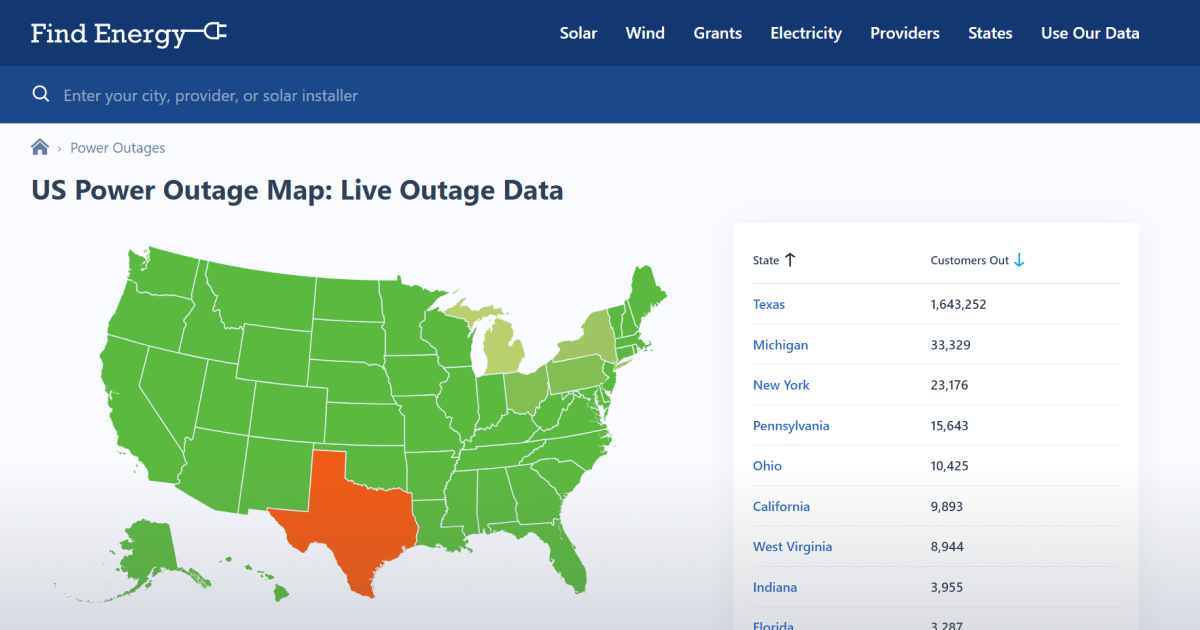
Honestly, the best thing you can do is have a "go-bag" for your electronics. A portable power bank won't run your fridge, but it’ll keep your phone alive so you can check the APS outage map. That map is surprisingly accurate most of the time. It shows you the boundaries of the outage and, more importantly, the "Estimated Time of Restoration" or ETR.
Food Safety: What to Keep and What to Toss
This is where people lose the most money during a power outage. A full freezer will usually stay frozen for about 48 hours if you keep the door shut. Seriously, stop peeking to see if the ice cream is melting. Every time you open that door, you’re letting out the cold air that’s keeping your expensive steaks safe.
The refrigerator is a different story. You’ve only got about four hours before things get dicey.
The Four-Hour Rule
Anything perishable—milk, meat, eggs, leftover takeout—needs to be handled carefully. If the power has been out for more than four hours and the temperature inside the fridge has risen above 40 degrees, it’s probably time to toss it.
It sucks. Nobody wants to throw away a hundred dollars in groceries. But food poisoning in a house with no air conditioning is a special kind of hell you don't want to experience.
If you have a cooler, grab the essentials early. Put some ice in there (if you have it) and move the milk and meds. That way, you aren't opening the big fridge door every time someone needs a drink.
The Economic Ripple Effect
When Yuma loses power, it’s not just houses. It’s the agriculture.
Yuma is the winter salad bowl of the United States. While the big outages often happen in the summer, any disruption to the power grid can affect irrigation systems and cooling facilities for produce. The cold chain is vital. If a massive cooling warehouse loses power, thousands of pounds of lettuce could wilt before they ever hit a truck.
Local businesses on 16th Street or in the Foothills take a hit too. Most small shops don't have massive industrial generators. A four-hour outage during peak lunch hours can kill the profit margin for the entire week for a local restaurant.
Technical Fixes and Future-Proofing
Is the grid getting better? Sort of.
APS has been leaning into battery storage. They have large-scale battery installations that can discharge power back into the grid during peak demand or minor interruptions. This helps stabilize the voltage. It’s a bit like a giant UPS for the whole city.
However, we’re also seeing more "Demand Response" programs. You might have seen these—they’re the programs where the utility slightly adjusts your smart thermostat during a peak event to prevent a total blackout. Some people hate them, calling it "corporate control," but from a grid-stability standpoint, it’s often the only thing preventing a cascading failure that would leave the whole city dark.
Solar Power: The Yuma Paradox
It’s ironic. We have more sun than almost anywhere, yet a Yuma AZ power outage still shuts down houses with solar panels.
Most people don't realize that if you have a standard grid-tied solar system, it shuts off when the grid goes down. This is for "lineman safety." You don't want your panels sending electricity back onto the wires while a technician is trying to fix them.
If you want your solar to work during an outage, you need a "battery backup" or a specific "islanding" inverter. Systems like the Tesla Powerwall or Enphase batteries allow you to disconnect from the grid and keep your own "island" of power running. It's expensive, but for many Yuma residents, the peace of mind is worth the five-figure price tag.
What to Do Right Now
The worst time to prepare for an outage is when the lights go out. You're stumbling around in the dark, the dog is barking, and you can't find the batteries.
First, build a "blackout box." Put it in a place everyone knows. It should have:
- High-quality LED flashlights (not the cheap $1 ones).
- A battery-powered fan. Trust me on this.
- Extra batteries.
- A physical list of emergency phone numbers.
- A manual can opener.
Second, sign up for alerts. Go to the APS website or your specific provider and opt-in for text alerts. They will literally text you the moment they detect an outage in your zip code. It’s way better than sitting in the dark wondering if it’s just your house or the whole block.
Third, check your surge protectors. When the power comes back on, there’s often a "spike." That spike can fry the motherboard on your expensive 4K TV or your fridge. Use high-quality surge protectors for anything with a computer chip in it.
Fourth, have a "Heat Buddy." Check on your neighbors, especially the elderly. In Yuma, the heat can turn deadly for seniors in a matter of hours. Make a plan with your neighbors—if the power goes out, everyone checks on the person to their left. It’s a simple system that saves lives.
Dealing with a Yuma AZ power outage is mostly about managing expectations and being prepared for the inevitable. The grid is strong, but the desert is stronger. Respect the heat, keep your fridge closed, and stay hydrated.
If you’re worried about your specific area, take a look at your local utility's 10-year plan. They usually list where they are adding new substations and which lines are being upgraded. Knowledge is the best way to keep your cool when the AC quits.
Actionable Next Steps:
- Identify Your Utility: Confirm if you are served by APS or Wellton-Mohawk and bookmark their specific outage map on your phone's browser.
- Test Your Gear: Turn off your lights tonight and try to find your emergency kit. If it takes more than 60 seconds, you need a better spot for it.
- Freeze Water Jugs: Fill a couple of gallon jugs 75% full of water and keep them in the back of your freezer. They act as "ice blocks" during an outage to keep food cold longer and provide cold drinking water as they melt.
- Update Contact Info: Ensure your utility company has your current mobile number so you receive automated restoration updates immediately.