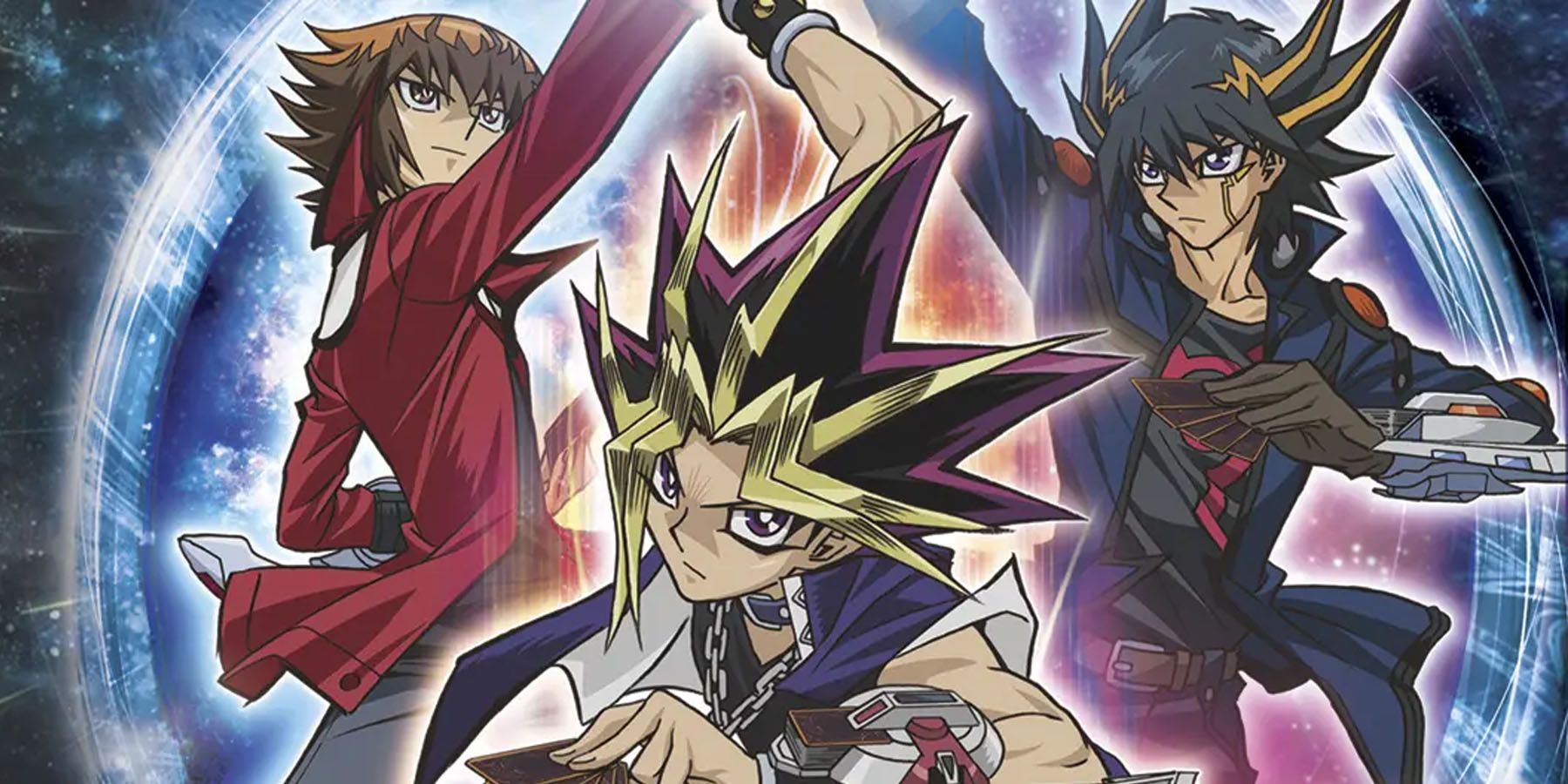
He’s the guy with the hair. You know the hair. It defies gravity, logic, and probably several laws of physics. But if you think Yugi Mutou, the original Yu-Gi-Oh main character, is just a walking meme about the "Heart of the Cards," you’re missing the actual point of the show.
Honestly, it's weird looking back.
In 1996, Kazuki Takahashi didn't set out to create a card game icon. He wanted to write a horror manga. The early chapters of the Yu-Gi-Oh! manga aren't about life points or summoning dragons; they’re about a kid getting bullied and a vengeful spirit forcing criminals to play twisted "Shadow Games" where the loser might end up blind or insane. It was dark. Like, really dark.
But then the card game happened. "Magic & Wizards," as it was called in the manga, took over the world. Suddenly, Yugi wasn't just a vessel for an ancient Pharaoh; he was the face of a billion-dollar franchise.
The Dual Identity Crisis of Yugi Mutou
We have to talk about the two versions of the Yu-Gi-Oh main character. You’ve got Yugi Mutou—the short, kind-hearted high schooler who just wants friends—and then there’s Yami Yugi (Atem), the nameless Pharaoh trapped inside the Millennium Puzzle.
Most people focus on the Pharaoh. He’s the cool one. He’s the one who stands tall, lowers his voice three octaves, and demands people "Draw their last pathetic card." But the real heart of the series is the relationship between the two.
It’s a symbiosis.
Early on, Yugi is basically a victim of his own power. He doesn't even know the Pharaoh exists; he just blacks out and wakes up to find his bullies in a catatonic state. It’s terrifying. As the series progresses, Yugi grows. He stops being the shadow and starts being the partner. By the time we get to the Battle City arc, they’re finishing each other's sentences.
Think about the character growth here. In the final arc, the Ceremonial Duel, Yugi actually has to fight the Pharaoh. Alone. Without the help of the spirit that’s protected him for years. That’s the peak of the show. It’s not about who has the strongest monster; it’s about the student surpassing the master. Yugi winning that duel wasn't just a plot twist; it was a necessary evolution. He became the true King of Games by defeating the legend himself.
Why His Deck Makes Absolutely No Sense (And Why That’s Okay)
If you try to play a "Yugi Deck" in the modern TCG, you will lose. Fast.
The Yu-Gi-Oh main character has a deck that is, frankly, a hot mess. It’s a pile of "one-of" cards with zero synergy. He runs Dark Magician, which is a high-level normal monster that requires two tributes. He runs Gaia the Fierce Knight. He runs Summoned Skull. He runs weird niche spells like Multiply or Magical Hats.
In a real game, you want consistency. You want three copies of your best cards. Yugi doesn't care about your "ratios."
He wins because of situational awareness and, let's be real, a healthy dose of plot armor. But there’s a thematic reason for his chaotic deck. His cards represent his journey. Kuriboh isn't just a weak monster; it’s a symbol of how the smallest things can change the course of a battle. Dark Magician is his bond with the Pharaoh’s past.
Modern players often criticize Yugi's "Heart of the Cards" philosophy as a glorified way of saying "I got lucky." But in the context of the lore, it’s actually an ability. Atem has the power to literally manipulate fate to draw exactly what he needs. It's not luck; it's divine intervention.
The Evolution of the Ace Monster
Everyone knows the Dark Magician. He’s the "Ultimate Wizard in terms of attack and defense," which was a bit of an exaggeration even back in 2002.
But look at how the Yu-Gi-Oh main character uses him. He’s not just an attacker. He’s a catalyst. He’s used for Magical Hats to hide from the Blue-Eyes White Dragon. He’s fused with Buster Blader to create Dark Paladin. He’s sacrificed to summon the Egyptian Gods.
Speaking of the Gods: Slifer the Sky Dragon, Obelisk the Tormentor, and The Winged Dragon of Ra. These cards defined an entire era of the anime. While Kaiba and Marik had their own, Slifer became Yugi’s signature. Why? Because Slifer’s power is based on the number of cards in your hand. It represents Yugi’s greatest strength—his resources and his ability to adapt.
The Cultural Impact: More Than Just a Show
Yu-Gi-Oh! isn't just a show about cards. It's a show about ancient Egyptian mythology mixed with 90s punk aesthetics and surprisingly deep themes of friendship and sacrifice.
The Yu-Gi-Oh main character changed how we view "gaming" protagonists. Before Yugi, most heroes in shonen anime were fighters. Goku punches things. Naruto uses ninjutsu. Yugi? He plays a tabletop game. He wins through intellect, strategy, and a weirdly intense level of focus on a children's card game.
This paved the way for every "game-based" anime that followed. Cardfight!! Vanguard, Future Card Buddyfight, and even parts of the Pokémon anime owe a debt to the way Yugi made high-stakes gaming feel like a life-or-death battle.
Common Misconceptions About Yugi
A lot of casual fans get things wrong.
- "Yugi is a loser without Atem." Wrong. In the manga and the Dark Side of Dimensions movie, Yugi proves he’s a tactical genius on his own. He beats Atem in the finale. He defeats Diva/Aigami. He’s the real deal.
- "He always cheats." Okay, "Catapult Turtle" launching "Dragon Champion" to break the flotation ring of "Castle of Dark Illusions" is definitely... creative. The early episodes of the anime were based on "soft" rules because the actual TCG hadn't been fully codified yet. By the Grand Championship and Dawn of the Duel, the plays are much more grounded in actual game mechanics.
- "He’s only the main character for one series." While the franchise moved on to Jaden, Yusei, and others, Yugi remains the face. He’s the anchor. Without him, the "King of Games" title has no weight.
Comparing Yugi to Other Yu-Gi-Oh Main Characters
Every series has a different vibe.
- Jaden Yuki (GX): The fun-loving student who slowly loses his mind to the pressure of saving the world. He’s the most relatable, honestly.
- Yusei Fudo (5D's): The stoic mechanic. He’s basically Yami Yugi if the Pharaoh lived in a dystopian future and rode a motorcycle.
- Yuma Tsukumo (ZEXAL): The underdog who starts off genuinely terrible at the game.
But Yugi is the only one who feels truly "mythic." There’s a weight to his presence. When he shows up in the Bonds Beyond Time movie, the other protagonists treat him like a god. Because, in their world, he basically is.
Strategy Deep Dive: Building a Modern Yugi Deck
If you’re looking to channel your inner Yu-Gi-Oh main character in the current 2026 meta, you have to lean into the "Dark Magician" support.
Konami has released dozens of cards that make the old wizard viable. You need Soul Servant. You need Magician's Rod. You definitely need The Dark Magicians (the fusion monster).
The goal isn't to overwhelm with raw power. It’s to control the board. You use Eternal Soul to keep bringing your Magician back from the grave. You use Dark Magical Circle to banish your opponent's cards every time he appears. It’s a "hit and run" strategy that fits Yugi’s clever personality perfectly.
Key Takeaways for Fans and Players
If you want to understand why Yugi matters, you have to look past the memes.
- Focus on growth: Yugi’s journey from a shy kid to a confident man is one of the best arcs in anime history.
- Respect the legacy: The original series laid the groundwork for everything that came after, from the mechanics of the game to the "archetype" system.
- Master the "Mental Game": Yugi won many duels before he even drew a card by getting into his opponent's head.
Actionable Steps for Aspiring Duelists
- Watch the Subtitled Version: If you’ve only seen the 4Kids dub, you’ve missed about 30% of the story’s depth and almost all of the actual stakes. The Japanese soundtrack by Shinkichi Mitsumune is incredible.
- Read the Manga: It’s faster, darker, and the art by Takahashi is legendary. The "Millennium World" arc makes way more sense in print.
- Try "Master Duel": It’s the easiest way to play the game today. You can build a Dark Magician deck for relatively cheap and see how the cards actually interact.
- Study the Meta: Even if you just want to play casually, understanding how modern "Hand Traps" (like Ash Blossom) work will save you a lot of frustration.
Yugi Mutou isn't just a character. He’s a cultural landmark. He represents that specific moment in the late 90s and early 2000s when gaming became "cool." Whether you're a veteran player or someone who just remembers the theme song, there's no denying the impact of the original King of Games. It's time to duel. Always has been. Always will be.