You’re planning a trip to the land of cenotes and tacos, but you’re staring at a 10-day forecast that shows a lightning bolt emoji for every single day.
Don't panic. Honestly, the biggest mistake travelers make is checking a generic weather app and assuming their vacation is washed out. Yucatan Peninsula Mexico weather is a moody, tropical beast, but it’s rarely as bad as the icons suggest.
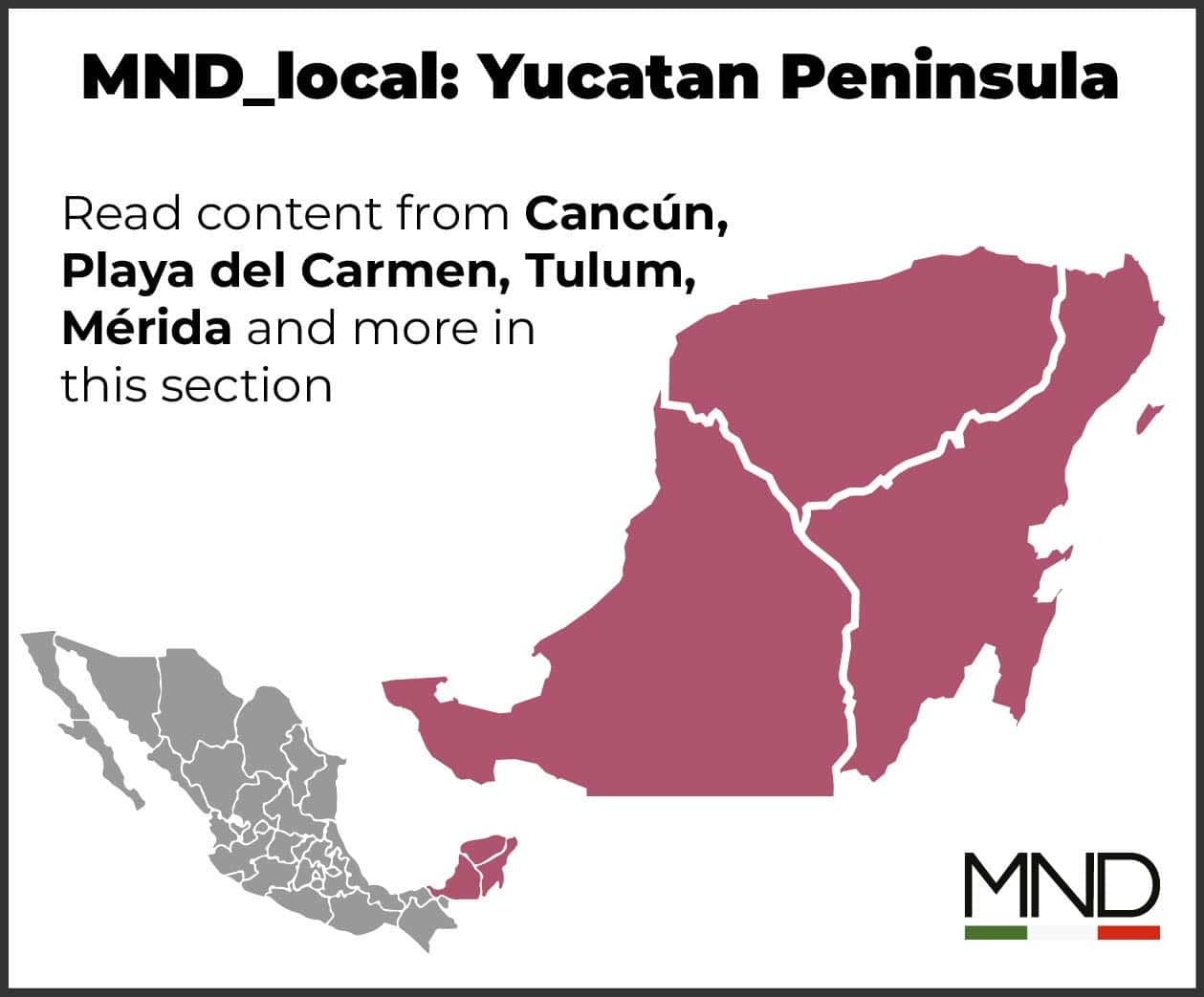
The peninsula is a giant limestone thumb sticking out into the Caribbean Sea and the Gulf of Mexico. Because it’s so flat—basically a pancake with jungle on top—there are no mountains to trap clouds. Rain here is fast. It’s intense. It’s usually over by the time you’ve finished a plate of cochinita pibil.
The Reality of Yucatan Peninsula Mexico Weather
If you want the "perfect" window, everyone will tell you to go between December and April. They aren't wrong. This is the dry season. The air is crisp (for the tropics), the humidity won't make your hair triple in size, and the mosquito population takes a bit of a breather.
But "perfect" comes with a price tag. And crowds. Lots of them.
Why January is the Sneaky Favorite
January is technically the "coolest" month. We’re talking highs of $28^{\circ}\text{C}$ ($82^{\circ}\text{F}$). For most people escaping a blizzard in Chicago or London, that’s heaven. At night, it can actually dip to $19^{\circ}\text{C}$ ($66^{\circ}\text{F}$), which feels chilly when you’ve been in the sun all day. You’ll actually see locals wearing light jackets. It's weird, but you'll get it once you're there.
The "Nortes" Factor
In the winter, you have to watch out for Nortes. These are cold fronts that blow down from the US and Canada. They don't bring snow, obviously, but they can shut down the ferries to Cozumel or Holbox for a day or two because of high winds and choppy water. If you see the sky turn a weird, bruised purple and the wind picks up, a Norte is probably moving in.
Humidity: The Silent Vacation Killer
Let's talk about May. May is brutal.
It’s the hottest month of the year, with temperatures regularly hitting $35\text{--}38^{\circ}\text{C}$ ($95\text{--}100^{\circ}\text{F}$). But the temperature isn't the problem; it's the dew point. In Merida, the humidity can feel like a physical weight. If you’re planning to climb ruins like Uxmal or Chichen Itza in May, you need to be through the gates at 8:00 AM. By noon, you’ll be melting.
Seriously.
I’ve seen people try to do the "full sun" tour at 2:00 PM in June and they look like they’re about to see the Mayan gods in person. Not recommended.
Hurricane Season and the Rainy Myth
Hurricane season officially runs from June 1st to November 30th.
People hear "hurricane season" and think they’re walking into a disaster movie. Statistically, the peak is September and October. While major landfalls aren't an every-year occurrence, the tropical waves are.
Here’s the thing about the rainy season:
- It’s green. The jungle actually looks alive, not brown and dusty.
- It’s cheap. Hotels drop their rates by 30% or more.
- The rain is predictable. Usually, it’s sunny all morning, a massive downpour at 4:00 PM for an hour, and then a clear, slightly cooler evening.
However, if you're a diver, the rainy season can be a bummer. Runoff from the rain can mess with the visibility in the cenotes and the ocean. If your heart is set on that crystal-clear "flying in water" photo, stick to the dry months.
Regional Microclimates (Yes, They Exist)
The Yucatan isn't a monolith. The weather in Cancun can be totally different from the weather in Merida, even though they're only a few hours apart.
The Coast (Cancun, Tulum, Playa del Carmen)
The Caribbean side gets those lovely sea breezes. It keeps the "real feel" temperature lower. But, it’s also the first hit by any tropical systems coming off the Atlantic.
The Interior (Merida, Valladolid)
Merida is a furnace. Because it’s inland, it loses the cooling effect of the ocean. It’s consistently $3\text{--}5^{\circ}\text{C}$ hotter than the coast. If the forecast says $32^{\circ}\text{C}$ in Playa del Carmen, expect $37^{\circ}\text{C}$ in Merida.
The Gulf Coast (Progreso, Celestun)
The water is shallower here and the weather is often a bit calmer than the Caribbean side, though it's more susceptible to those winter Nortes.
What the Data Says for 2026
Recent climate trends show that the "shoulder" seasons are becoming a bit more unpredictable. We’re seeing more heatwaves in late April and more lingering rain in early November. Experts like Felipe Zapata from UCLA have noted that even small shifts in sea level and temperature are starting to alter the traditional "wet/dry" boundaries we used to rely on.
Essentially, the "safe" windows are shrinking slightly.
If you're looking for the best bang for your buck without getting soaked, November and early May are the sweet spots. In November, the hurricane risk has plummeted, but the high-season prices haven't kicked in yet. In early May, you get the heat, but the rains haven't fully started.
Actionable Tips for Navigating Yucatan Weather
Don't just pack a swimsuit and hope for the best. If you want to handle the Yucatan Peninsula Mexico weather like a pro, follow this checklist:
- Download the "Windy" App: Forget the iPhone weather app. Use Windy to see actual satellite loops. You can see the rain clouds moving and realize that the "storm" is only 5 miles wide and will pass in ten minutes.
- The Linen Rule: If it's polyester, leave it at home. You want linen or high-tech moisture-wicking fabrics. Cotton just stays wet and gets heavy.
- Hydration is a Job: Don't wait until you're thirsty. The humidity saps your electrolytes faster than you think. Drink a suero (the local version of Gatorade—soda water, lime, and salt) once a day.
- Cenotes are the Cheat Code: When it’s $40^{\circ}\text{C}$ ($104^{\circ}\text{F}$) outside, the water in a cenote stays a constant, refreshing $24^{\circ}\text{C}$ ($75^{\circ}\text{F}$). They are the ultimate natural air conditioning.
- Flexible Itineraries: If you're visiting in September, don't book non-refundable outdoor tours. Have a "museum day" or "spa day" as a backup for when a tropical wave decides to park over the coast.
The weather here is part of the experience. The dramatic lightning over a Mayan temple or the smell of the jungle after a hot rain is something you won't forget. Just respect the sun, ignore the scary icons on your phone, and time your ruin-climbing for the early morning.
To make the most of your trip, start by looking at accommodation in Merida or Valladolid for the interior experience, then balance it with a few days on the coast to catch those Caribbean breezes. Check the moon phases if you're heading to Holbox—the bioluminescence is best when the sky is darkest, regardless of the temperature.