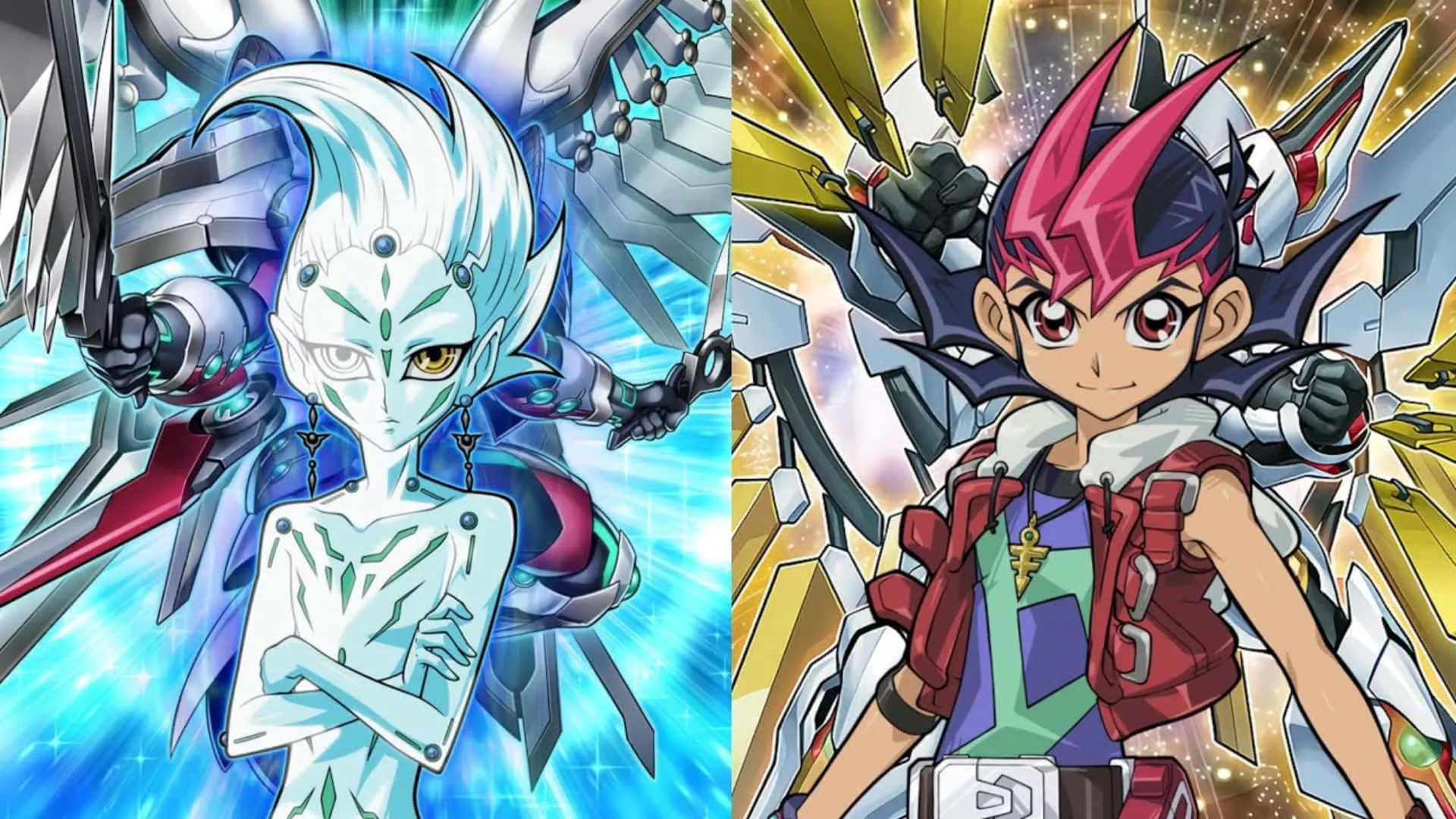
Honestly, if you were hanging around the internet back in 2011, you probably remember the absolute meltdown. People hated Yu-Gi-Oh! ZEXAL. Like, really hated it. After the "card games on motorcycles" grit of 5D's, fans saw Yuma Tsukumo—a kid who couldn't even play the game right—and collectively lost their minds. He was loud. He was annoying. He literally didn't know what a Trap card did half the time.
But it’s 2026. The dust has settled. If you enjoyed this piece, you should read: this related article.
And something weird happened along the way. The series that was once called "the downfall of the franchise" is now widely considered to have one of the best-written story arcs in all of Yu-Gi-Oh!.
The Yuma Tsukumo Problem
Most protagonists in this franchise start out as gods. Yugi had the Pharaoh. Yusei was a literal mechanical genius who never lost. Then comes Yuma. He’s basically that one kid at the local card shop who buys a starter deck and thinks he's the world champion until he gets flattened in two turns. For another angle on this development, refer to the latest coverage from Entertainment Weekly.
It was a bold move by head writer Shin Yoshida. By making Yuma a total amateur, the show could actually teach the audience how to play the newly introduced Xyz Summoning mechanic. But for veteran fans? It was painful. Yuma’s "Kattobingu" (Feeling the Flow) catchphrase felt like nails on a chalkboard to anyone over the age of twelve.
Then there’s the dub. If you only watched the English version, I get it. The voice acting for Yuma was... high-pitched. To put it nicely. It leaned heavily into the "clumsy kid" trope and stripped away a lot of the heavier philosophical stakes that the Japanese original actually cared about.
Why Xyz Summoning Changed Everything
Even if you hated the anime, you couldn't ignore the TCG. Yu-Gi-Oh! ZEXAL brought us the black-bordered Xyz Monsters. Before this, Synchro Summoning was the king, but it required specific "Tuner" monsters. It was a bit restrictive.
Xyz Summoning? It was a free-for-all.
Just take two monsters of the same level, stack them, and boom. You’ve got a boss monster. Cards like Number 39: Utopia became the face of the era, but it was the competitive staples that really defined it. Remember the terror of Wind-Up Zenmaity or Shock Master? The "Rank 4 Toolbox" became a dominant way to play the game, and it arguably made the TCG faster and more accessible than it had ever been.
The "Numbers" themselves were a brilliant marketing and plot device. 100 unique cards to collect? It gave the show a clear "monster of the week" progression that felt like the original series' Duelist Kingdom arc.
The Barian Twist: Where Things Got Dark
If you dropped off after the first 20 episodes, you missed the part where the show stops being a comedy. ZEXAL II is basically a different beast entirely.
The introduction of the Barian Emperors changed the tone from "let's collect cards" to "humanity is literally about to be erased." The backstories for characters like Shark (Ryoga Kamishiro) and Vector are genuinely tragic. We're talking about ancient reincarnated kings, betrayal, and mass suicide.
Vector, in particular, remains one of the most effective villains in anime history. He didn't want to rule the world; he just wanted to see Yuma suffer. The "Point-of-no-return" moment for many fans was the reveal of Vector's true identity—a betrayal so cold it makes Marik Ishtar look like a playground bully.
Breaking the "Perfect Hero" Trope
By the end of the series, Yuma isn't the same kid. He loses his innocence. In his final duel against Astral, he’s not just dueling to win; he’s dueling to prove that he can exist without the "god" hovering over his shoulder.
The final clash between Number 39: Utopia and Number F0: Utopic Future is a masterclass in symbolic storytelling. It’s Yuma rejecting the "power of the gods" to rely on his own human potential. It’s a theme that Kazuki Takahashi—the creator of the original manga—actually helped conceptualize. He wanted a story about a kid who was "zero" becoming "something."
Fact-Checking the Legacy
People often claim ZEXAL was a failure in Japan. That’s actually a myth.
While Western fans were busy complaining on forums, the series was doing massive numbers in Japanese viewership. The manga sold over 40 million copies worldwide. It successfully bridge-built a new generation of players who are now the veterans of today's Master Duel landscape.
- Fact: ZEXAL was the first series to introduce "Augmented Reality" (AR) duels, long before Pokémon GO made the tech mainstream.
- Fact: The series holds the record for the most "on-screen" cards created for a single protagonist, mostly due to the endless variations of the Utopia archetype.
- Fact: Shin Yoshida, the head writer, has worked on every Yu-Gi-Oh! series except Arc-V, and he considers the Yuma/Astral relationship one of his most personal projects.
What You Should Do Now
If you’ve never seen the show, or if you quit because Yuma was too annoying, here is the move: Watch the subbed version. Skip the filler (there's a lot of it in the first 25 episodes) and get to the World Duel Carnival. Once the Vetrix family shows up, the stakes ramp up and never really stop. If you're a TCG player, look into the "Utopia" or "Galaxy-Eyes" archetypes in Master Duel. They are surprisingly competent in the 2026 meta and offer some of the most satisfying "big number" plays in the game.
You don't have to love the "Kattobingu" attitude. But you should respect the craft. ZEXAL took a failing franchise after the end of 5D's and gave it enough fuel to last another decade. That’s a win in any duelist's book.
To get the most out of a rewatch, focus on the "Barian Invasion" arc and the "Mythirian Number" sub-plot. These episodes contain the deepest lore and the highest-quality animation. You might find that the "annoying kid" you hated back in 2011 has actually become one of the most human characters in the entire franchise.



