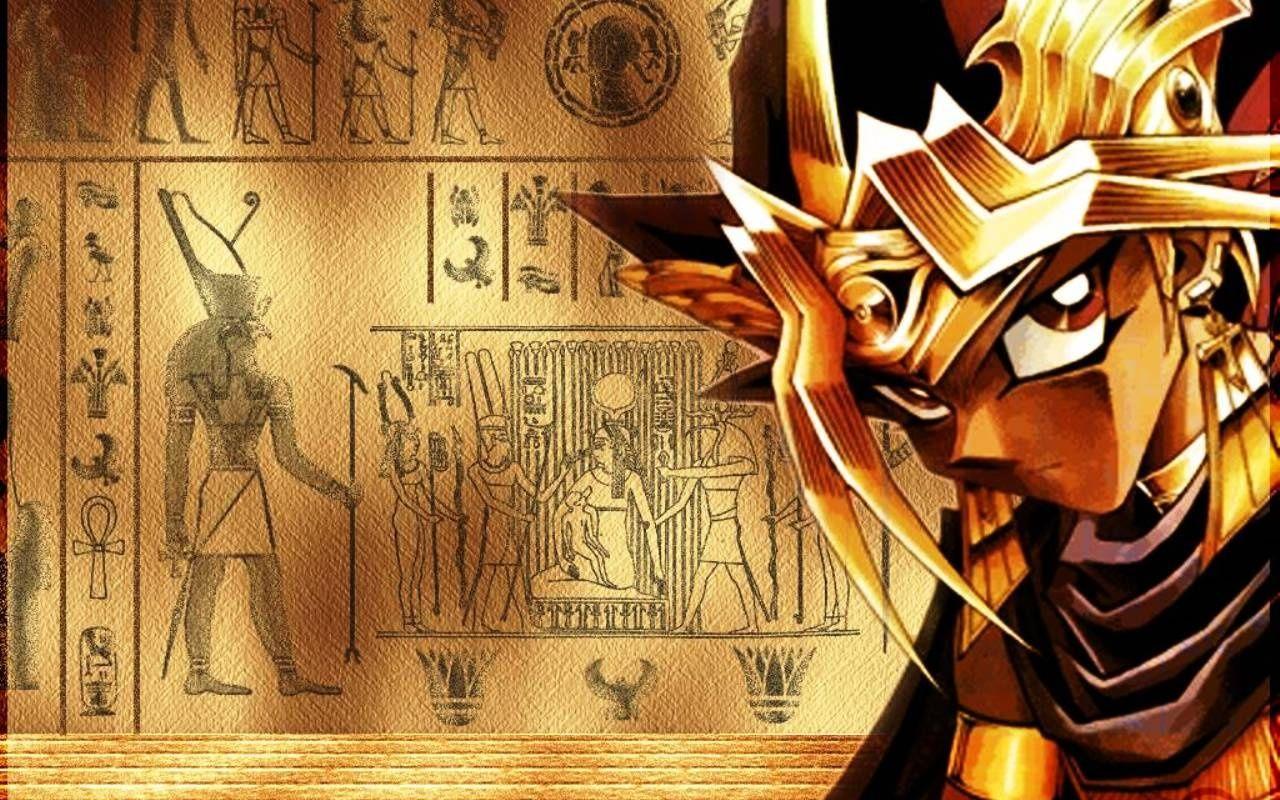
Finding the perfect Yu-Gi-Oh wallpaper is a rite of passage for anyone who grew up yelling "It's time to duel" at their television screen. It's more than just a background. For some, it’s a nostalgic trip back to the Saturday morning cartoons of the early 2000s, while for others, it’s a tribute to the complex, high-stakes meta of the modern Trading Card Game (TCG). But here’s the thing: most people just grab the first low-res image of Yugi Muto they find on a search engine and call it a day.
That's a mistake. Honestly, the art of Yu-Gi-Oh is some of the most intricate in the gaming world. Kazuki Takahashi, the late, legendary creator of the series, infused his work with a blend of ancient Egyptian mysticism and futuristic industrialism that few other franchises can match. If your desktop or phone background doesn't reflect that level of detail, you're missing out.
Why the Classic Art Still Dominates Your Screen
You've probably noticed that certain cards always show up when you search for a Yu-Gi-Oh wallpaper. The Blue-Eyes White Dragon. Dark Magician. Exodia the Forbidden One. There is a reason these designs remain the gold standard after over twenty-five years. Takahashi’s original vision for these monsters wasn't just "cool creature design." He was obsessed with silhouettes and weight.
Take the Dark Magician. He isn't just a guy in a purple robe. Look at the curved, almost organic armor and the way the staff balances the composition. When you set this as your background, you aren't just looking at a mascot; you’re looking at a piece of history that defined the "edgy" aesthetic of Shonen Jump in the late 90s.
The Resolution Trap
Modern displays—especially those 4K monitors and OLED phone screens—are unforgiving. If you're using a compressed JPEG from 2008, it’s going to look like a blurry mess of pixels. Digital artists like those found on DeviantArt or ArtStation have been doing the Lord's work by upscaling and recreating card art into ultra-high-definition landscapes. Specifically, look for "extended art" versions. These are wallpapers where the artist takes the small, square frame of a physical card and imagines what the rest of the world around that monster looks like. It’s a game-changer for ultrawide monitor setups.
Moving Beyond the Anime: The World of Archetypes
If you’re a regular at locals or a Master Duel grinder, you know there’s a whole world beyond the "DM Era." In fact, some of the best Yu-Gi-Oh wallpaper options come from the lore-heavy archetypes that never got a proper anime spotlight.
The World Legacy storyline is a prime example. It’s basically a dark fantasy epic told through card art. You have the Mekk-Knights, the Knightmares, and the emotional tragedy of Ib the World Chalice Justiciar. Setting a wallpaper of World Legacy - "World Chalice" gives your desktop an atmospheric, cinematic vibe that looks more like Elden Ring than a card game.
Then there’s the branded lore—Albaz and Ecclesia. Their journey across different nations like Despia and Swordsoul offers some of the most vibrant, color-rich landscapes in the history of the TCG. If you want something that looks professional but still signals your hobby to anyone who knows, these are the way to go. They’re subtle. They aren't just a big monster staring at the camera; they are environments.
Minimalist Approaches for a Professional Look
Maybe you don't want a massive fire-breathing dragon on your work laptop. I get it. Sometimes you want something that says "I like Yu-Gi-Oh" without screaming it. Minimalist wallpapers are underrated. Think: the Millennium Puzzle icon in gold on a matte black background. Or perhaps just the simple, iconic swirl of the Polymerization card.
These designs work because they use negative space effectively. Your desktop icons won't get lost in a sea of chaotic monster wings and spell effects. It's clean. It's functional. It's basically the "adult" version of the fandom.
The Technical Side: Aspect Ratios and Verticality
Choosing a Yu-Gi-Oh wallpaper for your phone is a completely different beast than choosing one for your PC. Cards are vertical, which makes them perfect for smartphone screens, but the framing is often wrong.
When you’re looking for a mobile background, you want something where the "action" is in the middle or bottom third. Why? Because your lock screen clock is going to cover the top. If you put the head of the Winged Dragon of Ra at the very top of your screen, you’re just going to see the time superimposed over its face. It looks cluttered.
For PC, especially if you have a dual-monitor setup, you can get creative. One monitor shows the Stardust Dragon, the other shows Red Dragon Archfiend. It creates a sense of conflict and balance across your desk.
Where to Find the Real Gems
Don't just stick to Google Images. It's a swamp of low-quality thumbnails. Instead, dive into these spots:
- The Yu-Gi-Oh! OCG Twitter (X) account: They often post high-res "mats" and promotional art that make for incredible backgrounds.
- Wallpaper Engine: If you haven't used this on Steam, you're missing out. You can find animated Yu-Gi-Oh wallpaper where the holographic foil actually shifts as you move your mouse, or where the flames of Uria, Lord of Searing Flames actually flicker.
- Reddit (r/yugioh): Every once in a while, a talented fan will drop a dump of high-res renders from Master Duel. These are usually the cleanest assets available because they come directly from the game files.
A Note on the "Vibe" of Your Setup
Colors matter. A lot. If you spend eight hours a day staring at your screen, a bright, neon Elemental HERO Neos wallpaper might actually give you a headache.
Blue and purple tones are generally easier on the eyes for long sessions. This makes monsters like Levianeer or the Shaddoll archetype perfect candidates. On the flip side, if you want something high-energy to get you hyped for a tournament, go for the reds and oranges of the Salamangreats or Infernoids.
The AI Art Controversy in the Fandom
We have to talk about it. Lately, a lot of "Yu-Gi-Oh" art popping up on wallpaper sites is AI-generated. You can usually tell because the card text is gibberish or the monsters have seven fingers. While they look sharp at a glance, they lack the soul and specific mechanical design of the actual cards. If you’re a true fan, stick to the official art or pieces created by human fans who actually understand the anatomy of a Cyber Dragon. There’s a distinct "look" to Konami’s official illustrators—a mix of sharp line work and cel-shading—that AI hasn't quite mastered yet.
Practical Steps to Optimize Your Display
Ready to upgrade? Don't just hit "Set as Desktop Background." Do it right.
- Check your native resolution. If you have a 1440p monitor, do not settle for a 1080p image. It will look soft. Use a "waifu2x" upscaler if you find a vintage image you love that's too small; it’s an AI tool specifically designed to upscale anime-style art without losing the sharp edges.
- Match your accent colors. If you're on Windows 11 or macOS, set your system accent color to pull from the wallpaper. If you’ve got a Dark Magician Girl background, a subtle teal or pink UI accent makes the whole OS feel cohesive.
- Organize your icons. If your wallpaper is a busy scene of Exodia breaking his chains, move your folders to the sides. Let the art breathe. A cluttered desktop ruins the aesthetic of a high-quality image.
- Rotate your collection. Use the "slideshow" feature. Why pick one favorite card when you can have a different monster every hour? It keeps your workspace feeling fresh and prevents you from getting bored of the same image.
Your setup is your digital sanctuary. Whether you’re a competitive player or just someone who loves the nostalgia of the Pharaoh, your Yu-Gi-Oh wallpaper should be a reflection of that passion. Skip the generic stuff. Look for the "extended art," the high-res renders, and the atmospheric landscapes that turn a simple card game into a sprawling epic right on your screen.