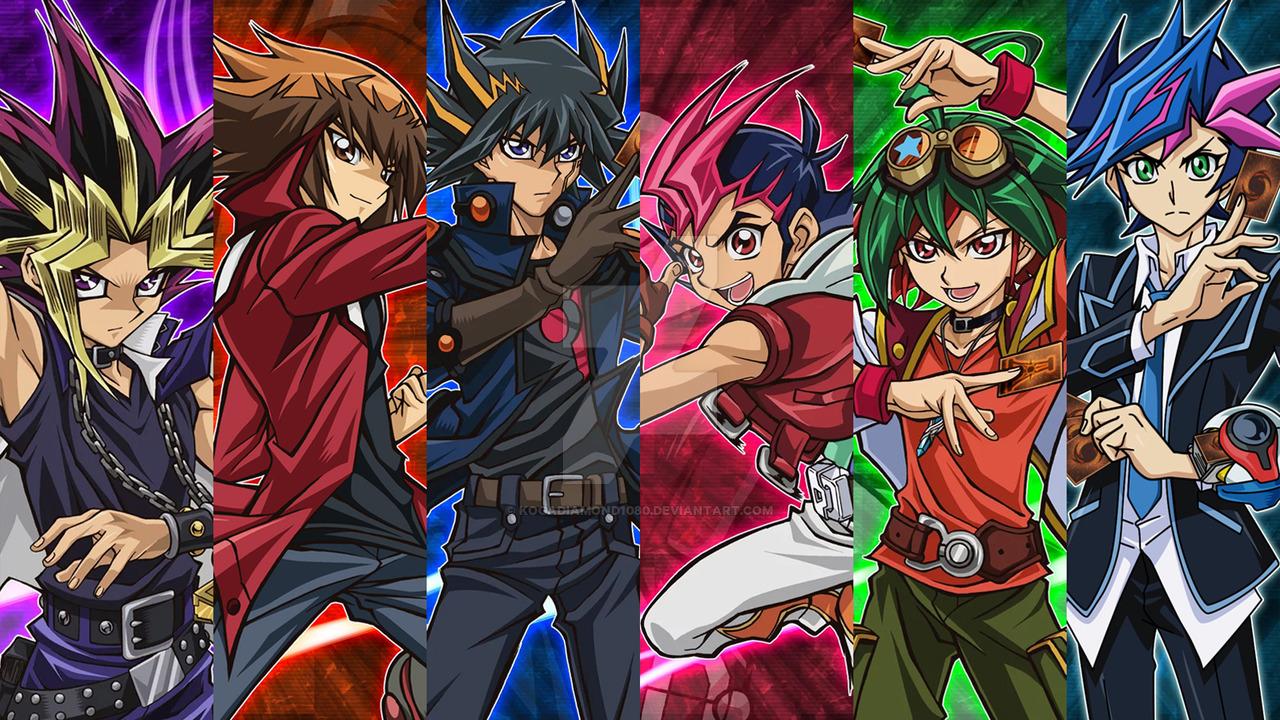
Honestly, the Yu-Gi-Oh! community is pretty divided on this one. Mention Yu-Gi-Oh! VRAINS in a room full of card game fans, and you'll either get a lecture on how it "killed the meta" with Link Summoning or a passionate defense of its dark, trauma-informed storytelling. It's a weird show. It's the sixth entry in the franchise, and boy, did it have a rough birth.
Production issues? Yeah, they were everywhere.
The series aired from 2017 to 2019, but it felt like the studio was fighting for its life the whole time. We’re talking about a show that had its first director replaced within months and was plagued by so many recap episodes that fans started making memes about it. Yet, despite the behind-the-scenes chaos, Yu-Gi-Oh! VRAINS managed to deliver one of the most cohesive, albeit somber, narratives in the entire franchise.
The VRAINS Identity Crisis
Most Yu-Gi-Oh! series follow a predictable pattern. A plucky kid with gravity-defying hair wants to be the best at a card game. He makes friends, beats a few bullies, and eventually saves the world from an ancient Egyptian deity or a space alien.
VRAINS didn't do that.
Our protagonist, Yusaku Fujiki, is basically a shut-in. He isn’t dueling for fun or for the title of "King of Games." He’s dueling for revenge. He’s a victim of the "Lost Incident" (or the Hanoi Project), where kids were kidnapped and forced to duel for their lives just so scientists could gather data on human decision-making.
That's dark.
Because of this, Yusaku is stoic and distant. He’s not out there making "nakama" speeches every five minutes. In the virtual world of LINK VRAINS, he operates as an anonymous hacker named Playmaker. His only real partner is Ai, a sentient Artificial Intelligence (an Ignis) who is basically the polar opposite of him: loud, annoying, and colorful.
The dynamic works. It’s a classic "straight man and funny guy" routine, but it’s anchored by the fact that they are both technically weapons of war.
What People Get Wrong About Link Summoning
When Yu-Gi-Oh! VRAINS launched, it introduced Link Summoning. If you played the TCG at the time, you remember the "Master Rule 4" era. It was a total overhaul of the board. Suddenly, you couldn't just spam Synchro or Xyz monsters from your Extra Deck wherever you wanted. You had to use Link Monsters to open up zones.
People hated it.
They felt the anime was just a glorified commercial for a mechanic that slowed down their favorite decks. But if you look back at the actual duels in the show, the "Link arrows" and positioning added a layer of strategy that previous series lacked. It wasn't just about having the biggest number; it was about where you put the card.
The show’s ace monster, Firewall Dragon, eventually got banned in real life because it was too broken. That tells you everything you need to know about the power creep VRAINS brought to the table.
Why the Ending Felt Rushed
It’s no secret that Yu-Gi-Oh! VRAINS ended shorter than its predecessors. Most series hit the 150-200 episode mark. VRAINS stopped at 120.
Why?
- Production Burnout: Studio Gallop was clearly struggling. The animation quality fluctuated wildly, and those recap episodes weren't just for fun—they were "stalling for time" because the scripts weren't ready.
- The Concept Shift: Rumor has it the show was originally supposed to be about "Charisma Duelists" (basically idol dueling), but they scrapped it for the hacker/revenge plot last minute. You can still see remnants of this with characters like Blue Angel and Go Onizuka, who feel like they belong in a completely different show.
- The Bridge Transition: Konami was ready to move on to Yu-Gi-Oh! SEVENS and the "Rush Duel" format, which meant VRAINS had to wrap up its complex AI-war plot fast.
Even with the rush, the final duel between Playmaker and Ai is widely considered one of the best "finales" in the franchise. It wasn't about saving the world; it was a deeply personal fight between two friends who knew they couldn't exist in the same future.
The Characters That Actually Mattered
Honestly, the side characters in VRAINS often stole the spotlight.
Revolver (Ryoken Kogami) is arguably the best "rival" since Kaiba. He uses "old-school" cards like Mirror Force and Magic Cylinder, which was a brilliant way to appeal to veteran players while still being a massive threat. He wasn't just a villain; he was a guy trying to fix his father’s mistakes by any means necessary.
Then there's Soulburner. He brought some much-needed energy to Season 2. His deck, Salamangreat, became a dominant force in the real-world meta, making him a fan favorite for both his personality and his "meta-relevant" cards.
Is It Worth Binging?
If you like sci-fi, cyberpunk aesthetics, and a protagonist who doesn't win through the "power of friendship" every time, then yes. Yu-Gi-Oh! VRAINS is a solid watch. It deals with some heavy themes: the ethics of AI, the lasting effects of childhood trauma, and the loneliness of the digital age.
It's not perfect. The first 15 episodes are a bit slow, and the constant "Data Storm" surfing during duels can get repetitive. But the payoff is there.
Key Takeaways for Fans:
- Watch the Sub: The Japanese version preserves the darker tone and the original soundtrack, which is excellent.
- Don't Skip Season 3: Even though it's short, it’s where the emotional core of the show finally hits home.
- Check the TCG: If you're a player, seeing how decks like Altergeist, Gouki, and Trickstar are played in the anime gives you a cool perspective on their design.
The legacy of Yu-Gi-Oh! VRAINS isn't just the cards it sold. It's the fact that it tried to grow up with its audience. It moved away from the "toy commercial" feel for a while and tried to tell a story about how we connect in a world where everyone is hiding behind a screen.
If you want to dive back into the series, start by revisiting the Knights of Hanoi arc. It’s the tightest writing the show has to offer and sets the stakes perfectly for everything that follows.