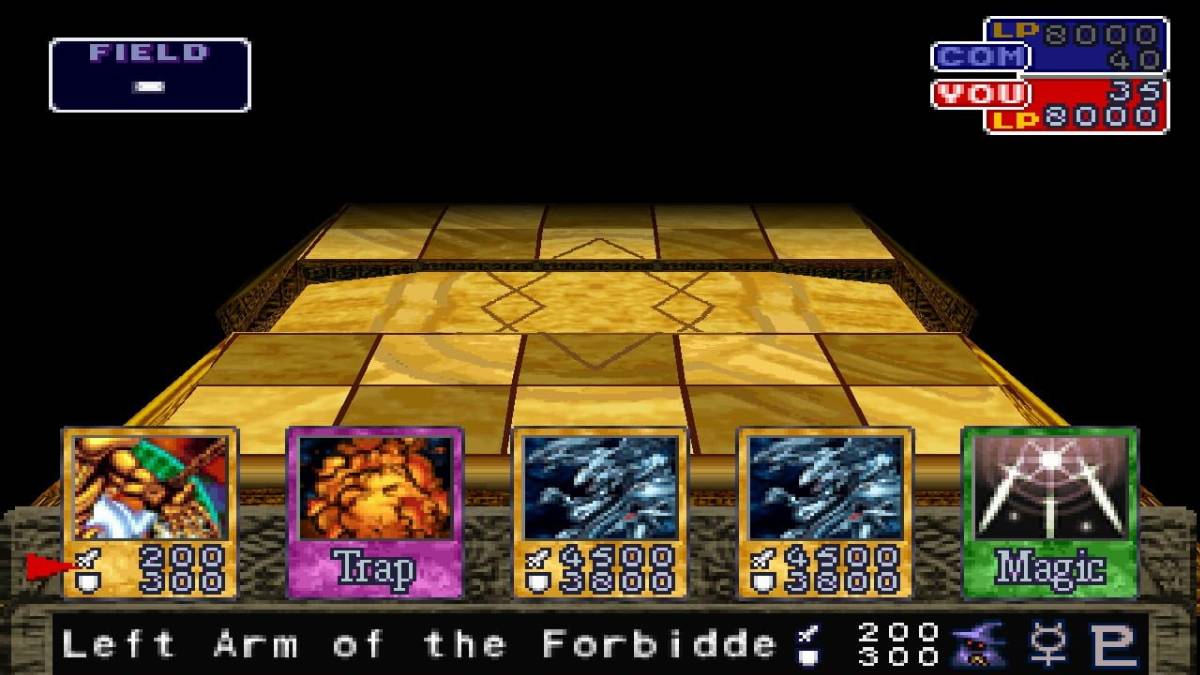
It was 2003. You popped a disc into your PlayStation 2, expecting the standard card game you saw on Saturday morning cartoons. Instead, you got a tactical war simulator set in 15th-century England during the actual War of the Roses. Talk about a curveball. Yu-Gi-Oh! The Duelists of the Roses remains one of the most bizarre, polarizing, and strangely addictive entries in the entire Konami library. It didn't just play the card game; it reinvented the board.
Most people who grew up with the TCG (Trading Card Game) found it frustrating. Why? Because it broke every rule. There was no "Main Phase 2." There were no "Special Summons" in the way we know them now. You had a Deck Leader—a physical card representing you on a 7x7 grid—and you had to maneuver your monsters like chess pieces across varying terrain. If you moved a Winged Beast onto a Mountain tile, it gained 500 ATK. If you blundered a Machine onto Forest, it withered. It was brutal. It was slow. Honestly, it was brilliant.
Why We Are Still Obsessed With This Yu-Gi-Oh PS2 Game
There is a specific kind of magic in games that take a massive risk with a licensed IP. Today, every Yu-Gi-Oh! game is a carbon copy of the Master Duel format. They’re simulators. But back in the PS2 era, Konami was experimental. They gave us Duelists of the Roses (DotR) and Capsule Monster Coliseum. DotR stands out because it mashed together historical fiction with the supernatural. Seeing Yami Yugi reimagined as Henry Tudor and Seto Kaiba as Christian Rosenkreuz was high-level camp that worked surprisingly well.
The "Perfect Rule" system was the heart of the game. Instead of just playing a card to a zone, you spent "Duel Points" (cost) to summon. This meant you couldn't just jam three Blue-Eyes White Dragons into a deck and call it a day. You had to earn your way to a powerful deck by winning matches and increasing your Duelist Level. It created a genuine sense of progression that modern titles often lack. You weren't just collecting cards; you were building a reputation.
The Terrain Mechanics That Broke Minds
Let’s talk about the grid. Most strategy games use terrain, but DotR made it the deciding factor of every match.
- Wasteland boosted Zombies and Rocks.
- Umi drowned almost everything but Fish and Sea Serpents.
- Toon World turned the map into a nightmare for anyone not playing a Pegasus-themed deck.
If you were playing the Red Rose side (Yugi), you often dealt with cramped, defensive maps. Switching to the White Rose side (Kaiba) felt like an entirely different game. You’d find yourself stuck in a corner, sweating because a "Pumpking the King of Ghosts" was slowly turning the entire map into a Graveyard, buffing every enemy monster while yours rotted. It was stressful. It was also the most "anime" a game has ever felt without actually following the anime’s rules.
The Deck Leader System: More Than Just a Mascot
Your Deck Leader wasn't just a cosmetic choice. As you used a card as your leader, it gained experience. It grew. Eventually, it unlocked abilities like "Increased Movement" or "Hidden Card Detection." This turned the Yu-Gi-Oh PS2 game experience into a pseudo-RPG.
I remember spending weeks just trying to rank up a Baby Dragon so it could move two spaces instead of one. Was it an efficient use of time? Probably not. But the dopamine hit of seeing those hidden abilities unlock was unmatched. It gave players a reason to stick with "weak" cards. You didn't just want the strongest monsters; you wanted the ones with the best leadership perks.
The Infamous Reincarnation Glitch and Secret Cards
Every kid on the playground had a theory about how to get the rare cards. Duelists of the Roses was notoriously stingy. To get the best stuff, you had to use the "Reincarnation" mechanic. You’d take a high-level card, sacrifice it, and get three random lower-level cards back.
Sometimes, you’d get garbage. Other times, you’d manipulate the system to snag a "Mirror Force" or "Riryoku"—cards that were essentially nukes in this format. There was also the "Slots" system at the end of a duel. If you lined up three of the same card, you won it. It was gambling, basically. But it made every victory feel like a potential jackpot.
The soundtrack deserves a mention too. It’s haunting. It’s baroque. It sounds nothing like the upbeat techno-pop of later games. It sounds like a cold, damp evening in a British castle where someone is about to get banished to the Shadow Realm.
Is It Still Playable Today?
If you try to play this on an original PS2 and a modern 4K TV, it’s going to look like a blurry mess of pixels and polygons. However, the emulation scene has breathed new life into it. Upscaling the game to 1080p or 4K makes those monster models look surprisingly decent for 2003.
The AI is still a cheating mess, though. Let’s be real. The computer knows exactly where your face-down cards are. It knows when you’ve set a "Man-Eater Bug" and will avoid it with surgical precision. This makes the game incredibly difficult for newcomers. You have to learn to bait the AI. You have to play mind games with a line of code. It’s frustrating, but when you finally trap the opponent's Deck Leader in a corner and blast them with a "Blue-Eyes Ultimate Dragon," it feels earned.
The lack of a true sequel is one of gaming's great tragedies. We’ve had dozens of "standard" Yu-Gi-Oh! games, but nothing has ever replicated the "Rose" formula. It’s a relic of a time when developers weren't afraid to take a popular brand and turn it completely inside out.
How to Master The Duelists of the Roses in 2026
If you’re dusting off a copy or firing up an emulator, stop trying to play it like the TCG. You will lose. Fast.
- Focus on Movement: The game is more about positioning than raw power. Use "Labyrinth" terrain to choke-point the AI.
- Rank Up Your Leader: Stick to one Deck Leader until it hits at least "First Lieutenant" to unlock basic movement perks.
- Abuse Fusion: Unlike the TCG, you don't need "Polymerization" for many fusions. You just stack cards on top of each other. Memorize the "Twin-Headed Thunder Dragon" recipe—it’s the easiest way to beat the harder campaigns.
- Watch the Cost: Don't put too many high-level stars in your deck or you won't be able to play anything for the first five turns. Balance is everything.
The legacy of this Yu-Gi-Oh PS2 game isn't just nostalgia. It’s a testament to weird, experimental game design. It’s a reminder that sometimes, the best way to honor a franchise is to break it and build something entirely new from the pieces. Whether you're siding with the Lancastrians or the Yorkists, the tactical depth here is deeper than most modern card games could ever hope to achieve.
Go find a copy. Deal with the "Graveyard and Wasteland" terrain. Lose to a "Castle of Dark Illusions." It’s part of the experience. It’s maddening, it’s slow, and it’s arguably the most unique Yu-Gi-Oh! experience ever coded.