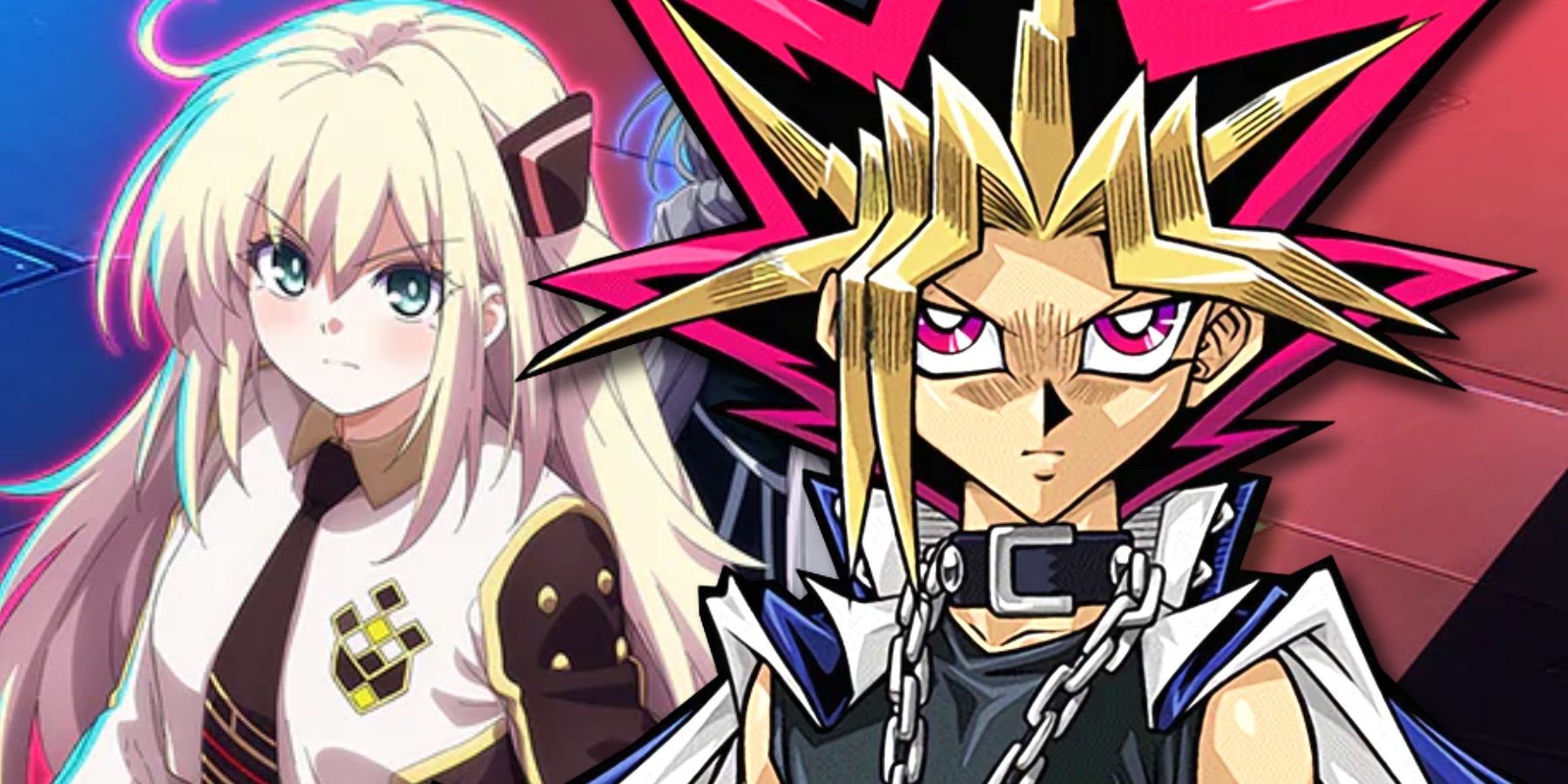
You've probably seen the memes about the "Heart of the Cards" or someone shouting about their Blue-Eyes White Dragon. It’s iconic. But honestly, if you try to figure out the Yu-Gi-Oh series in order by just scrolling through a streaming app, you’re going to get confused fast. There are parallel timelines, a "Season 0" that feels like a fever dream, and spin-offs that take place so far in the future they might as well be different franchises.
It started with Kazuki Takahashi’s manga in 1996. He didn't even mean for it to be a card game show. It was about a kid with a puzzle who played "shadow games" where losers got sent to a literal hell. Then the cards took over the world.
The Chaos of the Beginning: Where Do You Start?
Most people think the story starts with Yugi Muto and Seto Kaiba on a plane. It doesn't.
If you want the real experience, you have to acknowledge the 1998 Toei Animation series. Fans call it Season 0. It never officially made it to the West in a meaningful way because it’s weirdly violent. Yugi sets a guy on fire in one episode. It’s dark. It covers the early manga chapters before the "Duel Monsters" card game became the entire identity of the brand. You don't need to watch it to understand the rest, but if you want to see Yami Yugi acting like a genuine sociopath, it’s a trip.
Then comes the big one. Yu-Gi-Oh! Duel Monsters. This is the 2000 series everyone knows. It’s five seasons of peak nostalgia. If you're watching the Yu-Gi-Oh series in order, this is your anchor. It covers the Duelist Kingdom, Battle City, and that final Pharaoh's memory arc.
Wait. There’s a catch.
The English dub by 4Kids changed a lot. They added the "Shadow Realm" to hide the fact that characters were actually dying. They edited out guns and replaced them with... pointing fingers? It’s goofy, but it’s how a generation fell in love with the game. If you want the gritty version, watch the sub. If you want the memes and the over-the-top voice acting of Dan Green and Eric Stuart, the dub is legendary.
Moving Past Yugi: The GX and 5D’s Era
After Yugi wrapped up his story, the franchise did something risky. It moved on.
Yu-Gi-Oh! GX (Generation Next) takes place about ten years later. We’re at Duel Academy now. Jaden Yuki is the lead. It starts off incredibly lighthearted—literally a "school days" anime with card games. Then, around Season 3, it gets surprisingly heavy. Like, "existential dread and interdimensional war" heavy. Sadly, the English dub never finished the final season (Season 4), so if you want the full story of Jaden’s character arc, you have to switch to Japanese subtitles for the finale.
Then we hit Yu-Gi-Oh! 5D’s.
Card games on motorcycles.
People laughed when this was announced. It sounded stupid. It turned out to be one of the best-written entries in the entire franchise. It’s grittier, set in a dystopian Neo Domino City where the class divide is literally built into the highway system. It introduced Synchro Summoning, which fundamentally changed how the actual TCG was played. If you’re following the Yu-Gi-Oh series in order, 5D’s is where the game mechanics start to get "fast."
The Tonal Shift: ZEXAL to VRAINS
By the time we got to Yu-Gi-Oh! ZEXAL, the art style changed. It looked "younger." Yuma Tsukumo, the protagonist, is arguably the most annoying lead at the start because he’s actually bad at the game. That’s the point, though. He grows. It introduces Xyz Summoning (black card frames) and a lot of "shonen" energy.
Yu-Gi-Oh! ARC-V is where things get messy for some fans. It’s an ambitious crossover. It brings back mechanics from every previous show—Fusions, Synchros, Xyz—and introduces Pendulum Summoning. It deals with four different dimensions based on those summoning types. It’s high-concept, but the ending is notoriously polarizing among the community.
Then we have Yu-Gi-Oh! VRAINS. No more motorcycles. Now we’re in a VR world. The protagonist, Yusaku (Playmaker), is a stoic hacker with a tragic backstory. It’s a very "tech" focused show. It introduced Link Summoning, which was so powerful it required Konami to literally rewrite the rulebook of the physical card game to slow things down.
The Modern Reboot: Sevens and Go Rush
Here is the biggest divide in the Yu-Gi-Oh series in order.
In 2020, Studio Bridge took over from Studio Gallop. They launched Yu-Gi-Oh! SEVENS. This isn't just a new show; it’s a new game called Rush Duel. The rules are simpler. You can summon as many monsters as you want in one turn. The art style is much softer, and the stakes feel more like a Saturday morning cartoon than a "battle for the soul of the world."
Yu-Gi-Oh! Go Rush!! follows this trend, introducing aliens into the mix. If you grew up on the original 2000s series, these might not feel like the Yu-Gi-Oh you remember. They are targeted at a much younger demographic to bring new blood into the hobby.
Where do the movies fit?
You can't just ignore the films.
- Yu-Gi-Oh! The Movie: Pyramid of Light (2004): This fits somewhere in the middle of the original Battle City era. It’s non-canon to the manga but fits the "vibe" of the anime.
- Yu-Gi-Oh!: Bonds Beyond Time (2010): A 10th-anniversary special. It features Yugi, Jaden, and Yusei teaming up. You should watch this after finishing 5D's. It's short, flashy, and pure fanservice.
- Yu-Gi-Oh!: The Dark Side of Dimensions (2016): This is the masterpiece. But be careful. It is a direct sequel to the manga, not the anime. In the anime, Kaiba saw the final duel. In the manga, he didn't. This movie follows his obsession with bringing Atem back because he never got his closure. The animation is stunning.
The Technical Reality of the Watch Order
If you are a completionist, the chronological release order is usually the best way to go because the game mechanics evolve chronologically. You see the game grow from "tribute summoning a 2500 ATK vanilla monster" to "executing a 20-step combo that ends with three negates on the board."
- Yu-Gi-Oh! (Toei / Season 0) - Optional but cool.
- Yu-Gi-Oh! Duel Monsters - The essential core.
- Yu-Gi-Oh! GX - The academy years.
- Yu-Gi-Oh! 5D’s - The high-stakes dystopian era.
- Yu-Gi-Oh! ZEXAL - The cosmic/interdimensional era.
- Yu-Gi-Oh! ARC-V - The multiverse era.
- Yu-Gi-Oh! VRAINS - The cyber/hacker era.
- Yu-Gi-Oh! SEVENS - The Rush Duel reboot.
- Yu-Gi-Oh! Go Rush!! - The current alien/Rush Duel era.
Why the Order Actually Matters for Players
If you play the TCG (Trading Card Game) or Master Duel, watching in order explains why the game is so complicated now. Each series was essentially a giant commercial for a new mechanic. 5D's explains the white cards. ZEXAL explains the black ones. VRAINS explains the blue Link monsters.
If you jump straight into VRAINS without seeing the others, the speed of the game will make your head spin. There’s a logic to the madness.
How to Start Your Rewatch
Honestly? Don't feel pressured to finish every single episode. The original series has a lot of filler (the Virtual World arc and the Waking the Dragons arc aren't in the manga). While "Waking the Dragons" is actually pretty fun because it features some of the coolest monster designs (The Seal of Orichalcos), it doesn't impact the ending of the show.
If you’re short on time, watch the original Duel Monsters, skip to 5D’s, and then watch The Dark Side of Dimensions for a punch of nostalgia. That gives you the best of the writing without the 1,000-episode commitment.
The best way to experience Yu-Gi-Oh today is a mix of media. Watch the first few seasons on a streaming service like Crunchyroll or Hulu to get the lore down. Then, download Yu-Gi-Oh! Master Duel on your phone or PC. It’s free. It’ll let you play through "Solo Mode" stories that explain the lore of the actual cards, like the World Legacy or the Shiranui tribes. It adds a layer of depth the anime never quite touched.
Once you understand the Yu-Gi-Oh series in order, the game stops being a confusing mess of text and starts being a surprisingly deep strategy experience. Just remember to read the cards. Most players forget that part.
Next Steps for Your Yu-Gi-Oh Journey:
- Check the Manga: If the anime feels too "kiddy," read the original manga. It’s tighter, darker, and Kazuki Takahashi’s art is incredible.
- Master Duel Solo Mode: Play the "Duel Strategy" missions in Master Duel to see how the mechanics from 5D's and ZEXAL actually function in a real game.
- Watch the Sub: If you’ve only ever seen the 4Kids version, try watching the Japanese version of the "Ceremonial Duel" at the end of the original series. The music and tone change the entire emotional impact of the ending.



