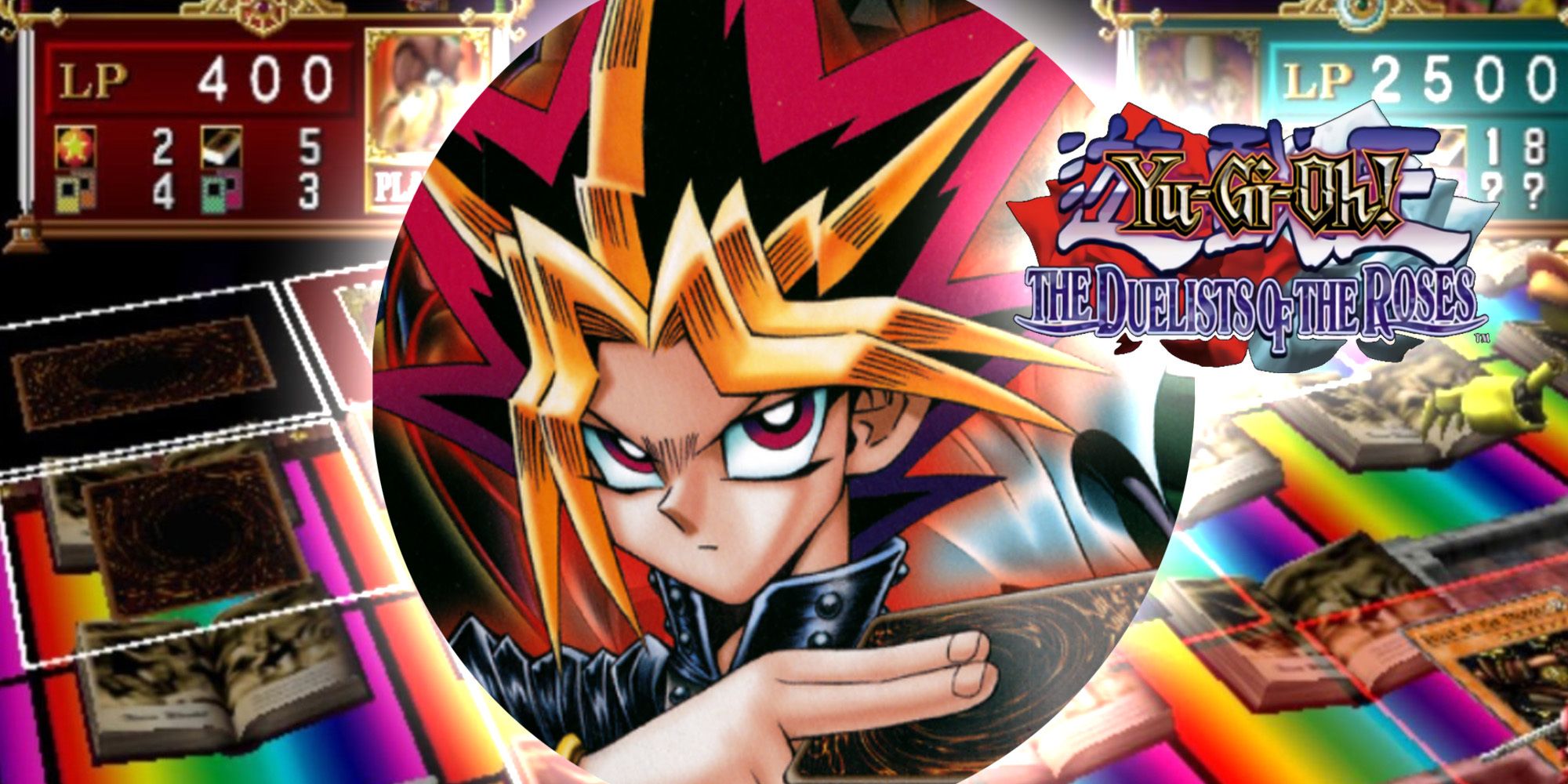
The PlayStation 2 era was a fever dream for fans of the King of Games. It was a time when Konami didn't just want to port the card game to a console; they wanted to break it. If you grew up playing Yu-Gi-Oh PS2 titles, you know exactly what I mean. We weren't just looking at static cards on a table anymore. We were seeing 3D monsters rise from the ground, even if they looked a bit crunchy by today’s standards.
Honestly, the sheer experimentation of that era is something we just don't see in modern gaming. Today, everything is about "Master Duel" and 100% accuracy to the TCG/OCG rules. Back then? Konami was throwing spaghetti at the wall to see what stuck. Sometimes it was a masterpiece. Sometimes it was Yu-Gi-Oh! Capsule Monster Coliseum, which felt like playing chess with monsters that had the AI of a toaster. But we loved it anyway.
The Weird, War-Torn World of Duelists of the Roses
Let’s talk about the elephant in the room. Yu-Gi-Oh! The Duelists of the Roses is arguably the most famous Yu-Gi-Oh PS2 game, but it’s barely a card game. It’s a tactical RPG disguised as a card game set during the English Wars of the Roses. Yes, really. Yugi Muto is Henry Tudor and Seto Kaiba is Christian Rosenkreuz. It sounds like a bad fanfiction, but it worked.
The game introduced "Deck Cost" and "Movement." You didn't just play a Blue-Eyes White Dragon; you had to move your Deck Leader across a grid, flip over hidden cards, and manage terrain bonuses. If your monster was a Landstar on a Meadow tile, you were a god. If you were a machine on a Forest tile, you were basically paper.
Why the Deck Leader System Changed Everything
The Deck Leader wasn't just a mascot. It was your lifebar and your commander. As you used a specific card as your leader, it gained "ranks." This took forever. I’m talking hundreds of duels just to get a single rank up. But those ranks unlocked hidden abilities, like increasing the strength of nearby monsters or weakening the enemy. It added a layer of grind that felt rewarding because seeing that "Major" or "Admiral" badge on your favorite monster felt like a genuine achievement.
The soundtrack also slapped. It had this weird, haunting harpsichord energy that made every duel feel like a life-or-death struggle for the English throne. People still listen to the "VS. Lancastrians" theme today for a reason.
The Absolute Chaos of Capsule Monster Coliseum
While Duelists of the Roses gets all the love, Yu-Gi-Oh! Capsule Monster Coliseum is the strange middle child of Yu-Gi-Oh PS2 history. It ditched the cards entirely. You bought capsules, leveled up monsters, and fought on elemental boards. It was basically "Pokémon-lite" but with the brutal difficulty spikes Konami was known for in 2004.
The elemental system was the core. Fire beat Wood, Wood beat Earth, Earth beat Thunder... you get the drift. But the AI was notorious. It would make moves that seemed nonsensical until three turns later when you realized you’d been cornered by a Penguin Soldier. It was frustrating. It was slow. But there was something incredibly satisfying about evolving your monsters into more powerful forms through sheer persistence.
The Forgotten Masterpiece: Duelists of the Roses Replayability
Most people beat the Red Rose campaign and stopped. That's a mistake. The White Rose side—the Kaiba side—is where the real challenge lived. You were frequently outgunned. The opponent's Deck Leaders had better abilities.
One thing people often forget is the "Slot Machine" mechanic. After a duel, you got to spin for cards. This was the only way to get some of the rarest monsters in the game. If you wanted a Mirror Force or a Riryoku, you had to line up three of a kind. It was gambling before loot boxes were a thing, and the adrenaline rush of seeing those three symbols line up was unmatched.
Fact-Checking the "Forbidden" Mechanics
Let's clear some things up. A lot of rumors circulated in the early 2000s about secret codes to unlock Egyptian God Cards in these games. In Duelists of the Roses, Slifer, Obelisk, and Ra aren't technically "playable" in the standard way people thought. They were mostly environmental or highly restricted.
Also, the "Fusion" mechanic in these games was wild. Unlike the real card game, you didn't need "Polymerization" half the time. You could just smash two cards together. If you put a Dragon and a Plant together, you might get a B. Plant. If you put two 특정 (specific) monsters together, you got a Twin-Headed Thunder Dragon. This "free fusion" made the early game a blast because you were constantly experimenting to see what worked.
The Technical Limitations and the Charm
Playing a Yu-Gi-Oh PS2 game today is a lesson in patience. The loading times were significant. The animations, while cool, could take forever. Watching a Summoned Skull attack for the 500th time lost its luster after about four hours.
But there’s a tactile feel to these games that Master Duel lacks. The sound of the cursor moving, the chunky 3D models, the way the screen shook when a powerful monster hit the field—it felt heavy. It felt like the monsters had weight.
Practical Steps for Modern Duelists
If you’re looking to dive back into these classics, you have a few options that don't involve scouring eBay for a $100 copy of Roses.
- Emulation is your friend. PCSX2 has come a long way. Duelists of the Roses runs beautifully at 4K resolution, and you can use "Fast Forward" to skip the lengthy battle animations that haven't aged well.
- Check out the modding scene. Believe it or not, there are "Hard Mode" mods and "Balance Patches" for Duelists of the Roses. Fans have actually gone into the game code to fix the broken Deck Cost system and add new cards.
- Password hunting. Many of these games have built-in password systems. You can find old GameFAQs threads from 2003 that still have the codes for powerful cards like "Blue-Eyes White Dragon" or "Crush Card Virus." Use them. The games are hard enough as it is.
- Don't ignore the side content. In Capsule Monster Coliseum, the free-battle mode is actually where the best grinding happens. Don't just rush the story.
The legacy of Yu-Gi-Oh PS2 games isn't about perfect card mechanics. It’s about a time when a massive franchise wasn't afraid to be weird. Whether you’re moving a Deck Leader across a muddy field in 1485 England or throwing capsules at a computerized Seto Kaiba, these games represent a unique peak in gaming history. They weren't just card games; they were adventures.
To get the most out of a replay today, focus on the tactical games like Duelists of the Roses rather than the more standard entries. The unique mechanics provide a challenge you simply can't find in modern Yu-Gi-Oh titles. Start by mastering the fusion list—knowing which "trash" cards combine into powerhouses like Twin-Headed Thunder Dragon will save you hours of frustration in the early campaign. Also, keep an eye on terrain bonuses; a 500-point boost is often the difference between a clean win and a crushing defeat.