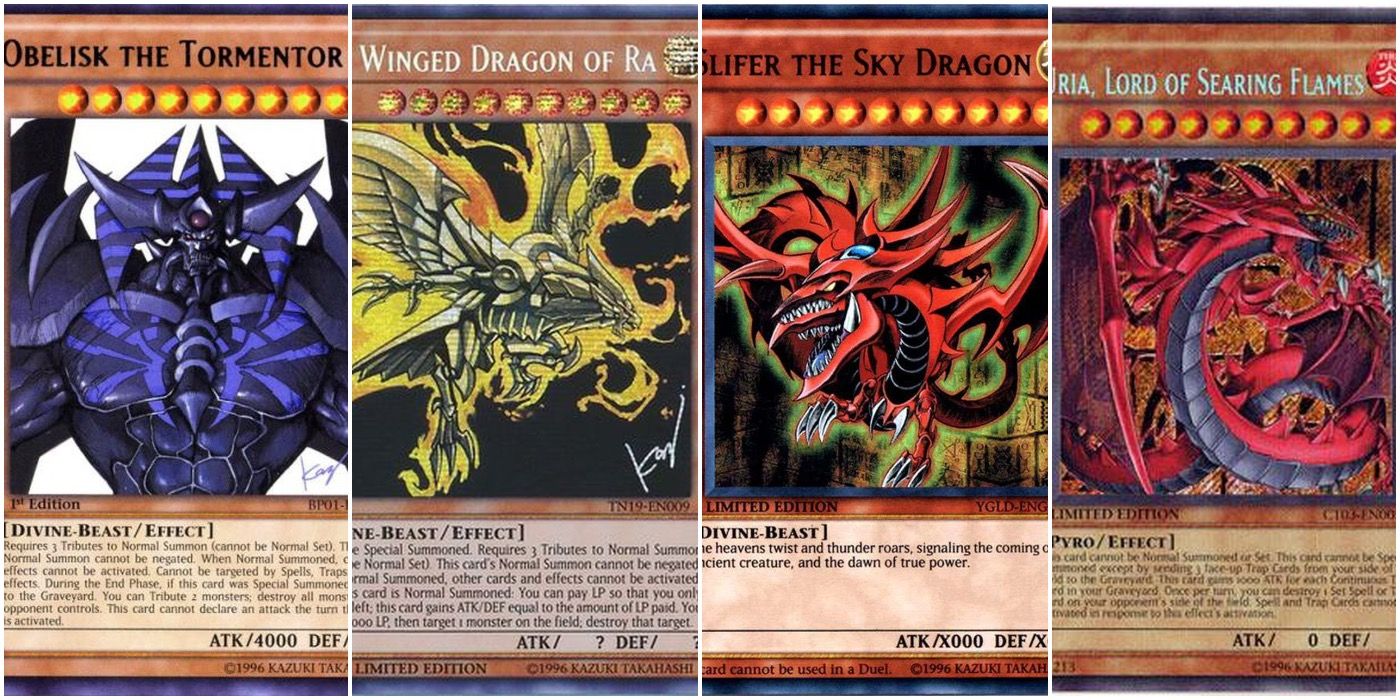
You’re sitting across from someone in a local card shop. They flip a single spell card. Your heart drops. You know the game is basically over, even though it’s only turn one.
That feeling is exactly why the conversation around Yu-Gi-Oh most powerful cards never actually dies. It doesn't matter if you haven't touched a deck since 2005 or if you're currently grinding the Master Duel ladder in 2026; certain cards just carry a weight that breaks the game's fundamental logic.
People love to argue about what "powerful" even means. Is it a monster with 5000 ATK? Not really. In this game, power is usually about "card advantage" or "resource denial." If I can draw more than you, or stop you from playing at all, I’ve already won. The math is simple, even if the card text isn't.
The "Draw" Power That Broke the Rules
Let's talk about the elephant in the room. Pot of Greed.
If you ask a casual fan why it's banned, they’ll joke about not knowing what it does. But if you ask a competitive player, they’ll tell you it’s the most dangerous card ever printed. It has no cost. No "once per turn" restriction. No downside.
In a game like Magic: The Gathering, you have to spend mana to draw. In Yu-Gi-Oh, you just... do it. It turns a 40-card deck into a 39-card deck. It’s a +1 in card advantage for zero effort. If it were legal today, every single deck would run three. No exceptions.
Graceful Charity is arguably even worse. You draw three and discard two. To a beginner, that sounds like a wash. To an expert, that’s "fixing" your hand and putting two monsters in the Graveyard where they can trigger their own effects. In the 2026 meta, where the Graveyard is essentially a second hand, Graceful Charity would be nuclear.
Why Some Cards Stay Forbidden Forever
There are cards that are so toxic they don't just win games—they make people want to quit the hobby.
- Victory Dragon: This is the weirdest one. Its effect says if it reduces your opponent's LP to zero with a direct attack, you win the Match (all three games). Because of this, players would just forfeit the game before the attack landed to avoid losing the whole match. It created a nightmare for tournament judges.
- Painful Choice: This is widely considered the strongest card in history by pro players. You choose five cards from your deck, and your opponent picks one for you to keep. The other four go to the Grave. In 2026, sending four specific cards to the Graveyard is better than adding ten to your hand. It’s a "choose your own win condition" button.
- Last Turn: This card turns a complex strategic game into a coin flip. It’s messy, it causes rules headaches, and it’s just not fun.
Honestly, Konami keeps these on the Forbidden list because they represent "non-games." A game where you don't get a turn isn't a game; it's a cutscene.
The Modern Titans: 2026 Staples
If you’re looking at the current state of the game in 2026, the power has shifted toward "Hand Traps" and "Board Breakers."
The Mulcharmy series (like Mulcharmy Fuwalos) has changed how we think about going second. These cards let you draw every time your opponent special summons from the deck or extra deck. It’s a check on "wank" combos that take ten minutes.
Then you’ve got S:P Little Knight. This card is everywhere. It’s a Link-2 monster that can banish cards on the field and then temporarily banish itself and another monster to dodge effects. It’s flexible. It’s annoying. It’s expensive. It’s easily one of the most powerful tools currently legal.
The Problem with "Maxx C"
We can't talk about power without the roach. In the OCG and Master Duel, Maxx "C" is the most polarizing card in existence. One side says it keeps fast decks in check. The other says it’s a "turn skip" that rewards lucky opening hands.
In the TCG, it’s been banned for years. The result? TCG players have to find other ways to stop the "Tier 0" decks like the recent Mitsurugi Yummy variants or Maliss combos.
What Actually Makes a Card "Powerful"?
It’s not the stars or the ATK. It’s the "generic" nature of the effect.
Ash Blossom & Joyous Spring is a tiny monster with 0 ATK. Yet, it’s more powerful than 99% of the giant dragons in the game. Why? Because it stops your opponent from searching their deck. It’s a universal "No" button.
Complexity is also a factor. Look at Tearlaments Kitkallos (currently banned in most formats). It didn't just do one thing; it searched, it summoned, and it sent cards to the grave. It was a Swiss Army knife in a game where most cards are just spoons.
Actionable Insights for Your Next Duel
If you want to start winning more, stop looking for the biggest monsters. Instead, focus on these three things:
- Prioritize "One-Card Combos": Look for cards that can start your entire engine without needing a second card in hand. These are the real powerhouses.
- Learn the "Choke Points": You don't need to stop every card your opponent plays. You just need to stop the one card that searches the rest of their deck.
- Respect the Banlist: Don't build a deck around a card that is likely to be hit in the next update. Watch the trends of "Tier 0" decks; if a card has 90% representation in top cuts, it's probably going to be banned soon.
The meta will always change, but the philosophy of power in Yu-Gi-Oh remains the same: the person who sees more of their deck usually wins.