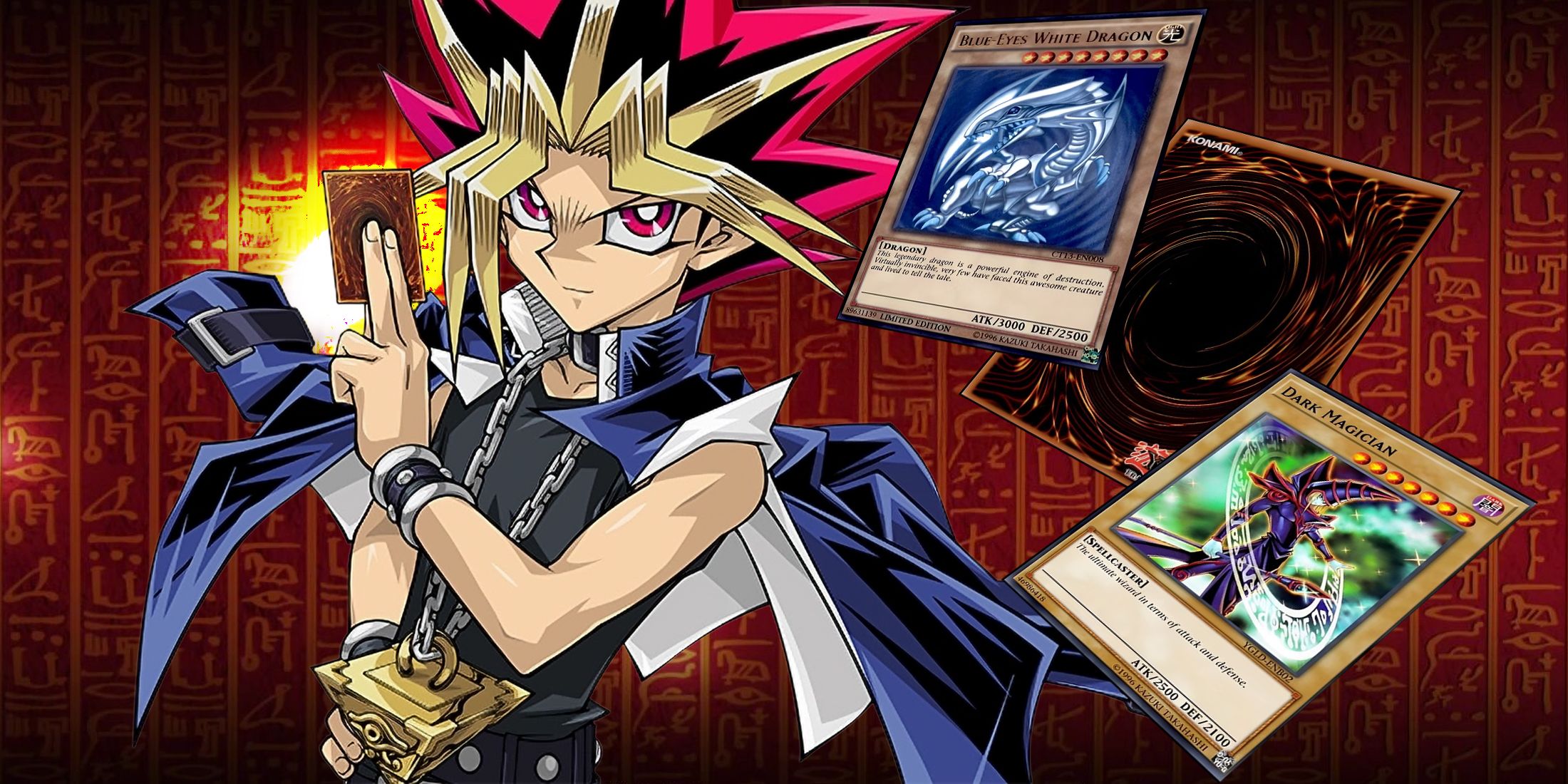
You’ve probably seen the headlines. A pristine, PSA 10 Blue-Eyes White Dragon sells for the price of a mid-sized sedan, and suddenly everyone is digging through their attic. They find a dusty binder, flip through some curled holos, and think they’ve hit the jackpot. Most of the time, they haven't. Building a Yu-Gi-Oh game collection isn't just about owning old cardboard; it’s about understanding the weird, often frustrating intersection of nostalgia, competitive viability, and printing rarities that Konami has been tinkering with since 1999.
Honestly, the market is a mess right now. If you’re looking at your childhood stack of LOB (Legend of Blue Eyes White Dragon) cards, you’re looking at the foundation of a massive global phenomenon, but you’re also looking at a minefield of reprints and "Unlimited Edition" labels that strip away 90% of a card's potential value. To really get why people obsess over these 2.3 by 3.4-inch slips of paper, you have to look past the shiny foil.
The First Edition Obsession and Why It Actually Matters
In the early 2000s, the little "1st Edition" stamp at the bottom left of the card art was just a cool detail. Today, it is the absolute law of the Yu-Gi-Oh game collection world.
If you have a Dark Magician from the original Starter Deck Yugi, and it lacks that stamp, it’s a neat curiosity. If it has the stamp, and the centering is perfect, and the corners aren't frayed from being shoved into a pocket without a sleeve, you're talking about a serious asset. The discrepancy is wild. We are talking about the difference between a $20 bill and a $2,000 paycheck.
But here is the kicker: rarity isn't just about age.
Ghost Rares and the Ultimate High-End
Take "Ghost Rares," for example. These cards have a pale, 3D-like holographic finish that looks like a silver phantom. They were notoriously difficult to pull from packs in the late 2000s and early 2010s. For a serious collector, a Ghost Rare Stardust Dragon or Black Rose Dragon is often more desirable than the earliest cards because the print quality was so fragile. These cards scratch if you even look at them wrong. Finding one in "Gem Mint" condition is like finding a needle in a haystack made of other needles.
Then you have "Ultimate Rares." These have embossed textures on the card art, the level stars, and the attribute icon. They stopped putting these in standard booster boxes for a long time, moving them exclusively to "Official Tournament Store" (OTS) packs. This moved the goalposts. Now, the most valuable parts of a modern collection aren't necessarily the old stuff, but the high-rarity versions of cards that people actually use to win tournaments today.
Playing the Meta vs. Collecting the History
There is a massive divide in the community. You have the "Players" and the "Collectors."
Players want "staples." These are cards like Ash Blossom & Joyous Spring, Infinite Impermanence, or Bonfire. These cards fluctuate in price based on how good they are in the current competitive "meta." If a card is essential to winning the World Championship, its price rockets to $100 overnight. Six months later, Konami reprints it in a $20 "Mega-Tin," and the value of the common version craters to $2.
If you are building a Yu-Gi-Oh game collection for long-term value, you stay away from the "meta" hype unless you are buying the highest possible rarity.
The Quarter Century Secret Rare Phenomenon
To celebrate 25 years of the franchise, Konami introduced the "Quarter Century Secret Rare" (QCR). These have a distinct foil pattern and a "25th Anniversary" watermark. They are beautiful. They are also everywhere. While some QCRs of iconic cards like Exodia the Forbidden One pieces are holding value, the market is becoming saturated. It’s a classic trap. Just because something is "special edition" doesn't mean it’s rare. True rarity is defined by low supply and high demand, not just a logo on the card.
The Grading Trap: PSA, BGS, and the "Pop Report"
You can't talk about a serious Yu-Gi-Oh game collection without talking about grading. Professional Sports Authenticator (PSA) and Beckett Grading Services (BGS) are the gatekeepers.
A card is sent in, scrutinized under a microscope, and given a grade from 1 to 10. A PSA 10 "Gem Mint" card is a different beast entirely. It represents the "Population" (or Pop) of that card. If there are 5,000 copies of a card but only 12 are graded PSA 10, those 12 people control the market price.
But be careful.
Grading takes months and costs money. I’ve seen people spend $50 to grade a card that comes back as a PSA 8 and is only worth $15. It’s a gamble. Unless the card is visibly perfect—I’m talking perfectly centered borders, zero white nicks on the back edges, and no surface scratches—grading might actually lose you money.
Misprints and Oddities
Surprisingly, some of the most expensive pieces in a Yu-Gi-Oh game collection are mistakes.
- Name Shifts: The gold foil name is printed in the middle of the artwork.
- Reverse Foils: The holographic pattern is upside down.
- Wrong Names: A Elemental HERO Neos card with the name Rainbow Dragon printed on it.
These are the "holy grails" for a specific subset of collectors. They shouldn't exist. Because they passed through quality control by accident, they are technically rarer than any intended rarity.
Where the Money Actually Is (Hint: It’s Not Always Blue-Eyes)
If you’re starting now, everyone tells you to buy Blue-Eyes, Dark Magician, and Red-Eyes Black Dragon. That’s "Nostalgia Bait." Yes, they are iconic. Yes, they will always have buyers. But because everyone knows this, the market is incredibly crowded.
The "Smart Money" in a Yu-Gi-Oh game collection often looks at the mid-era sets. Think 2005 to 2012.
- GX Era: Elemental HEROES are massive.
- 5D’s Era: Synchro monsters like Trishula, Dragon of the Ice Barrier.
- Retro Pack 2: This set had an incredibly low print run. A Secret Rare Blue-Eyes Shining Dragon from this set is a titan of the hobby.
People who grew up with these shows are now reaching their peak spending years. They want the cards they couldn't afford as kids. That’s the cycle.
Maintaining Your Collection Without Ruining It
You would be shocked at how many people ruin their cards by "protecting" them.
First, throw away the three-ring binders from the grocery store. The "O-rings" will eventually dent the cards closest to the spine. Use "D-ring" binders or, better yet, side-loading fixed-page portfolios.
Second, "Double Sleeving" is the industry standard. You put the card in a tight-fitting "inner sleeve" (bottom-up), and then into a standard size sleeve (top-down). This creates a vacuum seal that prevents dust and humidity from warping the cardboard. Humidity is the enemy. It makes holographic cards "curl" into a U-shape. While you can sometimes fix this with heavy books and silica gel packs, it’s better to prevent it entirely by keeping your Yu-Gi-Oh game collection in a climate-controlled room.
Avoid the "Loose Pack" Gamble
If you see someone selling "vintage unweighted packs" on eBay, be very skeptical. Back in the day, it was possible to "weigh" packs with a digital scale. Holographic cards have more metal content and weigh slightly more than non-holo packs. Most loose vintage packs for sale have already been weighed, meaning the chances of pulling a "hit" are near zero. If you want the thrill of opening old sets, you usually have to buy a "Blister Pack" (the ones in cardboard retail packaging) or a full sealed box with the Konami shrink-wrap intact.
Actionable Steps for the Aspiring Collector
Don't just go out and buy a bunch of shiny cards. That's how you lose a thousand dollars in a weekend.
- Check the Set Code: Look at the small text right under the bottom right corner of the card art (e.g., LOB-001). Plug that into a site like TCGPlayer or Cardmarket to see the actual sales history.
- Verify the Edition: Look for the 1st Edition stamp. If it’s not there, it’s "Unlimited." The price difference is astronomical.
- Invest in a Loupe: A small 10x jeweler’s loupe lets you see surface scratches that are invisible to the naked eye. This is the difference between a PSA 10 and a PSA 7.
- Focus Your Scope: Don't try to collect everything. Pick a theme. Maybe it’s "Every Ghost Rare ever printed," or "Every card used by Seto Kaiba in the anime."
- Watch the Forbidden List: If you're collecting competitive cards, be aware that Konami "bans" cards periodically. If a $100 card gets banned from tournament play, its price will drop faster than a rock.
The most successful Yu-Gi-Oh game collection isn't the one with the most cards; it's the one where the owner knows the history of every piece. It's a game of patience. Market dips happen. Reprints happen. But the iconic pieces of history—the cards that defined childhoods across the globe—tend to stand the test of time if you treat them with the respect they deserve. Keep them sleeved, keep them dry, and for the love of everything, stop touching the holographic surface with your bare thumbs.
To build a lasting collection, start by auditing what you already own. Use a high-quality scanner or a dedicated collection-tracking app to log your "holos" and check them against current sold listings. Ignore "asking prices" on eBay; only look at "Sold Items" to see what people are actually paying in real-time. This grounding in data is what separates a hobbyist from a serious collector.