Most people think of Ys as that "other" Japanese RPG series. It’s the one that sits in the shadow of Final Fantasy or Dragon Quest, quietly chugging along since the late eighties. But if you talk to any die-hard fan of the franchise, they won't point you toward the massive, 60-hour modern epics first. They’ll usually point you toward a tight, blistering, and notoriously difficult masterpiece. Ys: The Oath in Felghana is basically the gold standard for how to do a remake right. It’s fast. It’s loud. It’s incredibly punishing. Honestly, it’s one of the most satisfying pieces of software ever released by Nihon Falcom.
The game is actually a complete reimagining of Ys III: Wanderers from Ys. If you played the original 1989 version on the SNES or Genesis, you probably remember it as a weird side-scroller that felt a bit out of place. It was the "black sheep." Falcom knew they had a great story buried under some clunky mechanics, so in 2005, they rebuilt it using the engine from Ys VI: The Ark of Napishtim. The result? Magic.
Why the Combat in Felghana Hits Different
Combat in this game isn't about menu-scrolling or waiting for a turn. It’s pure, distilled adrenaline. You play as Adol Christin, the series' perennial red-headed adventurer, arriving in his friend Dogi’s homeland of Felghana. Within minutes, you're slashing through monsters with a speed that makes modern "soulslikes" feel like they’re stuck in molasses.
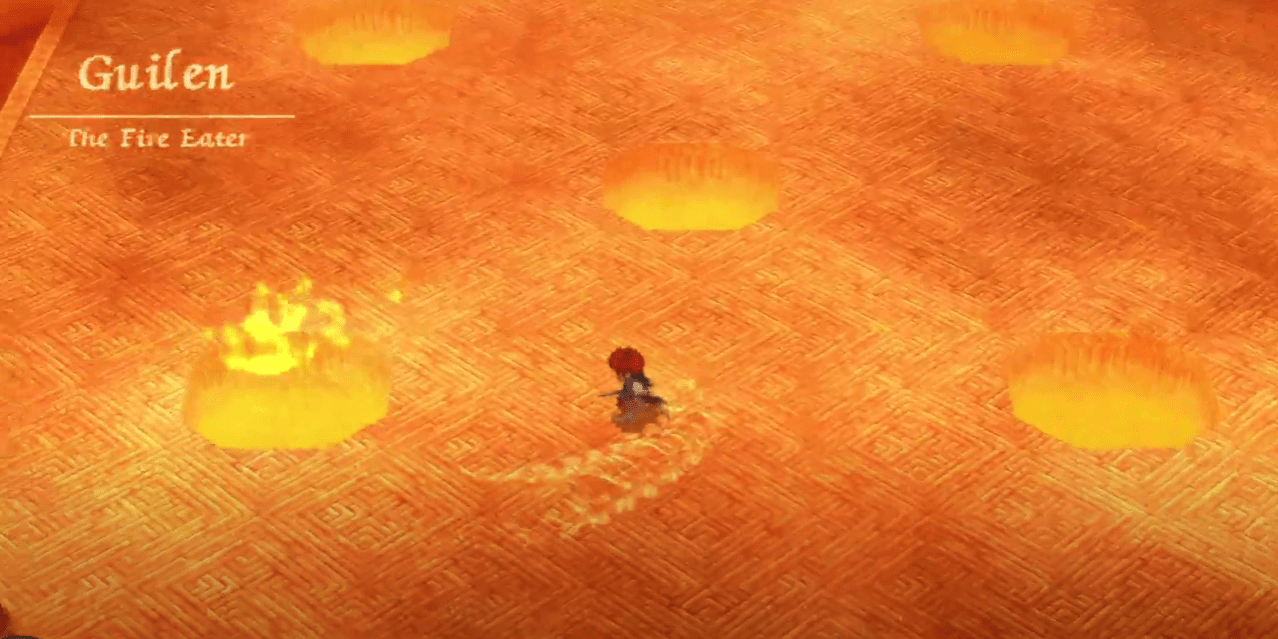
There’s no "attack" animation that locks you in place for three seconds. Everything is snappy. You jump, you slash, and you use elemental magic bracelets that double as platforming tools. The Fire Bracelet lets you light torches and hurl fireballs. The Wind Bracelet lets you glide across gaps. The Earth Bracelet lets you smash through walls. It’s simple. It’s elegant. It’s also incredibly hard because the game doesn't let you use healing items during boss fights.
Yeah, you read that right.
In most RPGs, if a boss is beating you up, you just pause and eat fifteen potions. Not here. In Ys: The Oath in Felghana, you have to actually learn the patterns. If you go into a boss fight with half health, you’re probably going to die. You have to rely on small health drops from minor enemies leading up to the fight, or just play perfectly. It creates this high-stakes dance where one mistake can end a run, but winning feels like you’ve actually accomplished something. It’s rewarding in a way few games are.
The Soundtrack is Basically Power Metal Heaven
We have to talk about the music. Nihon Falcom has an in-house band called the Falcom Sound Team jdk, and they clearly had way too much fun with this one. The soundtrack is a relentless assault of electric guitars, soaring violins, and synth melodies that sound like they were ripped straight out of a 1980s anime opening.
"The Boy Who Had Wings" is a track that plays early on, and it perfectly sets the tone. It’s heroic. It’s driving. It makes running across a grassy plain feel like the most important thing you’ve ever done. Then you hit "Illburns Ruins," and the heavy percussion kicks in, pushing you to move faster, kill quicker, and keep the momentum going. This isn't background music; it’s the heartbeat of the game. If you aren't bobbing your head while fighting a giant lava wyrm, you might actually be a robot.
Felghana's Story: Small Stakes, Big Impact
A lot of modern RPGs try to save the entire universe. You’re fighting gods, or stopping time from collapsing, or something equally absurd. The Oath in Felghana keeps things surprisingly grounded. It’s a story about a small province being squeezed by a corrupt Count, an ancient slumbering evil, and a tragic family history involving Dogi’s childhood friends, Chester and Elena Stoddart.
Chester is a fantastic antagonist. He’s not a mustache-twirling villain; he’s a man driven by a very specific, very personal vendetta. Watching his relationship with his sister Elena fray as the plot progresses adds a layer of genuine pathos that you don't always get in "save the world" narratives. It feels personal. When you’re climbing the clock tower or venturing into the abandoned mines, you aren't just doing it for XP. You’re doing it because these characters feel like people you want to help.
The Technical Reality of Playing it Today
If you’re looking to play this today, you have a few options, but they aren't all equal. The PC version on Steam is the most accessible. It runs on a potato. Seriously, if your computer was built in the last fifteen years, it can probably run this at 60 frames per second. The Steam version also includes some "quality of life" features like a turbo mode and the ability to switch between different versions of the soundtrack (PC-88, X68000, and the modern PC version).
However, the "definitive" version for many is Ys Memoire: The Oath in Felghana, which recently brought high-definition assets and voiced dialogue to modern consoles.
What Most People Get Wrong About the Difficulty
There’s a common misconception that Ys games are just button-mashers. If you try to button-mash through the "Galbalan" fight at the end of this game, you will be staring at a "Game Over" screen within ten seconds.
The game uses a "boost" system. As you hit enemies, a gauge fills up. When you activate it, Adol becomes faster, takes less damage, and hits harder. But the real trick is the combo multiplier. The higher your combo, the more experience you gain. This encourages you to play aggressively. It’s not about being careful; it’s about being precisely violent. If you stop moving, you lose your bonus. If you get hit, you lose your bonus. It’s a game that demands total focus.
Why it Still Matters in 2026
Gaming has moved toward massive open worlds and "cinematic" experiences. Don't get me wrong, I love a good 100-hour odyssey as much as the next person. But there’s something refreshing about a game that you can beat in 12 hours that has zero filler. No fetch quests. No "collect 50 feathers" map markers. Just pure gameplay.
Ys: The Oath in Felghana represents a design philosophy where every screen matters. Every enemy placement is deliberate. It’s a reminder that games don't need to be huge to be great; they just need to be focused. It’s the kind of game that reminds you why you started playing video games in the first place. It’s fun. It’s hard. It’s got a great beat.
The level design is also surprisingly vertical. Since Adol can jump and eventually double-jump, the dungeons feel less like flat hallways and more like playgrounds. You’ll be navigating floating platforms in a dark cathedral one minute and sliding down icy mountains the next. It keeps the pacing snappy. You never feel like you're "grinding" because the act of moving through the world is inherently enjoyable.
How to Get the Most Out of Your Playthrough
If you’re diving in for the first time, don't start on "Hard" unless you’ve got the patience of a saint. "Normal" is already quite a challenge for most people. The game rewards exploration—finding those "Raval Ore" deposits is crucial because they allow you to upgrade your sword, armor, and shield at the local blacksmith.
- Prioritize Armor Upgrades: In Felghana, defense matters more than you think. A single upgrade can be the difference between a boss two-shotting you or four-shotting you.
- Master the Double Jump: Many hidden items are tucked away in corners that require a bit of platforming finesse. If a chest looks out of reach, it probably is—until you get the right magic or ability.
- Listen to the NPCs: Talking to the people in Redmont isn't just for flavor. They often give you items or hints that make life much easier.
- Don't Fear Death: You will die. A lot. The game is generous with checkpoints right outside boss rooms. Use death as a learning tool to memorize attack telegraphs.
The legacy of this game is undeniable. It paved the way for Ys Origin and even influenced the design of the later "party-based" Ys games like Ys VIII: Lacrimosa of Dana. But there’s a purity to the solo-Adol gameplay in Felghana that later titles haven't quite replicated. It’s just you, your sword, and a whole lot of monsters.
Whether you're a veteran of the series or someone who has never heard of Adol Christin, this is the one you should play. It’s a tight, polished, and incredibly intense experience that proves that some games really are timeless.
Actionable Next Steps for New Players
If you’re ready to jump into the world of Felghana, start by grabbing the PC version on Steam or GOG. It's often on sale for less than ten dollars, which is an absolute steal for this level of quality. Before you start, go into the settings and make sure you have the "PC-88" or "X68000" music options available if you want a hit of retro nostalgia, though the default "Refined" soundtrack is honestly incredible.
Plug in a controller—this is not a game you want to play on a keyboard. Once you're in, take your time in the first dungeon to get a feel for the jump-slash mechanics. Don't rush to the boss until you feel comfortable with Adol’s movement. If you find yourself getting stuck, remember that even one level-up can significantly change the math of a fight. Spend ten minutes farming some mobs, upgrade your gear, and go back in. You've got this.
***