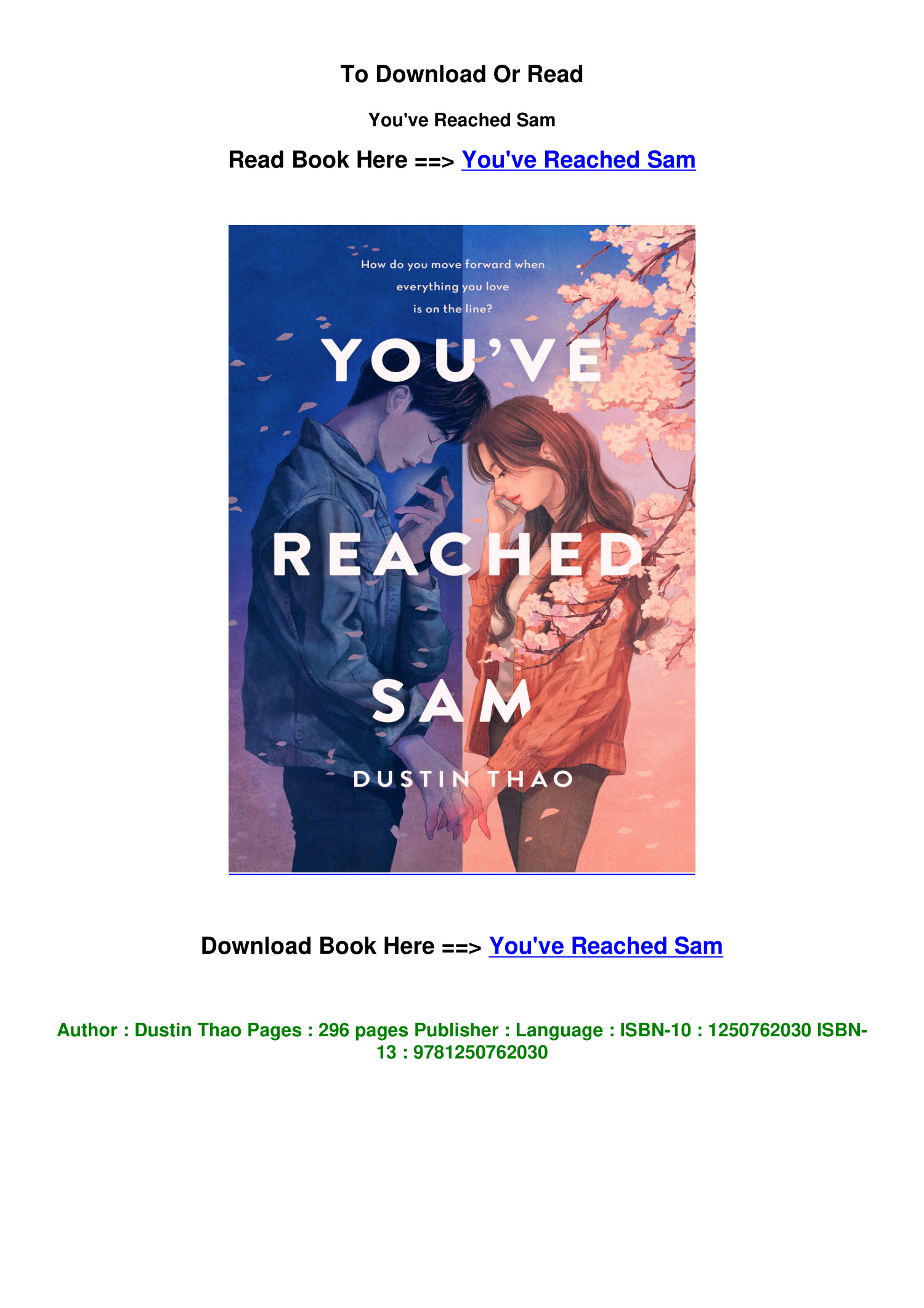
Dustin Thao’s debut novel didn't just walk onto the scene; it sprinted, fueled by a massive wave of TikTok-induced tears. If you've spent even five minutes on BookTok, you’ve seen the blue cover with the cherry blossoms. But for parents, librarians, or even adult readers looking for a good cry, the big question remains: what exactly is the You've Reached Sam age rating and is it actually appropriate for younger kids?
It’s complicated. Not because there’s "adult" content in the way people usually mean it, but because the emotional weight is heavy. Really heavy.
Understanding the Official You've Reached Sam Age Rating
The industry standard for You’ve Reached Sam generally lands in the Young Adult (YA) category. Most major retailers, including Barnes & Noble and Amazon, tag it for ages 12 to 14 and up. Common Sense Media, which relies heavily on parent and child reviews, tends to skew slightly older, often suggesting 13+ or 14+ because of the themes of grief and the permanence of death.
It’s a story about a seventeen-year-old girl named Julie who is planning her future with her boyfriend, Sam. Then Sam dies. In a moment of desperation, Julie calls his phone just to hear his voicemail, but—against all logic—Sam actually picks up.
That’s the hook. It’s magical realism. It’s also a recipe for an emotional wrecking ball.
Breaking Down the Content Concerns
When we look at the specific "rating" metrics, the book is actually quite clean.
Language usage is relatively mild. You’ll find some occasional "hells" or "damns," but it isn't peppered with the kind of profanity you’d find in a gritty contemporary novel like something by Angie Thomas or Adam Silvera. It stays firmly in the "PG-13" territory.
Romance and Sensuality are also handled with a very soft touch. Julie and Sam are deeply in love, and there are memories of their relationship—kisses, cuddling, the intimacy of shared dreams—but there is no explicit sexual content. It focuses on the emotional bond rather than the physical one, which makes it a safe bet for middle schoolers who are ready for romantic themes but not adult situations.
Violence is almost non-existent, though the inciting incident is a car accident. We don't see the carnage. We see the aftermath: the hospital waiting rooms, the funeral, the empty bedroom. That’s where the real "intensity" lies.
Why the Emotional Maturity Matters Most
Age ratings are a bit of a blunt instrument. They tell you if there are "bad words" or "scary scenes," but they rarely tell you if a kid is ready to process a 300-page exploration of the five stages of grief.
You’ve Reached Sam is heavy. Honestly, it’s suffocating at times.
Julie is not always a "likable" protagonist. She skips the funeral. She tries to throw away everything Sam ever touched. She isolates herself from their mutual friends. For a younger reader—say, a 10-year-old who just wants a cool story about a magic phone—this might be frustrating or even confusing. They might think, "Why is she being so mean?"
An older teen, however, understands that Julie is drowning. They recognize the messy, jagged edges of loss. This is why the You've Reached Sam age rating is less about "protection" from bad content and more about "alignment" with the reader's life experience.
Comparisons in the YA Space
To get a better sense of where this sits, compare it to other staples of the genre:
- If I Stay by Gayle Forman: Similar in its "limbo" state between life and death. Both are firmly 13+.
- The Fault in Our Stars by John Green: Green’s work often has more cynical, "adult-sounding" dialogue and more frequent swearing. Thao’s writing is more lyrical and gentle.
- They Both Die at the End by Adam Silvera: This is perhaps the closest cousin. Both deal with the countdown to a final goodbye. If a reader handled Silvera’s book, they can handle Sam.
The "BookTok" Factor and Younger Readers
We have to talk about the influence of social media. Because You’ve Reached Sam went viral, many 10- and 11-year-olds are asking for it. They see the "aesthetic" and the crying reaction videos and they want to be part of the moment.
If you are a parent of a "tween," the You've Reached Sam age rating of 12+ is a solid guideline, but you might want to read it alongside them. The book deals with the concept of "moving on" and whether or not holding onto the past is healthy. It’s a great conversation starter.
Does the book promote unhealthy coping mechanisms? Not necessarily. It portrays them realistically. Julie's struggle to let go of the phone calls is a metaphor for the way we all replay memories of people we've lost.
Final Verdict on the Rating
If we were to give it a cinematic rating, it’s a clear PG-13.
- Age 10-11: Only for very mature readers who are comfortable with sad endings and themes of death.
- Age 12-15: The "Sweet Spot." This is the target demographic.
- Age 16+: Fully appropriate, though some older readers might find the "magic phone" premise a bit sentimental.
The book doesn't rely on shock value. It doesn't use trauma as a cheap plot point. It’s a quiet, devastatingly beautiful look at what we do with the love that has nowhere to go after someone dies.
If you're worried about "inappropriate" content, don't be. There’s nothing here that will scar a young reader. But if you’re worried about them finishing the book and needing a giant box of tissues and a long hug? Yeah, that’s going to happen.
Moving Forward with the Book
Before handing the book over or starting it yourself, consider these practical steps:
- Check the Trigger Warnings: Specifically for grief, car accidents, and death of a loved one. If the reader has recently experienced a personal loss, this book might be cathartic, or it might be too much too soon.
- Pair it with Music: Dustin Thao actually has a playlist for the book. Music plays a role in the story, and listening to it can help younger readers connect with the tone.
- Discuss the Ending: Without giving it away, the ending is bittersweet. It’s not a "happily ever after" in the traditional sense. Prepare younger readers for the fact that stories don't always end with everything being fixed.
- Explore the Cultural Context: The book features a Vietnamese-American family and explores specific cultural ways of mourning and honoring the dead. It’s a great opportunity to talk about how different families handle loss.
Ultimately, the You've Reached Sam age rating is just a number on a sticker. The real value is in the emotional journey, which is accessible to anyone old enough to have loved someone and feared losing them. It's a "clean" read, but a heavy one.
Pack some tissues. You’ll need them.



