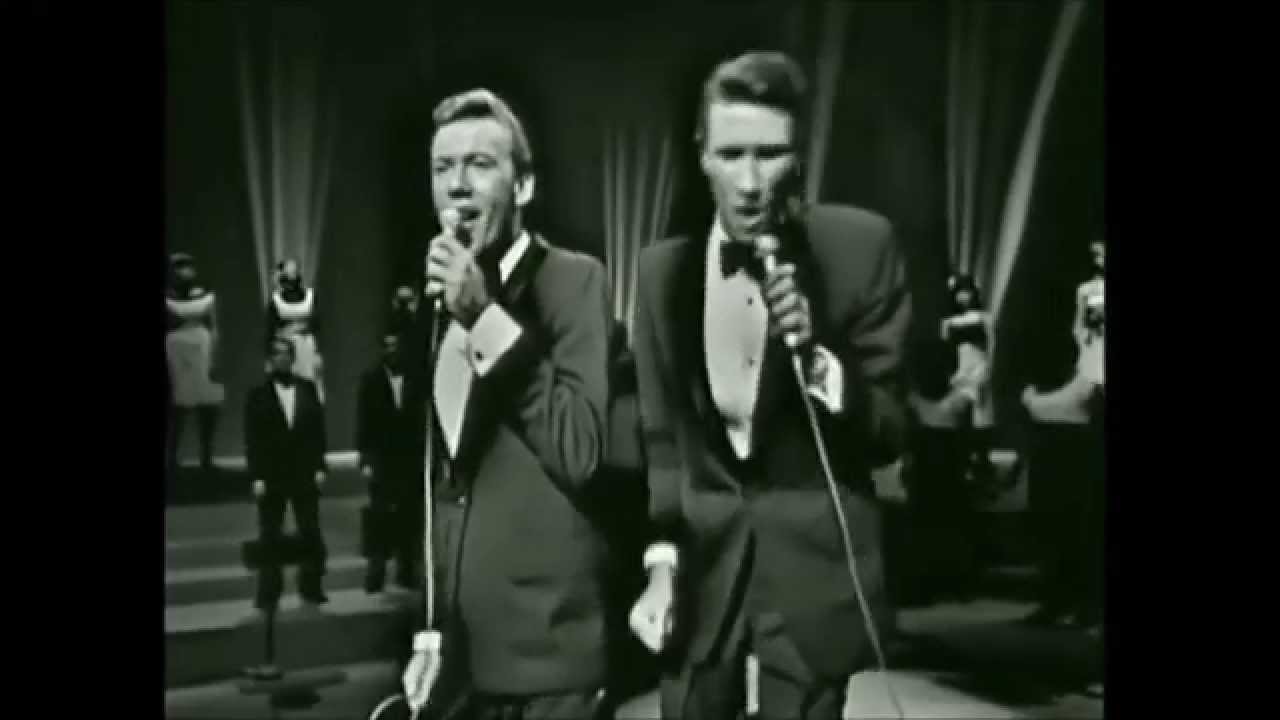
It starts with that low, almost brooding baritone. Bill Medley’s voice sounds like it’s coming from the bottom of a well, heavy with a kind of desperation that most pop songs in 1964 wouldn’t dare touch. Then, the swell happens. Bobby Hatfield joins in, the orchestration thickens into a literal wall of sound, and suddenly, you aren’t just listening to a radio hit. You’re trapped in a melodrama.
You’ve Lost That Loving Feeling is, by most official accounts, the most played song in radio history. BMI has clocked it at over eight million plays. To put that in perspective, if you played that song back-to-back for eighty years straight, you still wouldn’t hit the number of times it has drifted through car speakers, wedding receptions, and breakup playlists.
But here is the thing: the song was a massive gamble that nearly everyone involved thought was a mistake.
The Night in Vegas That Changed Everything
Phil Spector was looking for a hit that would define his "Wall of Sound" legacy. He found his muses in The Righteous Brothers, a duo that wasn’t actually brothers but two white guys from California with enough soul to make people think they were Black. Spector saw them performing in Las Vegas and decided they were the vehicles for his next masterpiece.
He didn't write it alone. He brought in the powerhouse duo of Barry Mann and Cynthia Weil. They sat at a piano at the Chateau Marmont and tried to channel the vibe of "Baby I Need Your Loving" by The Four Tops.
The process wasn't pretty. Mann and Weil originally thought the song was too slow. Spector, obsessive as always, kept pushing for more gravity. He wanted something that felt like a symphony for teenagers.
When they finally got into the studio, the tension was thick. Bill Medley was worried. He started the song in such a low register that he was convinced people would think the record was being played at the wrong speed. He actually told Spector, "Phil, you have this thing starting so low, only dogs are going to be able to hear it."
The "Too Long" Problem
In 1964, radio programmers were ruthless. If a song was over three minutes, it didn't get played. It was that simple. Advertisements needed their slots, and three minutes was the industry's hard ceiling.
You’ve Lost That Loving Feeling clocked in at nearly four minutes.
Spector knew this would kill the track. So, he lied. He literally printed "3:05" on the record label instead of the actual 3:45 runtime. He figured that by the time a DJ realized the song was still going, they’d be too caught up in the climax to care. It worked. DJs played it, the audience stopped what they were doing, and the song became a cultural juggernaut.
Why the Wall of Sound Actually Matters
People talk about the Wall of Sound like it’s just a fancy production term. It’s not. It was a physical, grueling process.
Imagine a tiny room at Gold Star Studios in Los Angeles. Spector would cram three pianos, five guitars, and multiple bass players into a space meant for a quartet. They would play the same parts in unison. The sound would bleed into every microphone, creating this dense, hazy, reverberating wash of noise.
- Layering: It wasn't just about volume; it was about doubling and tripling instruments to create a new texture.
- The Echo Chamber: Gold Star had a legendary basement echo chamber that gave the track its ghostly, church-like resonance.
- The backup singers? One of them was a young woman named Cherilyn Sarkisian. You know her as Cher.
This wasn't digital. There were no "undo" buttons. If one horn player messed up a note three minutes into the take, they had to start the whole thing over. The Righteous Brothers did dozens of takes. Medley and Hatfield were exhausted. Spector was relentless.
The Mid-Song Silence That Scared Everyone
About two-thirds of the way through, the song does something radical. It stops.
The music drops out, leaving only a rhythmic thumping and the "Whoa-oh-oh-oh" build-up. At the time, this was unheard of. Producers thought the silence would make listeners think the radio had died.
But that bridge is exactly why the song sticks in your brain. It creates a psychological tension. You’re waiting for the release. When Bobby Hatfield finally hits those high notes—that screaming, soulful plea—it feels earned.
Medley’s deep, grounded verses represent the reality of a dying relationship. Hatfield’s soaring tenor represents the panic of losing it. It’s a perfect sonic representation of an argument that neither side is winning.
The Maverick Effect and the 80s Revival
If you’re under the age of 50, there’s a good chance your first exposure to You’ve Lost That Loving Feeling wasn't through a 60s oldies station. It was Tom Cruise.
The 1986 film Top Gun used the song as a centerpiece. Maverick (Cruise) and Goose (Anthony Edwards) use the track as a "pickup" move in a bar. It was cheesy, sure. But it introduced the song to a generation that didn't know Phil Spector from a hole in the ground.
Suddenly, the song was back on the charts. It became a karaoke staple. It cemented the idea that this wasn't just a 1960s relic; it was a permanent piece of the English language.
The Complicated Legacy of the Creators
It's hard to talk about this song without acknowledging the darker side of its history. Phil Spector’s later life, marked by violence and his eventually conviction for murder, casts a long shadow over the "Wall of Sound."
Does the art stand apart from the artist? For many, the song is so deeply embedded in their own lives—their own breakups and memories—that Spector becomes a footnote.
Then there’s the "Blue-Eyed Soul" debate. The Righteous Brothers were often criticized for "sounding Black," a term that carries a lot of weight in musicology. However, Black artists of the time, including many of the Motown greats, defended them. They saw Medley and Hatfield as genuine talents who respected the genre rather than just mimicking it for profit.
Is It Really the "Best" Song Ever?
Music is subjective. Obviously. But if we look at the data, You’ve Lost That Loving Feeling holds a unique crown.
- BMI Honors: It is the only song to surpass 8 million broadcast performances.
- Cover Versions: Everyone from Elvis Presley to Hall & Oates to Dionne Warwick has tackled it.
- Cultural Longevity: It has appeared in over 50 major motion pictures.
The song resonates because it captures a very specific, universal feeling. It’s not the "I hate you" phase of a breakup. It’s the "something is wrong and I don't know how to fix it" phase. It's the hollow realization that the person sitting across from you feels like a stranger.
How to Listen Like a Pro
To truly appreciate the song, you have to get away from laptop speakers. The Wall of Sound was designed for mono radio, but on a good pair of headphones, you can start to peel back the layers.
Listen for the tambourine. It’s buried, but it’s the heartbeat of the track.
Listen to the way the bass notes at the beginning aren't just one instrument, but a combination of several playing the same line to create that "growl."
Most importantly, listen to the transition from the bridge back into the final chorus. That explosion of sound is the moment pop music grew up. It stopped being about "I want to hold your hand" and started being about the complex, often messy reality of adult intimacy.
What You Can Learn From the "Loving Feeling" Success
Success often comes from the things that shouldn't work. Spector’s "mistakes" are what made the song a legend.
- Don't fear the "too much": Everyone told Spector the orchestration was too busy. He did it anyway.
- Trust the dynamics: The silence in the bridge is just as important as the noise in the chorus.
- Subvert the rules: If the radio says 3 minutes, give them 4 and tell them it's 3.
The Righteous Brothers didn't stay together forever, and Spector’s story ended in a cell. But those three minutes and forty-five seconds remain perfectly preserved. It is a masterclass in emotional manipulation through sound.
If you want to understand the architecture of a perfect pop song, you start here. You look at the low-end frequency of Bill Medley. You look at the frantic energy of Bobby Hatfield. And you realize that sometimes, losing that loving feeling is the best thing that ever happened to the history of music.
To get the full experience of the Wall of Sound, track down a high-quality mono recording of the 1964 original. Modern stereo remasters often separate the tracks too much, which actually ruins the "wall" effect Spector was trying to achieve. The magic is in the blur. Look for the original Philles Records master if you can find it. You’ll hear the difference immediately.



