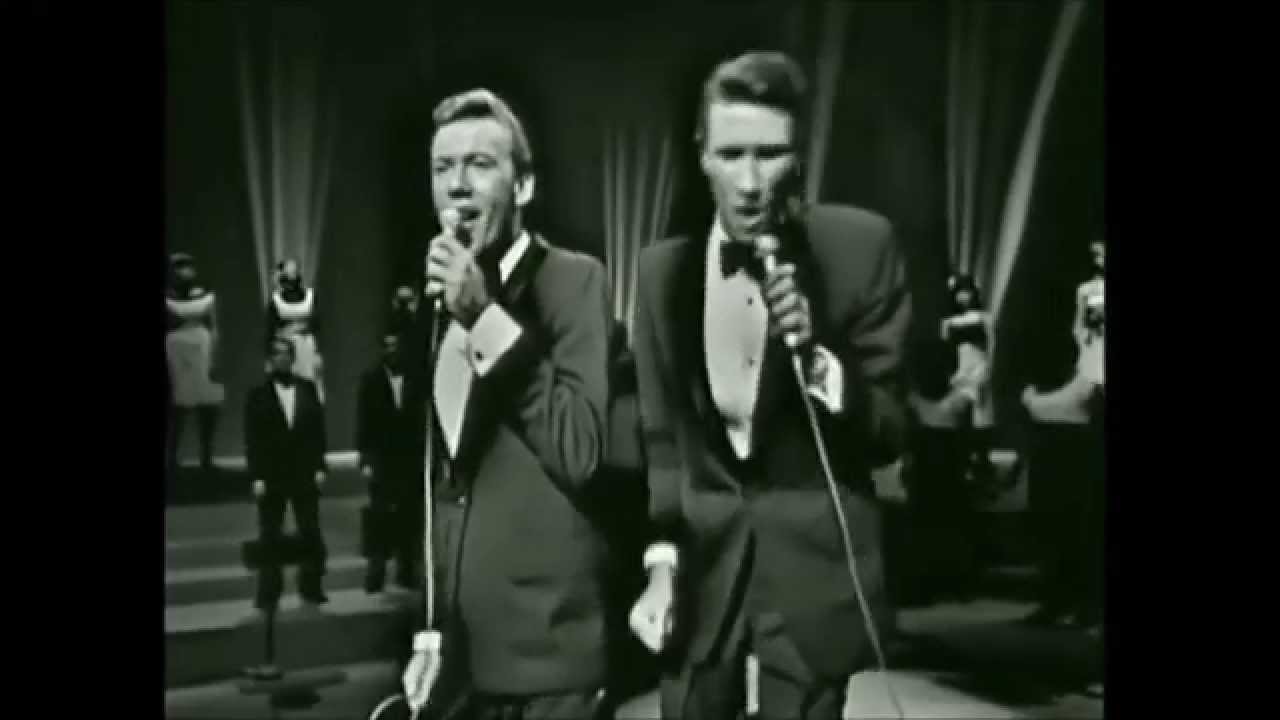
It is the sound of a heavy heart. That low, rumbling baritone from Bill Medley starts so deep it feels like it’s coming from the floorboards. Most people recognize the opening notes of You've Lost That Lovin' Feelin' within two seconds. It is, quite literally, the most played song in the history of American radio. But if you were in the studio in late 1964, you might have bet your last dollar it was going to be a total flop.
Phil Spector was obsessed. He was a man who didn't just record music; he built cathedrals of sound. For this specific track, he brought in the Righteous Brothers—Bill Medley and Bobby Hatfield—and pushed them until they were raw. It wasn't just about a breakup. It was about that terrifying moment when you realize the person sitting across from you has already checked out emotionally. The "lovin' feelin'" isn't just gone; it's evaporated.
The Three-Minute Lie That Saved the Hit
Back in the sixties, radio stations had a golden rule: if a song was longer than three minutes, DJs wouldn't play it. They needed room for commercials and fast-talking transitions. You've Lost That Lovin' Feelin' clocked in at nearly four minutes. Spector knew this was a death sentence.
So, he lied.
If you look at the original Philles Records label for the 45 rpm vinyl, the time is listed as 3:05. In reality, the song is 3:45. It was a ballsy move. Spector figured that by the time a DJ realized the song was still going, the hook would have already sunk in. He was right. The song didn't just get played; it became a sonic landmark that defined the "Wall of Sound" technique.
Why Bill Medley Thought the Song Was for a Woman
When Medley first heard the demo, he was confused. The key was so low. At the time, the Righteous Brothers were known for their high-energy, "Blue-Eyed Soul" performances. Medley actually asked Spector if he was intended to sing the lead or if the song was meant for a female singer like Cher (who, funnily enough, was a backup singer on the final track).
Spector insisted. He wanted that "gravel-at-the-bottom-of-the-well" sound. Medley’s deep voice provides the foundation, while Bobby Hatfield’s soaring tenor creates the explosion of desperation in the bridge. It’s a perfect contrast. It feels like a conversation between two different stages of grief.
The Architecture of the Wall of Sound
What actually makes this song work? It’s crowded. Spector didn't just use a band; he used an army. We’re talking about multiple pianos, three basses, and a literal room full of guitarists playing the same chords simultaneously to create a shimmering, massive drone.
This wasn't digital. There were no "undo" buttons. If one musician messed up, the whole take was ruined. They spent hours—sometimes days—on a single track.
- The Wrecking Crew: The legendary group of session musicians provided the backbone.
- The Echo Chamber: Gold Star Studios in Los Angeles had a specific acoustic chamber that gave the song its cavernous, "church-like" reverb.
- The Build: Notice how the song starts with just a few instruments and slowly adds layers until the bridge, where everything—horns, percussion, backing vocals—hits at once.
Honestly, it’s overwhelming. But that’s the point. It mimics the feeling of a panic attack or a collapsing relationship. You feel the air leaving the room.
The 1986 Top Gun Effect
If you’re under the age of 50, your first exposure to You've Lost That Lovin' Feelin' probably wasn't the radio. It was Tom Cruise in a flight suit.
When Top Gun used the song as Maverick’s "go-to" move to woo Charlie (Kelly McGillis) in a bar, it transformed the track from a 60s relic into a cultural meme before memes existed. It added a layer of kitsch to the song. Suddenly, every guy in a bar thought they could serenade their way into a date by singing off-key.
But if you strip away the aviator sunglasses and the Hollywood gloss, the song remains devastatingly sad. It’s interesting how pop culture can take a masterpiece of melancholy and turn it into a karaoke joke. Despite the Top Gun association, the original recording still holds a weight that a thousand bar sing-alongs can't diminish.
Cissy Houston and the Backup Singers
One of the best "hidden in plain sight" facts about this recording is the pedigree of the background vocals. You aren't just hearing random studio singers. You’re hearing Cissy Houston (mother of Whitney). You’re hearing a young Cher.
Spector was notorious for his "vocal layering." He would have groups of singers stand around a single microphone, blending their voices until they became an instrument of their own. This is why the backing vocals on You've Lost That Lovin' Feelin' don't sound like "backup." They sound like a Greek chorus commenting on the tragedy of the lead singer’s life.
The BMI Record
According to BMI (Broadcast Music, Inc.), this song is the most-played song of the 20th century. By 1999, it had surpassed 8 million airplays. To put that in perspective, if you played the song back-to-back 8 million times, it would play for more than 45 years straight.
It beat out "Yesterday" by The Beatles. It beat out "Stand By Me." There is something universal in the lyrics—written by Barry Mann, Cynthia Weil, and Spector—that resonates across generations. Everyone knows that feeling of reaching out for someone who is right there, yet miles away.
Breaking Down the Lyrics: The Psychology of the Fade
"You never close your eyes anymore when I kiss your lips."
That’s the opening line. It’s brutal. It’s a specific observation of intimacy fading. Most breakup songs are about the "after"—the crying in the rain, the moving out. This song is about the "during." It’s about the slow-motion car crash of a relationship that hasn't officially ended yet, but the soul has left the body.
The mid-section of the song, where the tempo drops and the "Baby, baby, I'd get down on my knees for you" chant begins, was actually a point of contention. Some felt it was too long. But that repetition is where the desperation lives. It’s a plea. It’s a man refusing to accept the inevitable.
The Legacy of the Righteous Brothers
While Spector got the credit for the production, the Righteous Brothers gave the song its humanity. They weren't actually brothers, of course. Bill Medley and Bobby Hatfield were just two white kids from California who loved R&B so much that black audiences in the early 60s supposedly coined the term "soul brothers" for them because they "sounded black."
They took a polished, over-produced Spector track and made it bleed. Without Medley’s vulnerability and Hatfield’s soaring "I need your love!" climax, the Wall of Sound might have just felt like a wall of noise.
How to Truly Appreciate the Track Today
To understand why this song still matters, you have to stop listening to it as "oldies" background music.
- Listen on high-quality speakers or open-back headphones. Avoid cheap earbuds. You need to hear the separation of the instruments in the "Wall."
- Focus on the bass line. The way the three basses interact creates a "pulse" that drives the anxiety of the track.
- Compare it to modern "clean" pop. Modern music is often tuned to perfection. This song has "dirt" in it. It has bleed-through from other microphones. It has the sound of a room full of people breathing and sweating.
You've Lost That Lovin' Feelin' isn't just a song; it's a captured moment of 1960s ambition. It represents the peak of analog recording, where humans pushed machines to their absolute limits to capture an emotion as fleeting as "a lovin' feelin'."
If you want to dive deeper into the history of the "Wall of Sound," look up the discography of the Wrecking Crew. Seeing the list of songs these session musicians played on—from the Beach Boys to Frank Sinatra—will completely change how you hear the radio. For a more modern perspective, compare the Righteous Brothers' original with the 1980 cover by Hall & Oates; it’s a masterclass in how different production styles can completely alter the emotional impact of the same lyrics.
Next Steps for Music Enthusiasts:
- Audit the "Wall of Sound": Listen to "River Deep – Mountain High" by Ike & Tina Turner immediately after this. It’s Spector’s other "masterpiece" that actually failed in the US but succeeded in the UK, showing the weird volatility of the 1960s music market.
- Study the Lyrics: Read the poetry of Cynthia Weil and Barry Mann. They were the powerhouse songwriting duo behind hits like "On Broadway" and "We Gotta Get Out of This Place." Their ability to capture urban anxiety is unmatched in pop history.
- Explore Blue-Eyed Soul: Check out the early work of The Rascals or Dusty Springfield to see how the Righteous Brothers fit into the larger movement of white artists interpreting African American soul music during the Civil Rights era.



