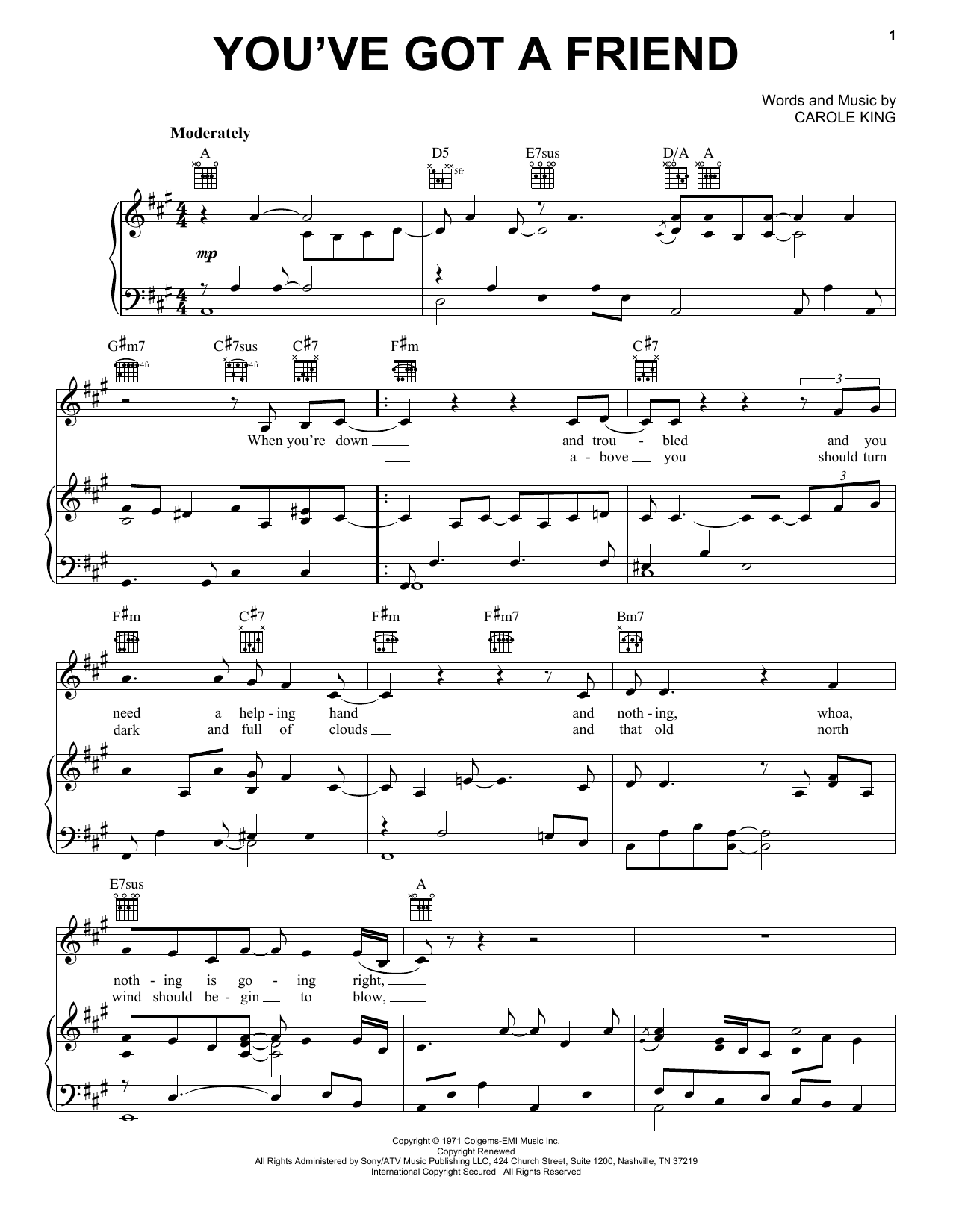
Sometimes a song doesn't just get written. It sort of falls out of the sky.
When Carole King sat down at a piano in January 1971, she wasn't trying to write a global anthem for friendship. She was just a woman in a recording studio, a songwriter who had spent years behind the scenes, now finally stepping into her own spotlight. The track that emerged, You've Got a Friend, would eventually define her career, but the way it actually became a hit is a bit of a weird, beautiful accident involving a very famous friend and a line from a totally different song.
Honestly, the story of how this track went from a quiet demo to a Grammy-winning powerhouse is as much about James Taylor as it is about Carole.
The Response to a Lonely Lyric
If you’ve ever wondered where the inspiration for those iconic lyrics came from, you have to look at James Taylor's 1970 hit, "Fire and Rain."
In that song, James sings a pretty devastating line: “I’ve seen lonely times when I could not find a friend.” Carole King heard that. It stuck with her. She later told Taylor that You've Got a Friend was her answer to that specific moment of despair. It was like she was reaching across the musical aisle to say, "Hey, I'm right here."
She described the writing process as "pure inspiration." She didn't labor over it for weeks or obsess over the bridge. In her own words, the song basically "wrote itself." It was a gift from the universe that she just happened to be the one to catch.
Parallel Lives in the Studio
The weirdest part of the 1971 timeline is that King and Taylor were actually recording their legendary albums—Tapestry and Mud Slide Slim and the Blue Horizon—at the exact same time in the same studio complex (A&M Studios in Hollywood).
They were sharing the same musicians. Same vibe. Same air.
When James heard Carole playing the song, he was floored. He asked her if he could record it, too. Most artists would be protective of a potential hit, but Carole just said yes. She didn't write it for him, but once he heard it, it belonged to him as much as it did to her.
Carole’s Version vs. James’s Version
While James Taylor’s version is the one that hit Number 1 on the Billboard Hot 100, Carole’s version on Tapestry remains the emotional core of the song.
They are remarkably similar because, well, they used the same people. If you listen closely to the credits, you'll see Danny "Kootch" Kortchmar playing guitar on both and James Taylor himself playing acoustic guitar on Carole’s version.
But there are tiny, human differences:
- The Tempo: Carole’s version feels a bit more grounded. It’s a piano-driven soul-folk hybrid.
- The Vocals: James has that famous "Carolina" drawl. He often sings "You got a friend," while Carole sticks to the more formal "You've got a friend."
- The Backing: James’s version features the incredible Joni Mitchell on backing vocals. You can hear her high, haunting harmony in the chorus if you really lean in.
It’s rare for two versions of the same song to be released in the same year and both become legendary. Usually, one person "owns" the song and the other is just a cover. Not here. They are two sides of the same coin.
The Night at the Troubadour
To really understand why You've Got a Friend Carole King is such a massive cultural touchstone, you have to look at the Troubadour.
The legendary L.A. club was the center of the universe for the singer-songwriter movement. Carole and James performed there together, and that live energy is what cemented the song as a "friendship anthem."
People weren't just listening to a pop song; they were watching a real, documented friendship play out on stage. It felt authentic because it was authentic. They weren't a manufactured duo put together by a label. They were just two people who liked each other's music and helped each other survive the pressures of 70s stardom.
Grammy Dominance
The 1972 Grammys were essentially a coronation for the song.
- Carole King won Song of the Year (a songwriter’s award).
- James Taylor won Best Pop Vocal Performance, Male.
It was a clean sweep for a single piece of writing. It proved that a great song could transcend the person singing it.
Technical Details Most People Miss
The production on Carole’s Tapestry was intentionally "raw." Producer Lou Adler didn't want a polished, over-produced Hollywood sound. He wanted it to sound like Carole was sitting in your living room.
If you listen to the track today on a good pair of headphones, you can hear the "bleed"—the sound of the instruments leaking into each other's microphones. It’s imperfect. You can hear the wooden thud of the piano keys.
That lack of polish is exactly why it works. It doesn't sound like a product. It sounds like a person.
The Legacy Beyond the 70s
Since 1971, the song has been covered by everyone. And I mean everyone.
- Dusty Springfield recorded a version that was actually held back due to a contract dispute and didn't see the light of day for decades.
- Michael Jackson did a version as a young teen that is surprisingly sweet and innocent.
- Aretha Franklin turned it into a gospel-tinged powerhouse.
But despite the hundreds of covers, people always go back to the original. There is something about Carole’s piano intro—those first three chords—that immediately settles your heart. It’s musical therapy.
How to Appreciate the Song Today
If you want to really "get" the magic of this track, do these three things:
- Listen to "Fire and Rain" first: Hear James Taylor's cry for help. Then immediately play Carole's version of You've Got a Friend. It changes the way you hear the lyrics "Close your eyes and think of me."
- Watch the Troubadour Reunion footage: There’s a 2010 concert film of Carole and James back together. They are older, their voices have changed, but the way they look at each other while singing this song proves the lyrics weren't just marketing fluff.
- Pay attention to the bass: Charles Larkey (Carole’s husband at the time) plays a beautiful, melodic string bass on the Tapestry version. It’s the "hug" that holds the song together.
The song works because it isn't about romantic love. It’s about the kind of love that shows up at 2:00 AM when your car breaks down or your heart is in pieces. It’s the "no questions asked" kind of loyalty.
As long as people feel lonely, this song is going to stay relevant.
Actionable Insights for Music Lovers
- Dive into the "Section" Musicians: If you love the sound of this track, look up the other work of Danny Kortchmar, Russ Kunkel, and Leland Sklar. They are the "secret sauce" behind almost every great 70s record.
- Try the Carole King "Tapestry" Deep Dive: Don't just stop at the hits. Listen to the transitions between "Way Over Yonder" and "You've Got a Friend." The album was designed to be heard as a single journey.
- Check out the Broadway show "Beautiful": If you want the narrative context of her life leading up to this song, the musical does a fantastic job of showing the struggle of being a female writer in a male-dominated industry.
There's no "conclusion" needed here because the song is still being played, still being covered, and still helping people through the night. It’s a finished piece of history that stays fresh every time someone hits play.



