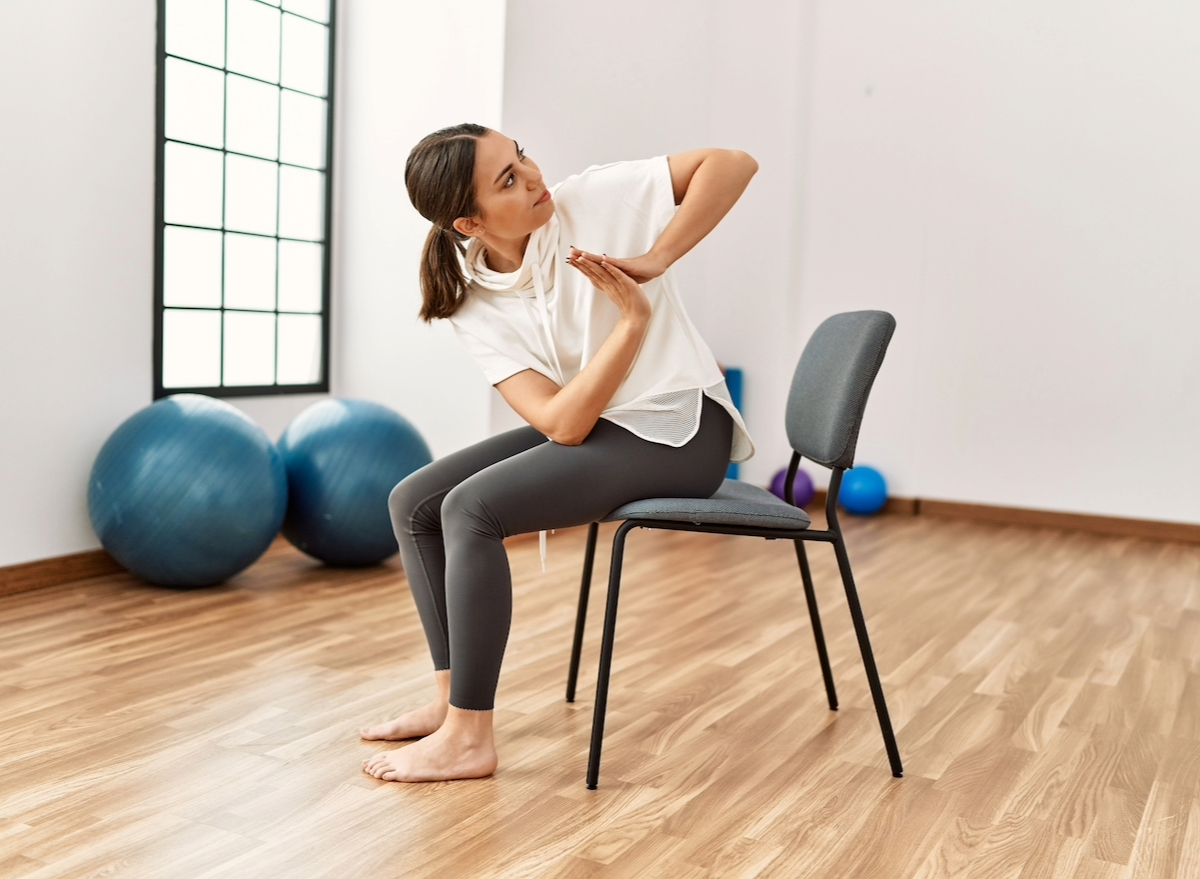
You're sitting there. Probably hunched over a laptop or scrolling through a phone while the middle of your back starts to scream. We've all been there. The immediate instinct is to search for a quick fix, which usually leads straight to YouTube chair exercises. It makes sense. It’s free. It’s accessible. You don't even have to change into spandex. But honestly? Most of the "desk yoga" or "seated cardio" videos you find in the search results are either dangerously fast or just plain boring.
There is a weird disconnect in the fitness world. We assume that if you're sitting in a chair, the workout isn't "real." That's total nonsense. Ask anyone recovering from a hip replacement or a high-level office executive with zero time to hit the gym. They'll tell you that the right seated movement is the only thing keeping their joints from seizing up like a rusty gate.
The problem is the "influencer" factor. A lot of creators just sit on a stool and wave their arms around for ten minutes. That isn't exercise; it's a TikTok dance. If you want actual results—like improved circulation, better posture, or even a bit of metabolic "fire"—you have to be picky about who you follow and how you move.
The Science of Sitting (and Why Moving Matters)
Sitting is stagnant. It’s not just about burning calories; it’s about fluid dynamics. According to researchers at the Mayo Clinic, sitting for long periods without interruption is linked to a cluster of conditions including increased blood pressure and high blood sugar. When you engage in YouTube chair exercises, you aren't just stretching. You are literally acting as a manual pump for your lymphatic system.
Your muscles are the engines that move your blood. When you do a seated leg extension or a seated twist, you’re helping your heart. It’s basic biology. However, you can’t just go through the motions. You have to create tension. If you’re just flopping your legs up and down while watching a video, you’re wasting your time. You’ve got to squeeze the quad. Feel the burn.
Most people think these routines are just for "seniors." Wrong. A 2021 study published in the International Journal of Environmental Research and Public Health looked at "desk-based" exercises. They found that even micro-bouts of movement—stuff you can do during a Zoom call—significantly lowered musculoskeletal discomfort. It’s about frequency, not just intensity.
Not All YouTube Chair Exercises Are Created Equal
Search for "chair workout" and you’ll get millions of hits. It's overwhelming. You have the high-energy cardio queens, the soft-spoken yoga instructors, and the clinical physical therapists.
Let's talk about HASfit. Coach Joshua and Claudia are legendary in this space. Why? Because they show modifications for everything. They understand that someone looking for YouTube chair exercises might have a limited range of motion or chronic pain. They don't just tell you to "lift your leg." They explain where you should feel it.
Then you have Yoga with Adriene. She has a few "Chair Yoga" sequences that focus heavily on the nervous system. This is huge. If you're stressed, your muscles tighten up. If you try to force a stretch while you're stressed, you might actually hurt yourself. Her approach is more about "vagal tone" and relaxing the shoulders. It’s less about sweat and more about survival in a high-stress world.
But then there's the "cardio" side. Channels like The Body Coach (Joe Wicks) have brought high-intensity interval training (HIIT) to the chair. This is where it gets tricky. If you have a wheeled office chair, do NOT do these. I've seen people slide right across the room trying to do seated mountain climbers. Use a sturdy, four-legged dining chair. Preferably one without arms so you have a full range of motion.
The Danger of "Mindless" Following
You've got to listen to your body more than the person on the screen. YouTube creators can't see your form. They don't know if your L5-S1 disc is bulging.
- The Twisting Trap: A lot of videos suggest deep spinal twists. If you have osteopenia or osteoporosis, aggressive twisting can be risky. Keep it small.
- The Neck Strain: People tend to stare at the screen while twisting their body. This wreaks havoc on the cervical spine. Learn the move, then look forward.
- The "Slump" Factor: If you lean back into the chair's support, you've turned off your core. Sit on the edge of the seat. Make your spine do the work.
How to Actually Rank Your Workout Efforts
If you’re doing this for weight loss, let's be real: sitting down burns fewer calories than standing. But that’s not the point. The point is "Non-Exercise Activity Thermogenesis" (NEAT). By incorporating YouTube chair exercises into your workday, you’re keeping your metabolism from hitting "sleep mode."
Think of it as a ladder.
Level one is simple stretching. Neck rolls, shoulder shrugs. This is for maintenance. Level two is resistance. This is where you bring in a resistance band or a couple of water bottles as weights. Level three is seated cardio—getting the heart rate up to where it’s slightly hard to speak.
Most people stay at level one and wonder why they don't feel "fit." You have to progress. If a video feels easy, it’s time to move to a harder one. Don't get stuck in a comfort zone just because you're sitting down.
Why Your Feet Matter in a Chair Workout
This is the stuff nobody talks about. Your feet are your foundation, even when you’re on your butt. If your feet are dangling, you’re putting a ton of pressure on your hamstrings and the back of your thighs. This can actually cut off circulation—the exact opposite of what we want.
Keep your feet flat. If you're short, use a footrest or a couple of books. When you do a seated move, press your heels into the floor. You’ll feel your core engage instantly. It’s a "hack" that most fitness influencers forget to mention because they’re too busy smiling at the camera.
Real Experts to Look For
If you want the "good stuff," look for creators with actual credentials. Justin Agustin is fantastic for beginners and people with limited mobility. He focuses on functional movement—things that help you get out of a car or pick up a grocery bag.
For the older crowd, SeniorShape Fitness is a goldmine. The pacing is respectful of joint health. They aren't trying to sell you a "six-pack in six days" lie. They’re selling independence.
Physical therapists on YouTube, like Bob & Brad, often show seated versions of rehab exercises. If you have sciatica or "tech neck," their seated routines are usually safer and more effective than a generic "office workout" video made by a lifestyle vlogger.
Common Misconceptions About Seated Fitness
"It's too easy." Tell that to someone doing 50 seated leg lifts with a 2-second hold at the top.
"I don't need shoes." Actually, you might. If you’re doing cardio-style YouTube chair exercises, the impact of your feet hitting the floor can be tough on your arches if you’re just in socks. Plus, socks slide. Sliding leads to falls.
"It won't help my posture." Actually, it's the only thing that will. You can't just "decide" to have good posture. Your muscles have to be strong enough to hold you up. Seated rows (mimicking the rowing motion) strengthen the rhomboids and traps, which naturally pulls your shoulders back.
Creating a Routine That Sticks
Don't try to do a 30-minute video on day one. You'll get bored or your hip flexors will get cranky. Start with "pantry" workouts. While the coffee is brewing, do three minutes of seated marches.
Consistency beats intensity every single time.
Honestly, the best way to use these videos is as a "pattern break." Every hour, set a timer. Do 5 minutes of a video. It resets your brain and your body. The "brain fog" people complain about at 3:00 PM is often just a lack of oxygenated blood reaching the head because they’ve been a statue for four hours.
Practical Steps to Get Started Right Now
Stop scrolling and actually do this. Don't just "save for later" because we both know "later" never happens.
- Clear your space. Move the rolling chair away and grab a kitchen chair. If you must use an office chair, lock the wheels or put it against a wall so it doesn't fly out from under you.
- Search for "Low Impact Seated Cardio" or "Chair Yoga for Beginners." Look for videos between 10 and 15 minutes.
- Focus on the "Big Three": - The Seated March: Gets the heart rate up and works the hip flexors.
- Seated Twists: Opens the mid-back (thoracic spine) but keep it gentle.
- Seated Leg Extensions: Strengthens the knees and quads.
- Check your alignment. Ears over shoulders, shoulders over hips. Don't lean into the backrest.
- Breathing is mandatory. People tend to hold their breath when they're concentrating on a new move. That spikes your blood pressure. Exhale on the "work" part of the move.
The reality is that YouTube chair exercises are a tool. Like any tool, they only work if you use them correctly. You don't need a gym membership to stay mobile, but you do need a bit of intentionality. Start small. Your back will thank you by the end of the week.
/i.s3.glbimg.com/v1/AUTH_08fbf48bc0524877943fe86e43087e7a/internal_photos/bs/2025/H/e/ewwgKCQCSopdUJUwy6DA/imagem-2025-04-27-114802986.png)


