Hollywood loves a crowd. Specifically, it loves the kind of crowd that happens when two single parents with a small army of children decide to get married. We’ve seen it twice now under the same name, and honestly, the fascination with Yours, Mine and Ours says a lot more about our obsession with "blended family" logistics than it does about actual parenting.
The story is simple. It's basically a math problem dressed up as a comedy. Take one disciplined, high-strung parent (usually military or high-stakes business), add one free-spirited, creative parent, and throw in enough kids to start a small colony. It shouldn't work. In real life, it would probably end in a very expensive therapy bill or a massive zoning violation, but on screen, it’s a goldmine for slapstick and sentimental realizations.
People often forget that the 1968 original starring Lucille Ball and Henry Fonda wasn't just some wacky script cooked up in a studio basement. It was based on a real person named Helen Beardsley. She wrote a book called Who Gets the Drumstick? which detailed her life with Frank Beardsley and their combined 18 children. Eighteen. Just think about the sheer volume of laundry for a second. That reality provided the foundation for a sub-genre of family films that still resonates because, let's face it, most of us feel like our households are barely controlled chaos even with just two kids and a dog.
The 1968 Original vs. The 2005 Remake
If you grew up with the 2005 version starring Dennis Quaid and Rene Russo, you might find the Lucille Ball version a bit slow. But the 1968 film is actually the superior piece of storytelling. Why? Because it treats the stakes with a weird kind of sincerity. Lucille Ball was already a titan of comedy, but she plays Helen with a genuine vulnerability. Henry Fonda is as stiff as a board, which is exactly what the role of a Navy officer father requires.
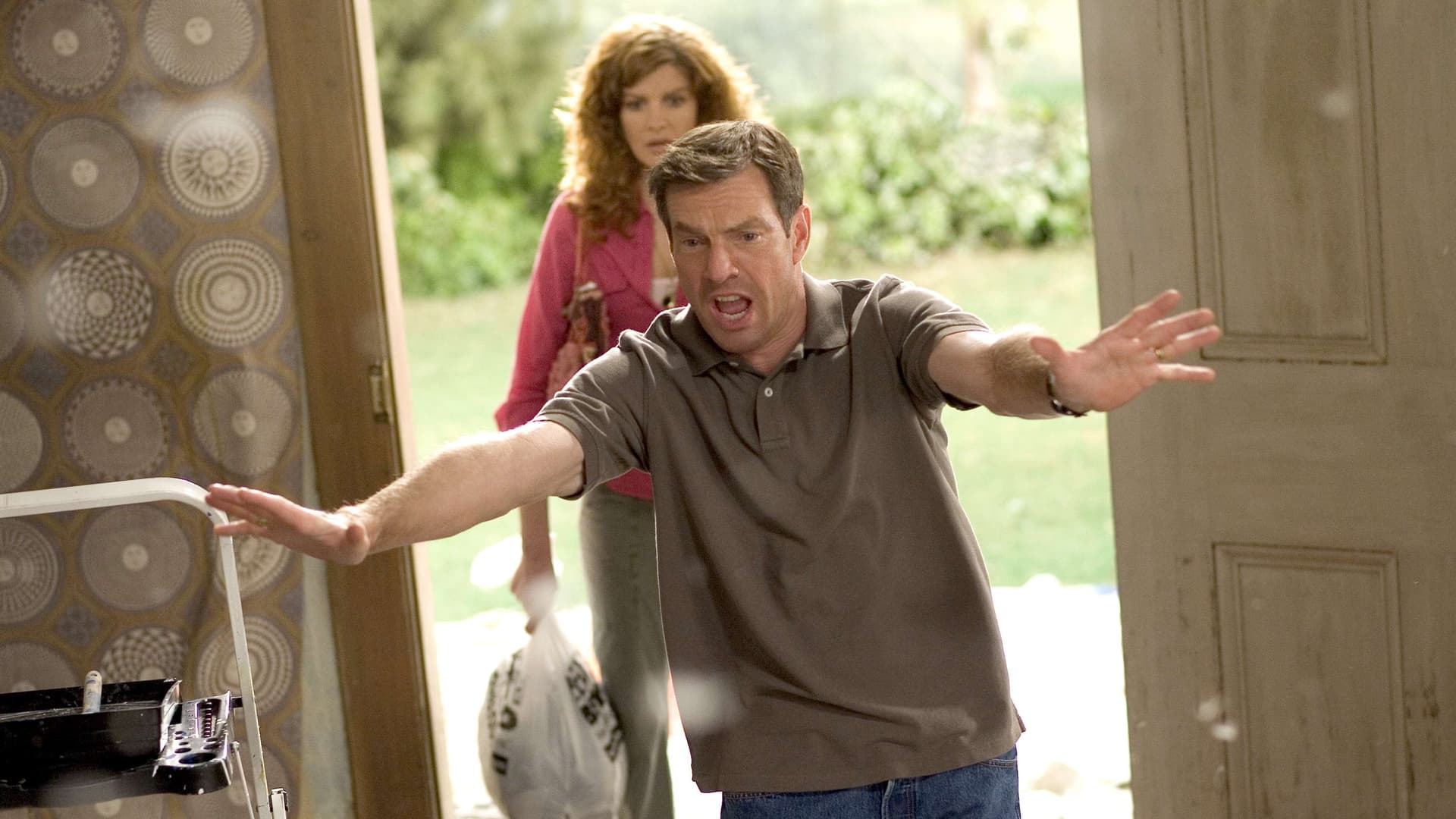
The 2005 remake shifted the gears toward "home invasion" style comedy. It leaned heavily on the tropes established by movies like Cheaper by the Dozen. You’ve got the kids sabotaging the parents, the paint buckets falling on heads, and the inevitable "we have to work together to win the big event" climax. It’s loud. It’s colorful. It’s exactly what Nickelodeon fans in the mid-2000s wanted.
What’s interesting is how the movies handle the "Yours" and "Mine" aspect. In the original, the focus is heavily on the logistics of the merger—the biological realities and the genuine fear of being replaced. In the remake, it’s more about the clash of brand identities. The Norths (Rene Russo’s brood) are boho-chic artists. The Beardsleys (Dennis Quaid’s crew) are basically a junior ROTC program. It’s a classic "clash of cultures" trope that feels a bit dated now, but at the time, it served as a perfect vehicle for slapstick.
Why the "Blended Family" Narrative Still Works
Hollywood keeps coming back to this well because the "blended family" is the ultimate conflict generator. You have built-in rivals. You have the "us vs. them" mentality that slowly dissolves into a "we." It’s a predictable arc, sure, but it’s a satisfying one.
- The 1968 film dealt with the heavy grief of losing a spouse more directly.
- The 2005 version skipped the grief and went straight for the "my new step-dad is a drill sergeant" jokes.
- Both films use the house itself as a character—a space that is physically too small for the egos involved.
The real Helen Beardsley’s story was actually quite a bit more complex than the movies let on. While the films make it look like a hilarious series of mishaps, the actual Beardsley family had to navigate the very real pressures of the 1960s, including significant media attention. They were a spectacle. The movie Yours, Mine and Ours turned that spectacle into a repeatable formula.
The Logistics of 18 Kids (Real Life vs. Cinema)
Let’s talk about the math. In the 2005 movie, they live in a lighthouse. A lighthouse! Imagine trying to get 18 children up and down a spiral staircase every morning for school. It’s a logistical nightmare that only works in a movie world where gravity and physics are suggestions.
In the original 1968 film, the house felt more lived-in. You saw the bunk beds. You saw the industrial-sized pots of stew. It felt like a barracks. There’s a specific scene where they have to organize a "batch" system for bathing and meals. That’s the stuff people actually remember. It’s the "how do they do it?" factor.
Critical Reception and Cultural Impact
Critically, neither version of Yours, Mine and Ours is considered "high art." The 2005 version, directed by Raja Gosnell, was largely panned by critics who found it derivative. Rotten Tomatoes has it sitting at a pretty grim percentage. But critics often miss the point of these films. They aren't for the cinephile; they are for the family sitting on a couch on a Saturday night looking for something that won't make anyone argue.
The 1968 version was a massive commercial success, becoming one of the highest-grossing films of its year. It proved that Lucille Ball could carry a feature film outside of her "Lucy" persona, even if she brought a lot of those trademark mannerisms with her. It also paved the way for shows like The Brady Bunch. Without the success of the Beardsley story, we might never have gotten the story of a lovely lady and a man named Brady.
What People Get Wrong About the Franchise
Most people think these movies are just about "too many kids." That’s part of it, but the heart of the story is actually about the parents. It’s a romance first. It’s about two people who have already "failed" at the traditional family structure (usually through being widowed) and are brave enough to try again.
There's a common misconception that the kids are the protagonists. They aren't. They are the obstacles. The real journey is Frank and Helen realizing that their love for each other has to be stronger than the collective chaos of their offspring. If the parents break, the whole structure collapses.
Comparing the Two Versions: A Quick Look
- 1968 Version: Better acting, more realistic portrayal of the 60s, feels more like a "movie."
- 2005 Version: Faster pace, more physical comedy, Drake Bell (if you're into that era of pop culture).
- The "Real" Version: Read Helen Beardsley’s book if you want to know how they actually managed the grocery bills. It’s fascinating.
The 2005 version also featured a very young Miranda Cosgrove and some other faces that would become staples of mid-2000s TV. It’s a time capsule of a very specific era of filmmaking where every family comedy had to have a "house destruction" sequence. It’s chaotic, loud, and honestly, a bit exhausting to watch in one sitting.
How to Watch Them Today
If you want to do a double feature, start with the 1968 original. It’s available on most major streaming platforms (usually for rent on Amazon or Vudu). Then, move to the 2005 version for the "modern" (well, 20-year-old) take.
Comparing them side-by-side shows you exactly how much the "family movie" genre changed over four decades. We went from character-driven comedy to spectacle-driven comedy. But the core remains: we love watching big families struggle because it makes our own lives feel a lot more manageable.
Next Steps for the Curiously Overwhelmed:
- Watch the 1968 version first: Seriously, Lucille Ball’s performance is a masterclass in physical comedy that isn't just "falling down."
- Read the source material: Find a copy of Who Gets the Drumstick? by Helen Beardsley. It’s out of print but usually available via used book sellers. It provides a much more "human" look at the 18-kid lifestyle.
- Check the "Cheaper by the Dozen" connection: If you enjoy this, watch the original 1950 Cheaper by the Dozen. It shares a similar "true story" DNA.
- Look for the cameos: In the 2005 version, keep an eye out for how many "future stars" you can spot in the background of the massive family scenes.
Ultimately, Yours, Mine and Ours isn't just about a movie franchise. It’s about the messy, loud, and often ridiculous reality of trying to merge two lives into one. Whether it’s 1968 or 2005, the message is the same: you’re going to need a bigger house and a lot more patience.



